

Cutting-edge technologies improve efficiency and productivity throughout the project lifecycle.
BIM, or Building Information Modeling, is the process of building an intelligent 3D model prior to actual construction. The term VDC, or virtual design and construction, refers to the entire process that our team will use to ensure we deliver a high-quality project to our clients. This process aligns stakeholder expectations, reduces risk to overall cost and schedule due to rework, and enhances overall customer experience and satisfaction. As a world leader in the AEC industry, Haskell uses virtual design and construction through all phases of the project lifecycle to maximize project efficiency.
Haskell leverages BIM on all projects throughout the delivery process.
From early design through construction and field execution to client occupancy, we leverage BIM in a variety of ways. We empower client stakeholders, as well as design, construction and field personnel, with cutting-edge office and mobile technologies, including smart model-based decisionmaking tools, to ensure that high-quality, complex projects are delivered successfully, on time and under budget.
Talk to a Subject Matter Expert
Recognized By




Featured Projects
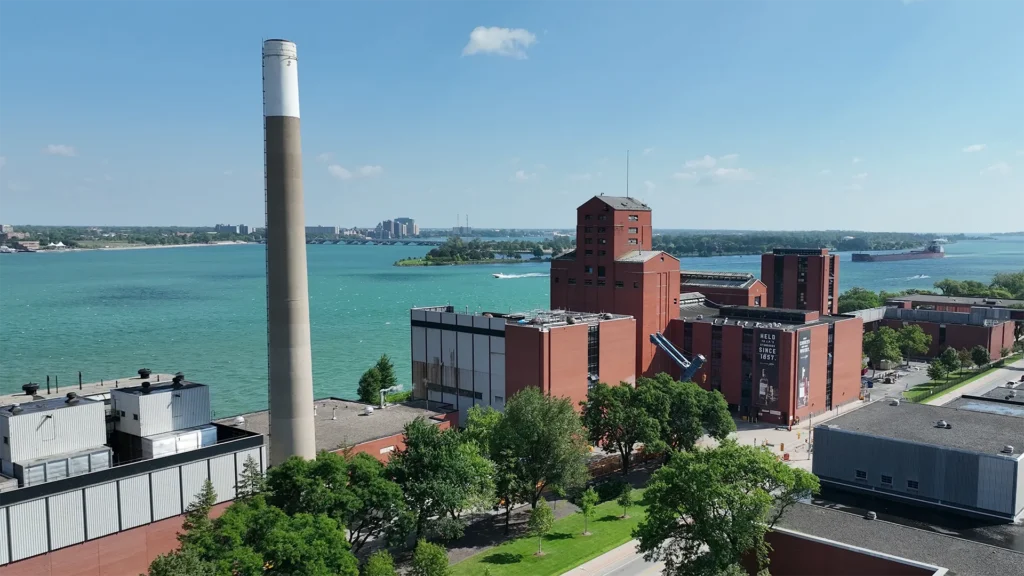
Windsor, Ontario, Canada
Hiram Walker & Sons Evaporator
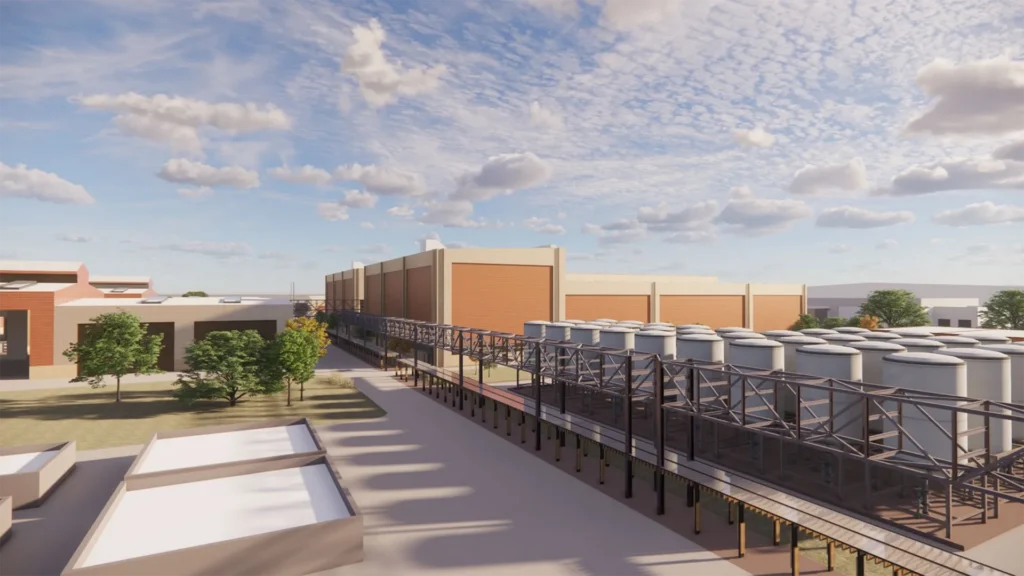
La Barca, Jalisco, Mexico
Diageo Atreyu
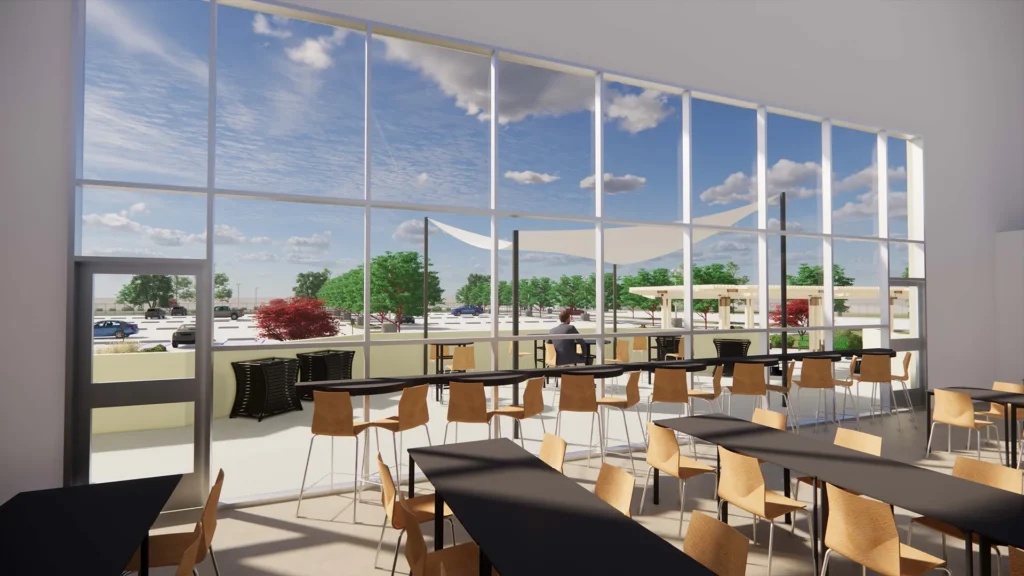
Jeffersonville, Indiana
Protein Bar & Powder Manufacturing Plant
Virtual Design & Construction Services
Link 3D models to construction schedules with time (4D) and cost (5D).
Clearly visualize the construction sequence and cash flow of the project.
Adding the element of time to the 3D BIM model as the 4th Dimension produces a visual simulation of the sequencing for the project. This helps bring the schedule to life, conveying the project schedule to our clients in a clear manner that goes beyond a lengthy paper schedule Gantt chart that can be difficult to process. Moreover, the 4D sequencing video can alert our project managers to potential conflicts in work areas before they occur and optimize work through multiple phasing and sequencing scenarios. Linking the project estimate to the BIM model produces a 5th Dimension, cost, that highlights the cost of work associated with the different sequences of the project over time. Our team and clients are better informed and prepared for financially demanding construction activities and payment schedules through the use of this technology.
Building Information Modeling (BIM) gives a detailed, 3D view of conceptual designs.
Cutting-edge technology unites the disciplines to prevent pitfalls and maximize efficiency.
Project owners can look at the future through Haskell’s application of Building Information Modeling (BIM). Our teams employ the latest digital technology, as architects and engineers design in software systems that combine the computer-generated 3D modeling and database-driven tools of the Architectural, Engineering and Construction (AEC) industry with those developed in the video game industry to create and fully realize conceptual designs. For the professionals involved in a project, BIM enables a virtual information model to be shared by the design team, the construction team and the owner with each professional contributing discipline-specific data to the shared model. Visualization of all aspects of the project in a single environment allows better coordination and development of designs, enhanced clash detection and greater efficiency.
Reduce the risk of rework costs and schedule impacts through automated design conflict identification.
Proactively resolve design issues rather than reacting as issues occur in the field.
Clash detection is the process of coordinating the building systems virtually prior to construction. Through the use of Navisworks software, which is a universal model integrator, regardless of design authoring platform, and built-in clash detection functionality, the Haskell team is able to collaboratively identify and resolve problems that could otherwise result in significant cost implications and delays to the construction project. Prefabrication opportunities are an added benefit that ensures a safer, more efficient jobsite throughout the fully-coordinated 3D design and construction process.
Laser scanning verifies existing facility conditions for renovation or expansion projects.
Eliminate the unknowns in expansion and renovation projects.
Laser scanning involves using laser light to rapidly capture billions of scan data points and accurately produce a photorealistic 3D model representation of existing conditions, which leads to more efficient design and construction processes. The laser scan provides the design team with a tremendous amount of information on obstructions and allows examination of alternate routes and design options to avoid them. Haskell has invested in laser scanning equipment and scanning personnel to execute this new technology service in-house for our clients. This process has been proven to drastically reduce the greatest risk to clients: the risk of the unknown.
Track construction progress more precisely than ever before.
Laser scanning technologies can be employed during the construction phase to capture actual progress and measure it against tolerances in the BIM model. In addition, such scans can alert project managers of construction or installation deviations from the design. This allows faster reactions to minor inconsistencies before they accumulate and cause larger problems in prefabrication and installations.
Enhance project insight and potential for value-engineering opportunities.
Model-based estimating enhances project insight and value-engineering opportunities.
Information embedded in the BIM design models allow the integrated design-build team to quantify the 3D design almost instantaneously at every stage of design development. This produces faster and more accurate estimates that give owners the ability to visualize 3D color-coded model information, compare estimates of different design options, make better-informed decisions, run bid analysis during procurement phase, change analysis over time, and reduce project costs.
Incorporating data in real time increases accuracy and productivity of field personnel.
RTS and other digital layout equipment help reduce the time and increase the accuracy of field layout.
During construction, laying out the points in real time for each of the building components for concrete, steel, utilities, interior walls, ceilings, etc., can be tedious and time-consuming. Leveraging the 3D geometry and data in the BIM model, Robotic Total Station (RTS) equipment and other digital layout technology can significantly reduce the time needed to locate and construct work via 3D model geo-referenced coordinate system to immediately locate, stake-out, and execute in the field without additional survey. Additionally, Haskell is able to provide round-trip as-built data back to engineers in the office, to understand exact anchor bolt locations, underground utility locations, piping penetrations, and any other critical information, to make design adjustments as necessary, thereby increasing project productivity and expediting schedule.
Tour the facility virtually before it is built.
Virtual walkthroughs give clients a clear picture of design intent.
Using the latest game engines and virtual-reality headsets, owners can take an immersive walk through their designed facility. This highlights the different design elements and options that lead to better decisions before construction begins, which can include facility managers and other end-users for even better feedback.
Our team refines design in virtual quality-control walkthroughs.
Virtual walkthroughs can also be a powerful tool for design and construction quality control. Our designers and project managers can virtually walk around the model to identify conflicts, clearance and accessibility issues, and constructability issues before construction. Such accuracy issues cannot be as easily identified using modeling and clash detection software.
Related News & Insights
Fabrication, Sales and Service Underpin for Eric Jensen’s Leadership
Learn how the Haskell Superintendent's technical depth and people skills make him 'the glue that keeps it all together' on complex projects.
Haskell Partners with NEFBA to Expand Construction Trade Education
Learn NEFBA's vision for a state-of-the-art home for the next generation of skilled labor. See how Haskell invests in the future construction workforce.

BIM Leader Leo Dino Buera Honored with Living the Values Award
Explore how Buera has helped build Haskell Philippines, playing a collaborative role and successfully coordinating global BIM integration initiatives.
Integrated Expertise That Drives Results in Beer, Wine and Spirits
Learn how, with all disciplines under one roof, Haskell delivers highly complex, sustainable, turnkey beverage facilities with speed and certainty.