

How AI and Digital Twins Are Shaping Industrial Analytics

Discover how stronger data foundations and planning tools are improving operations. Explore insights on capacity planning, supply chains and modeling.
What does it take to deliver analytics that matter? That question was central to the 2026 INFORMS Analytics+ Conference, where Haskell Senior Analyst Zary Peretz and Analytics Technical Lead Shannon Browning engaged with leaders across industries to explore how AI, optimization and decision systems are reshaping operations.
The conference brings leaders in analytics, operations research and data science together to share insights on how analytics solve complex challenges across manufacturing, distribution, healthcare and infrastructure.
Organizations continue to invest in AI, with greater emphasis on strong data foundations to support planning, particularly in capacity and facility design. Advances in optimization and sequential decision-making are improving how complex systems with real-world variability are designed and operated. At the same time, a clear focus on usability ensures tools and simulation models can be trusted and applied in operational and capital planning.
This was especially clear in how organizations are approaching AI. While many are experimenting with generative AI, success depends less on the technology and more on how it is integrated into workflows. Leading organizations are rethinking workflows to unlock new value.
“We learned and shared effective AI strategies with other analytics leaders,” Browning said. “While AI may affect organizations in different ways, there are core tenets that drive success with generative AI tools. First, AI works best when there are standards across teams, but not necessarily across use cases. Next, collaboration across domains lifts everyone’s practice. Finally, focus on tasks where AI provides a measurable advantage rather than applying it everywhere.”
This focus on usability and trust was reflected in the conference’s top recognition, the Franz Edelman Award, the highest honor in operations research and advanced analytics. This year’s winner, Microsoft, demonstrated how advanced analytics can be applied at scale to optimize its data center supply chain, combining forecasting and optimization models to support planning. The solution also incorporated a large language model to provide explainable outputs and enable what-if scenarios, helping build trust and support adoption.
“Adoption remains the critical link in the analytics value chain,” Browning said. “Developing tools that improve understanding and support decision-making is essential to realizing the full impact of advanced analytics.”
Haskell’s System Analytics team approach to problem-solving reflects the same principles, combining data, analytics and domain expertise to support decisions across the project lifecycle, from facility design and capacity planning through continuous improvement. Simulation models and digital twins capture real-world system variability, allowing teams to evaluate scenarios, test assumptions and make smarter decisions.
“Counterintuitively, data-driven decisions are never just about the data. You need system engineering fundamentals to go along with it,” Peretz said. “As we move further into Industry 4.0, it is about connecting data with the right tools so people can make informed decisions. Digital twins play a critical role by creating models that teams can understand and trust, allowing them to test scenarios and optimize systems.”
Several sessions highlighted how these approaches can be applied to challenges facing Haskell clients.
In sustainability, concepts like carbon-aware computing sparked new thinking around carbon-aware process systems, optimizing operations to reduce emissions and cost.
In safety, discussions focused on the ethical use of nontraditional wellness metrics to identify leading indicators of risk and proactively improve outcomes.
For manufacturers navigating high product variety and the demands of mass customization, advanced analytics must capture real-world variability in systems, moving beyond reporting to account for uncertainty and system behavior.
By engaging with peers across industries, Haskell’s System Analytics team hones proven approaches with new ideas to support clients at every stage of their data and analytics journey. Whether designing new facilities, driving continuous improvement or navigating increasing complexity, these insights help translate innovation into real-world outcomes, empowering decision-makers across the AEC industry to make smarter, more informed decisions through advanced analytics and modeling.
Contact Haskell’s System Analytics team for the deep, nuanced analysis it takes to leverage data to draw informed conclusions and support real-world decisions across a wide variety of industries.
Related News & Insights

What Manufacturers Should Know About High-Temperature Heat Pumps
Discover how industrial manufacturers evaluate high-temperature heat pumps as part of an integrated thermal strategy. Learn what early design decisions shape performance and economics.
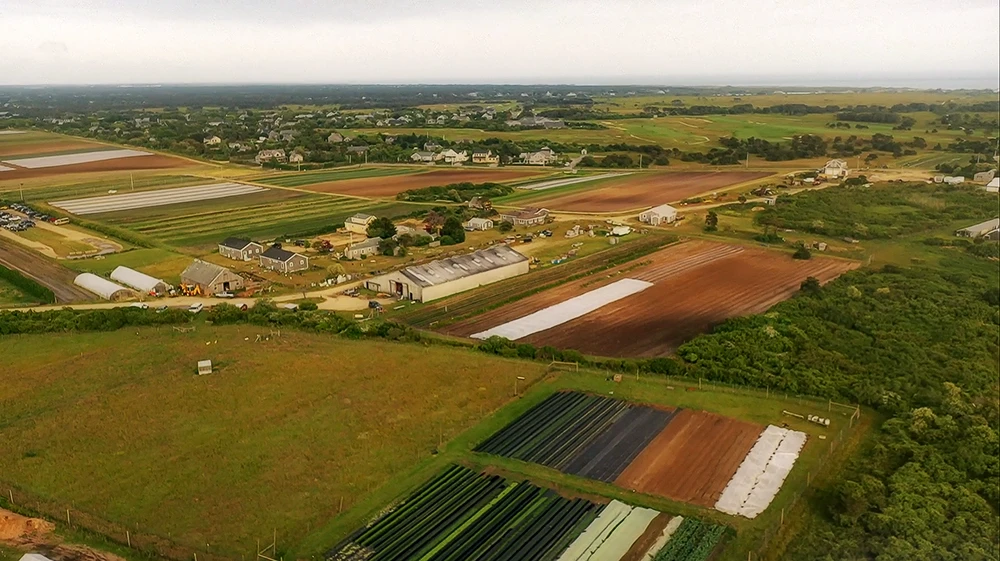
An Adventure in Nantucket, Restoring Distillery Automation
Learn how Haskell Subject Matter Expert Alan Green brought custom solutions to Triple Eight Distillery to upgrade an overmodified system.

Data-Based Analysis Drives Optimal Manufacturing Facility Design
Learn how Haskell’s System Analytics team replaces assumptions with facts for smarter capital investment, better performance and reduced risk.
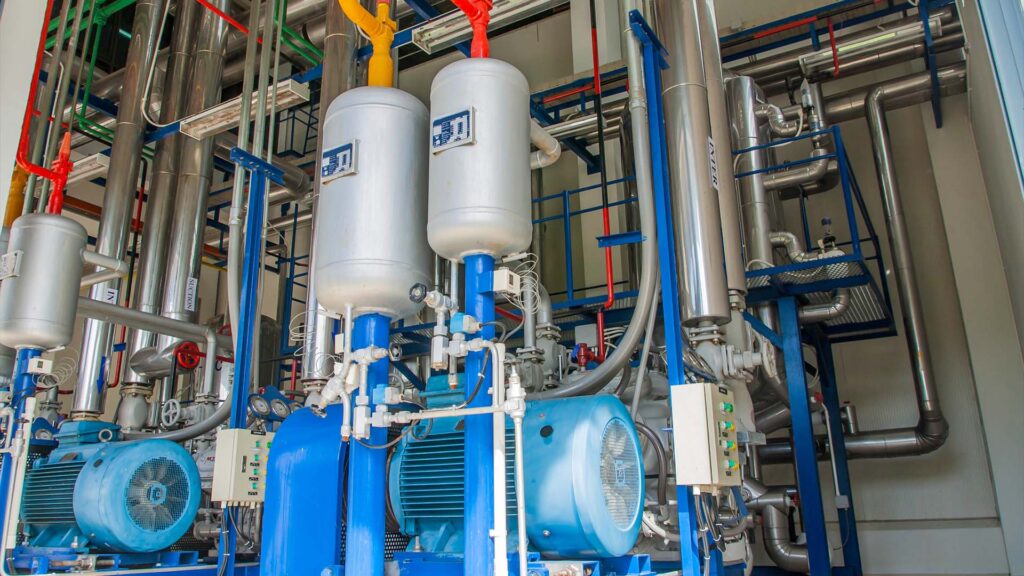
The Immediate Need for CO₂ Refrigeration in Food Processing
Learn how regulatory pressure and performance demands are accelerating the transition to CO₂ refrigeration across food processing facilities.