

Beer, Wine & Spirits Expert Explores European Tech and Innovation

Travel along as Haskell's Phil Morgan explores how producers are improving efficiency without compromising the products consumers know and love.
Phil Morgan, Haskell’s Strategic Industry Advisor for Beer, Wine & Spirits (BWS), traveled across Europe this year, but he wasn’t there to sightsee.
From Denmark to Scotland to France, Morgan traveled the continent throughout the first half of 2026, meeting with industry leaders, touring manufacturing and equipment facilities and attending conferences focused on energy efficiency and the future of distilled spirits.
“Each stop and event gave me a closer look at the latest industry innovations,” he said. “I saw how producers are balancing tradition with new technology while evaluating ways to improve efficiency, reduce energy use and compete in changing markets.”
Heat Recovery Offers New Options for Distillers
Morgan began his travels in January at Copenhagen’s High-Temperature Heat Pump Symposium. There, he focused on technology with broader applications across manufacturing, including BWS.
“Heat pumps can now decarbonize distillery processes in ways that weren’t practical a decade ago,” Morgan said. “These systems work like refrigeration in reverse. They use electricity to transfer heat, producing several times the energy they need to process. They recapture energy at multiple points in the process and reuse it, really reducing our reliance on natural gas.”
The technologies include mechanical vapor recompression (MVR) and thermal vapor recompression (TVR), which recover heat for reuse in the production process. Months later, Morgan saw how distillers in Scotland were applying those approaches to traditional operations.
Joined by Haskell Project Development Director Tony Smith, Morgan visited the Scottish Highlands in June to meet with Forsyth Ltd., a manufacturer of distillation systems that supplies equipment to producers throughout Scotland. A tour of its facilities showed how manufacturers are incorporating energy-saving technology into established production processes.
“Ten years ago, distillers resisted energy-saving technology because they were worried it would change their flavor profiles,” Morgan said. “That concern was legitimate then, but it doesn’t have to be true anymore.”
Digital modeling technology now allows producers to simulate how equipment changes may affect a product and predict potential flavor outcomes before production begins.
Some facilities have fully adopted MVR and TVR technology, while others use a hybrid approach. Morgan observed producers that continue using gas-fired heat for pot stills while introducing TVR later in the process to reduce energy use and operating costs. He described the approach as a blend of “old-school flavor and sustainable, efficient technology.”
European producers are adopting high-temperature heat pumps in response to changing regulations and available incentives. U.S. regulations and energy markets differ, but Morgan sees potential for the technology as BWS manufacturers look for ways to manage costs and improve efficiency.
“You don’t have to overhaul your whole operation,” he said. “We can help you pinpoint where and what and how you can change, without changing what your consumers love most about your drinks.”
For BWS manufacturers, the visits showed that efficiency and sustainability improvements do not necessarily require a compromise in quality or flavor.
Market Trends Reshaping Growth Strategies
Before leaving Scotland, Morgan traveled to Edinburgh, where he represented Haskell among industry leaders and global brand representatives at the Worldwide Distilled Spirits Conference.
The conference expanded the focus beyond manufacturing operations to the market trends influencing BWS producers.
“Ready-to-drink cocktails are growing, traditional wine and spirits are shrinking, larger brands are adapting their portfolios, and new brands are finding success by responding to changing consumer behavior,” he said.
The conversations also highlighted growth opportunities outside Europe and North America, including India, as brands respond to changing consumer preferences and evaluate where future demand may emerge.
Morgan’s final stop was Paris, a global BWS hub, where he met with Haskell Vice President of International Planning & Development Johnathan Toke. Together with Smith, they discussed Haskell’s international capabilities and experience supporting clients across markets.
“Haskell has partners and offices all across the world,” Morgan said. “We have over 200 team members in Mexico, and right now, we’re doing work with a Japanese client in Canada. If your concern is sales, we can take you to where the consumers are.”
Morgan’s point reflected a broader benefit of Haskell’s relationships with producers and partners around the world: Clients can draw on local regulatory and operational knowledge as they evaluate new markets. In the United States, for example, alcohol regulations vary by state, creating market-specific planning challenges for international distillers expanding operations.
Global Insight Informs Future Operations
“From my travels, a theme remained consistent,” he said. “The future of beer, wine and spirits manufacturing is not a choice between tradition and innovation, but rather how to balance them. Producers are finding ways to protect established products while making targeted changes to how facilities use energy, automate work and plan for growth.”
Those conversations are shaping questions Haskell is discussing with BWS clients today:
- Where are the constraints in the production process?
- Which activities can be automated?
- How can manufacturers preserve established flavor profiles while reducing labor needs and improving efficiency?
- Where are consumers creating new growth opportunities?
Those questions span the same issues Morgan explored with manufacturers, technology providers and global brands across Europe. His role connects Haskell’s global capabilities with the needs of the BWS industry, whether a client is evaluating heat-pump technology, improving operational performance or considering expansion into a new market.
Through direct engagement with industry leaders, Haskell can bring clients technical, operational and market context that extends beyond design and construction and supports decisions about their next phase of growth.
Learn how Haskell’s Beer, Wine & Spirits team helps manufacturers plan and deliver efficient production facilities across global markets.
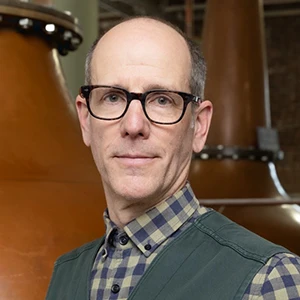 About the author: Phil Morgan is Haskell’s Strategic Industry Advisor for Beer, Wine & Spirits, serving as a bridge between client operations and Haskell’s design and construction capabilities. With more than 30 years of experience as a restaurant operator, entrepreneur and hospitality designer, he brings firsthand knowledge of what it takes to build and run facilities where production performance matters. His background, including founding a Brooklyn-based design firm that created 150+ hospitality spaces and deep hands-on work across craft distilleries, gives him the ability to identify operational gaps early and translate client needs into practical design solutions. Phil also serves as a regular spirits judge for the American Craft Spirits Association.
Related News & Insights

What Manufacturers Should Know About High-Temperature Heat Pumps
Discover how industrial manufacturers evaluate high-temperature heat pumps as part of an integrated thermal strategy. Learn what early design decisions shape performance and economics.
An Adventure in Nantucket, Restoring Distillery Automation
Learn how Haskell Subject Matter Expert Alan Green brought custom solutions to Triple Eight Distillery to upgrade an overmodified system.
What Distilleries Should Know About Industrial Wastewater
See how Haskell experts evaluated distillery wastewater to help spirits manufacturers plan right-sized pretreatment solutions.
The Immediate Need for CO₂ Refrigeration in Food Processing
Learn how regulatory pressure and performance demands are accelerating the transition to CO₂ refrigeration across food processing facilities.