Thermal Imaging Camera Ensures Precision in Building Construction

Discover how certified experts use thermal imaging to reveal hidden flaws, enhancing the accuracy and reliability of building inspections.
When air leakage, water intrusion, or electrical issues occur in a finished building, unobtrusively locating the damage is a priority, particularly at sites where temperature regulation is imperative, like cold storage facilities.
In such circumstances, Haskell’s Quality Team uses thermal imaging cameras to map temperature differentials by capturing heat emissions and displaying temperatures as different colors. They can be cost-effective and efficient tools for spotting insulation damage, moisture intrusion, roof leaks, electrical hotspots and overloaded circuits.
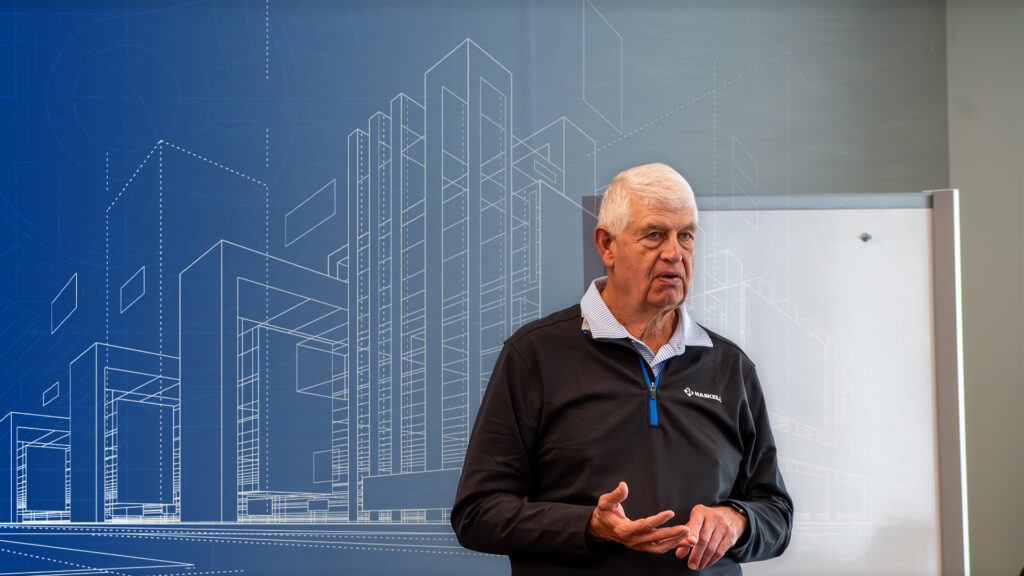
Haskell’s FLIR thermal imaging device detects and displays slight variances in temperature and can be tuned to capture a wide range of temperatures. Senior Quality Coordinator Benjamin Pierson and Building Envelope SME Austin Adler underwent 40 hours of thermography training so they could conduct and interpret thermal imaging using the company’s equipment.
Pierson and Adler are now certified to use the camera and can use it with other tools and elements that conduct thermal energy.
Evaluating environmental conditions such as relative humidity and ambient temperature and determining the emissivity using common items, such as electrical tape and aluminum foil, can assist the Quality Team with obtaining accurate images onsite. The intensive training Pierson and Adler received taught them how to account for the complicating factors of emissivity – a measurement of how efficiently something can radiate heat.
“It’s complicated, but knowing all this information allows us to set up the camera so that we can get very accurate information and get as much information as possible from the thermal imaging camera,” Pierson said.
On one project, Pierson was asked to use the camera to ensure that a large wall had been constructed to the necessary standard. To get the most accurate thermal readings possible, he allowed the sun to saturate the outside face of the wall and quickly set up the camera once the sun set and the wall began to cool. The heat signatures that the thermal imaging camera caught as the wall cooled allowed Pierson, in conjunction with Haskell's Structural EOR, to determine that it had been constructed correctly.
Not all projects require a full day of sunbathing to get a read, and Pierson can adapt how he uses the camera to best capture a range of situations. Some sites require only 10 to 15 minutes to set up the camera and take the images, but the Quality team will spend days at other sites to gain the most in-depth and comprehensive reads possible.
Thermal imaging cameras reinforce Haskell’s commitment to customer service and ensure all projects are completed to the highest standard.
“Many of the things we’re called in to investigate can’t be seen by the naked eye, and we’re committed to seeing these projects through and making sure these problems get resolved,” Pierson said. “Working in the Quality Department, I’m told all the time that other companies don’t come back to verify that everything is done correctly, the way we do at Haskell.”
Haskell offers clients the assurance that their projects will be completed safely, on time, within budget and with the least possible risk exposure. Contact us to discuss your facilities needs.
Related News & Insights
How Scaling Preconstruction Training Serves a Growing Workforce
Haskell’s preconstruction training program strengthens estimating fundamentals and knowledge transfer. See how it improves consistency and reduces risk across markets.
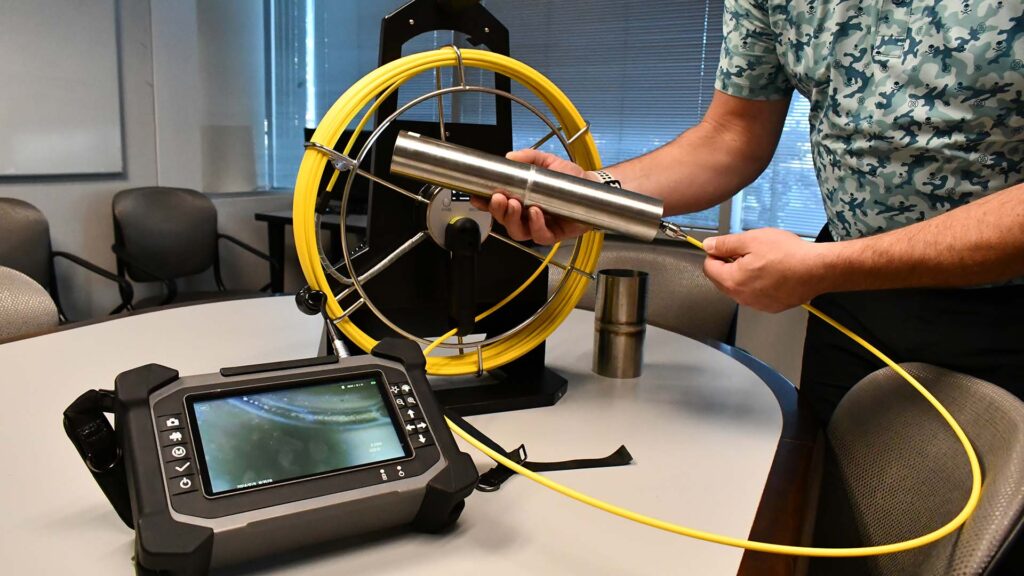
An Insider’s View: Borescope Technology Piping Project Outcomes
Peer into the Haskell Quality team's efforts to ensure defect-free piping systems by leveraging cutting-edge technology to deliver best-in-class results.

Electronic Leak Detection Technology Ensures Absolute Roof Integrity
Learn how Haskell's investment in the cutting-edge ELD system helps detect and repair leaks to deliver the best possible long-term roof performance.

The High Cost of Low Prices: Avoiding Pitfalls in AEC Procurement
Gain insight into how moving away from transactional dynamics and focusing on quality and value enhances project outcomes and client satisfaction.