
A complicated and traffic-choked interchange had to be replaced.
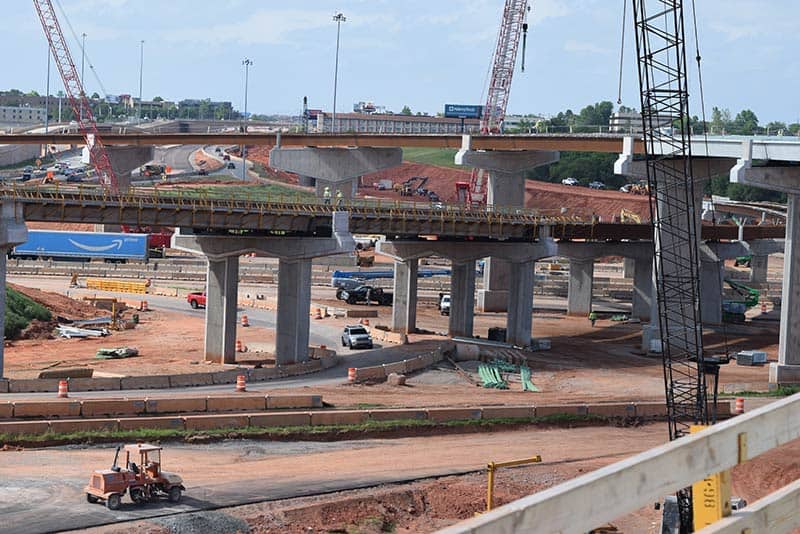
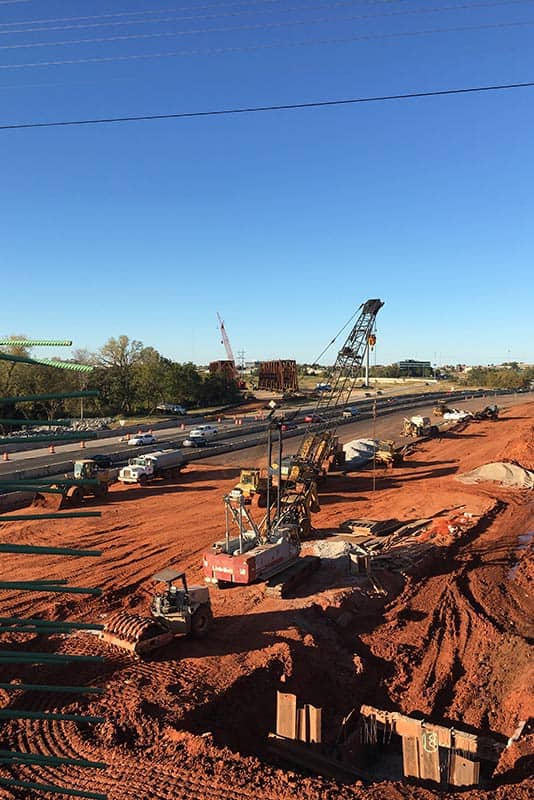
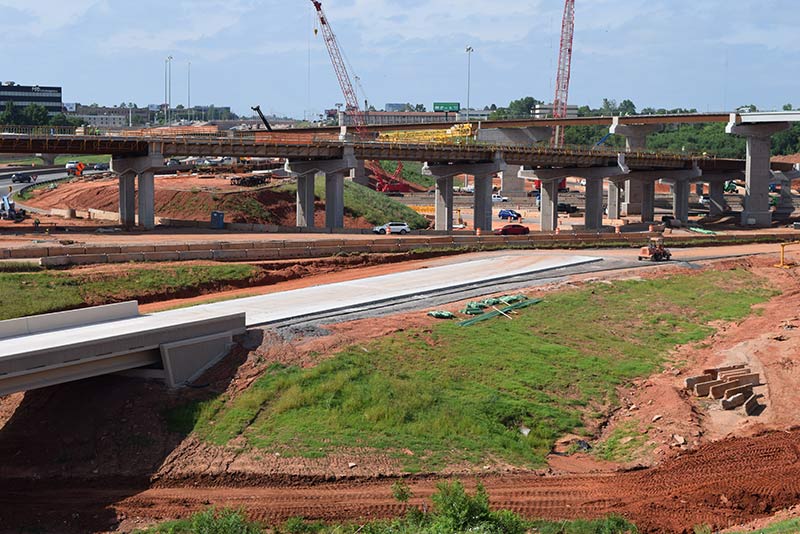
At what once was the crossroads of Dallas-to-Kansas City trail drives and the Chicago-to-Los Angeles trade route, two Interstate Highways, I-44 and I-235, now intersect. Increasing transcontinental traffic on the I-44 corridor and a heavily traveled north-south railway created the need for a critical and challenging update to the interchange. Benham, a Haskell Company, was selected for its team’s big-picture vision for the interchange, insightful attention to construction traffic control, strong bridge design staff and innovative solutions to minimize disruption to the traveling public.
We introduced groundbreaking techniques on the unprecedented project.
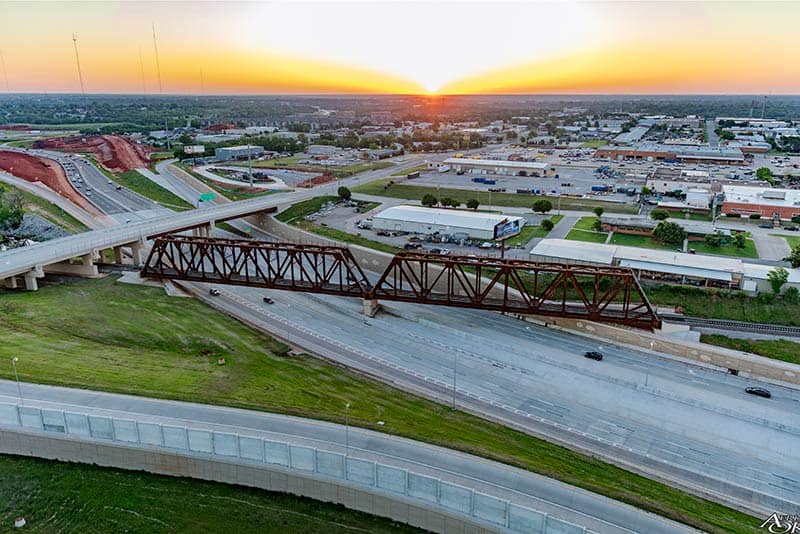
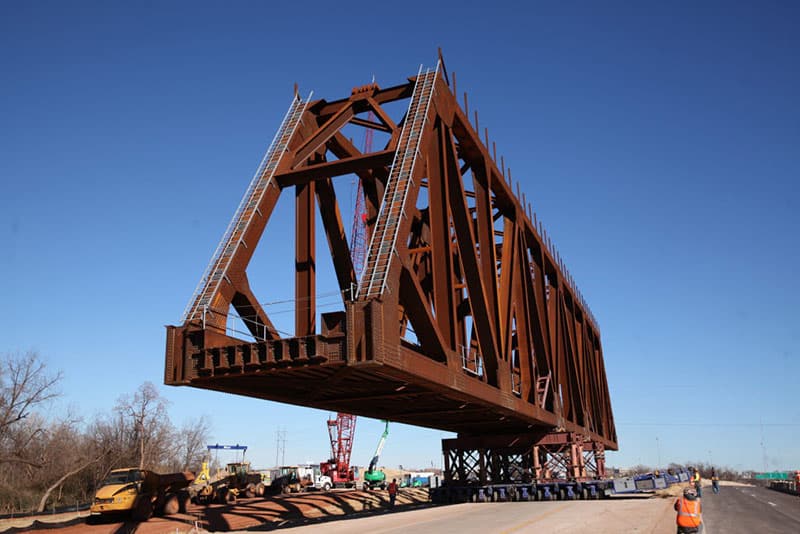
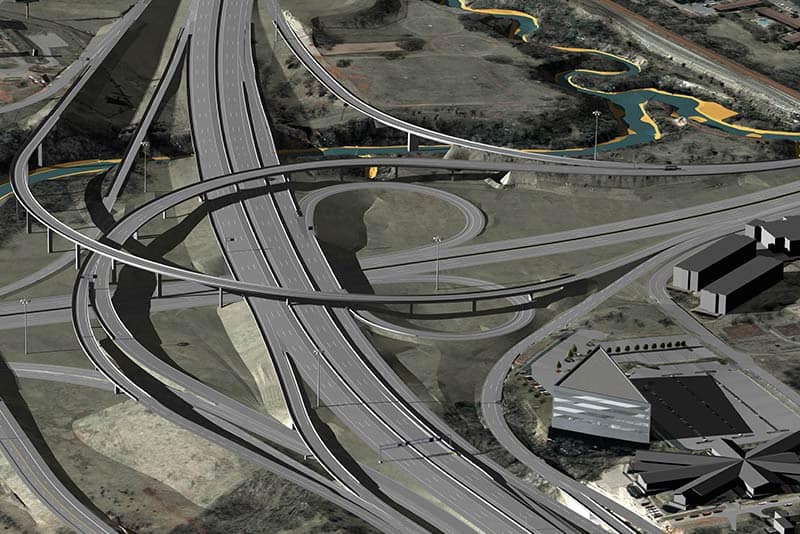
The project was divided into five construction contracts with a total estimated cost of $220 million, the largest project cost in the Oklahoma Department of Transportation (ODOT) history at the time. Two phases of the project were significant firsts in state history. One was the first four-level highway interchange on the ODOT highway system. The other was the erection of two railroad truss spans, each measuring 275 yards long and 45 feet high and weighing 2 million pounds, to carry a single mainline track for the BNSF Railroad. Benham crafted project documents that instructed the contractor to use Accelerated Bridge Construction (ABC) techniques, performing truss member assembly 1/4 mile north of the final location and using Self-Propelled Modular Transports (SPMTs) to move the trusses into position.
Planning and innovation allowed minimal disturbance, early completion and an award-winning design.
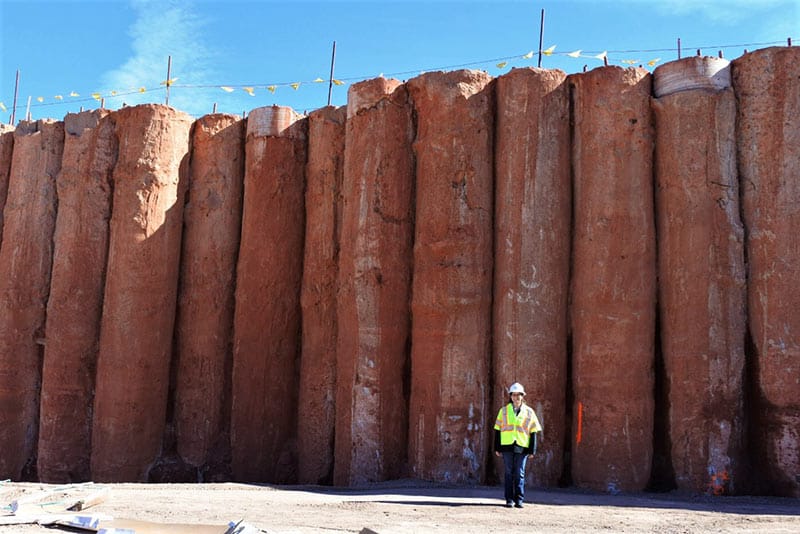
Benham’s innovative planning allowed the bridge move-in to occur with the highway’s full closure over a two-and-a-half-day weekend. The SPMTs stopped to enable trains to pass unhindered throughout, yet work concluded nearly a full day ahead of schedule, before the Monday-morning rush hour. Further, retaining walls of up to 30 feet in height were designed using adjoining drilled shafts in a “tangent pile” configuration to retain existing embankments. This innovative construction technique allowed the project to proceed without relocating the adjoining businesses or interfering with the railroad embankment. Ultimately, with careful planning by ODOT and Benham and skillful execution by the contractor, the project was completed nearly a year ahead of the original schedule. The design received a National Honor Award for Transportation from the American Council of Engineering Companies (ACEC).
Related Topics
Talk to a Subject Matter Expert
Project Highlights
Three Interchanges with Local Streets
Sixteen Bridges
Railroad Truss Bridge
Three Braided Ramp Bridges
Intelligent Transportation Systems (ITS)
CCTV cameras for traffic monitoring
Interchange lighting design
Utility relocation
Streetscape
Railroad Truss Bridge Design
Truss Move-In by Self-Propelled Modular Transports (SPMT)
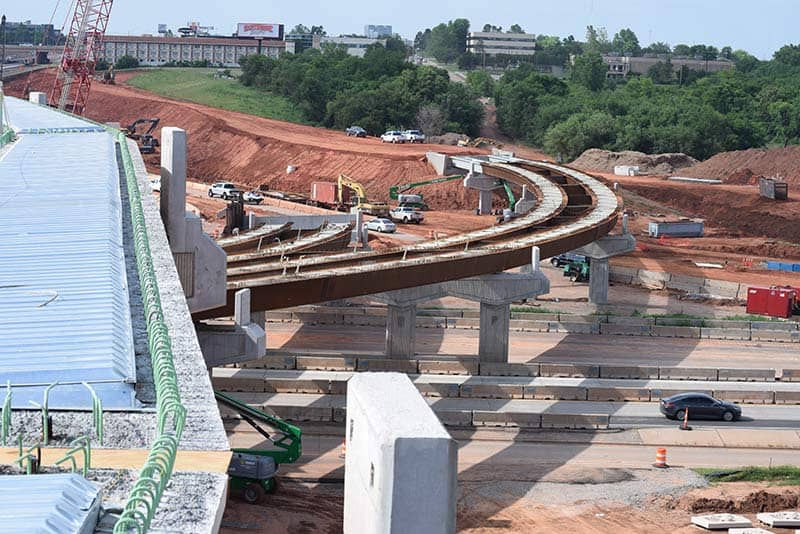
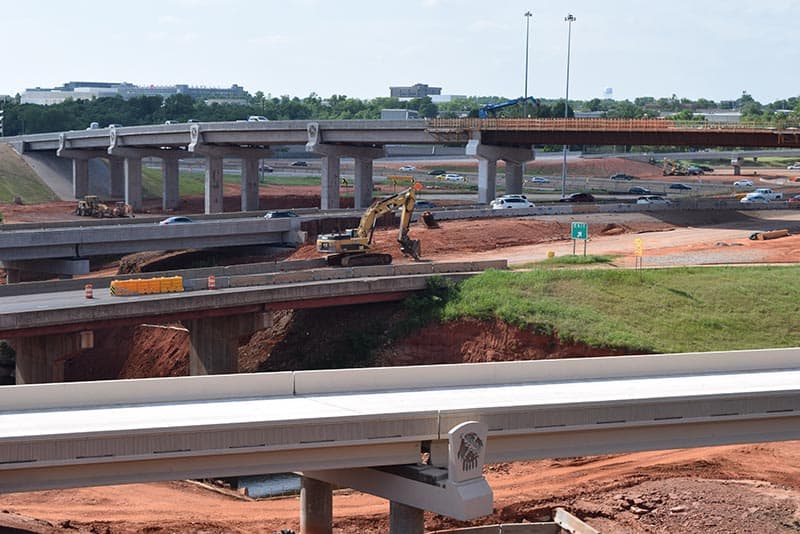

Innovative thinking was not just encouraged, it was required. Benham worked with us hand-in-hand to provide innovative solutions to the challenge.
Brian Taylor
Chief Engineer, Oklahoma Department of Transportation

Related Projects
Tulsa County, Oklahoma
Creek Turnpike Study and Widening
Tulsa, Wagoner and Rogers Counties, Oklahoma
US-412 / I-44 / 193rd East Avenue Interchange
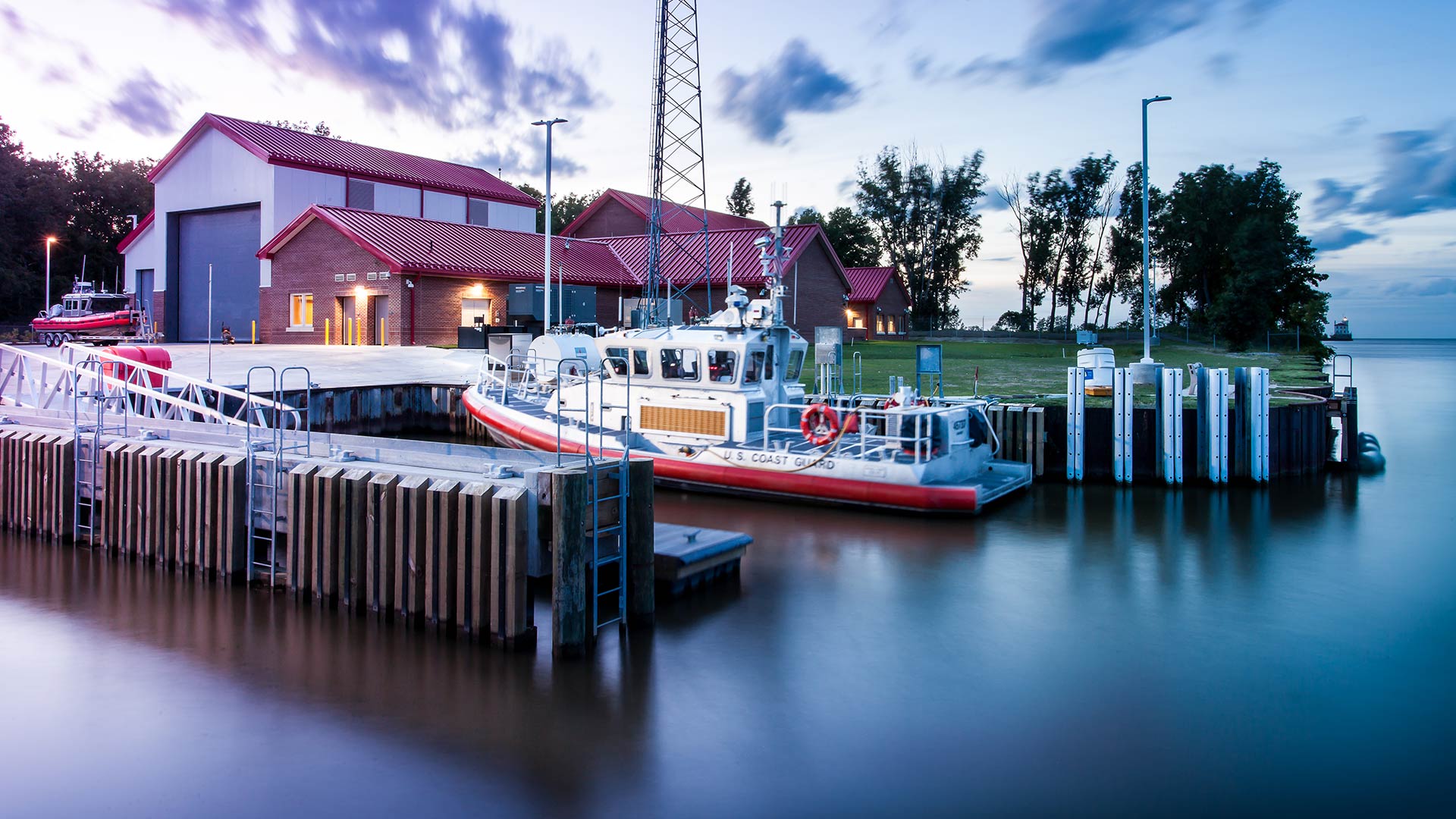
Grand River, Ohio
U.S. Coast Guard Station Fairport
Related News & Insights

How ECOncrete is Building a Sustainable Future for Coastal Infrastructure
Learn how a new round of funding is pushing marine construction technology worldwide. Discover sustainable solutions for building materials.

Riverfront Plaza Brings a Resilient New Era in Downtown Jacksonville
Discover the transformation of the historic Jacksonville Landing site into a world-class public park. Explore the history and future of this new destination.
Bobbie Wood Earns 2025 Engdahl Award for Leadership in Design
Discover how Wood’s disciplined approach, cross-disciplinary view and commitment to integrated design elevate outcomes for Haskell’s clients.

Engineering.com Ranks Haskell High on National Top Workplaces List
Discover why this workplace ranked third among large engineering firms. Explore how a culture of collaboration and innovation drives exceptional results.