

The challenge: Renovate a massive, 80-year-old Navy hangar as normal operations continued uninterrupted.
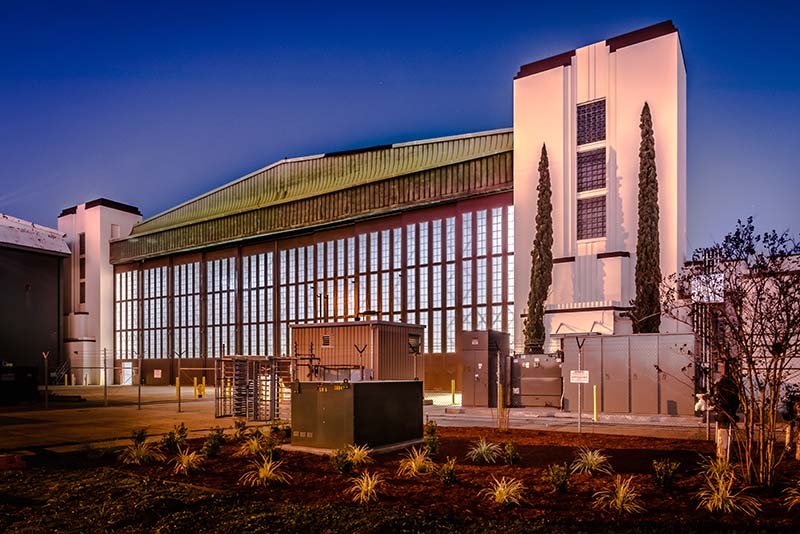
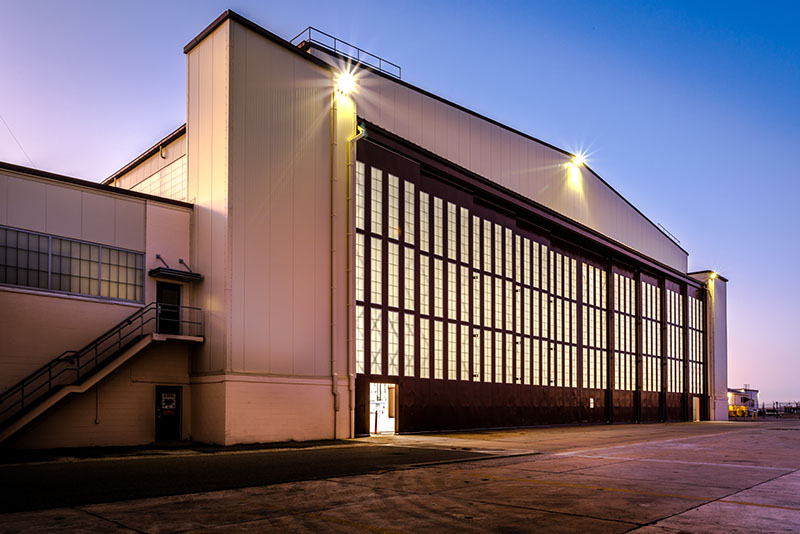
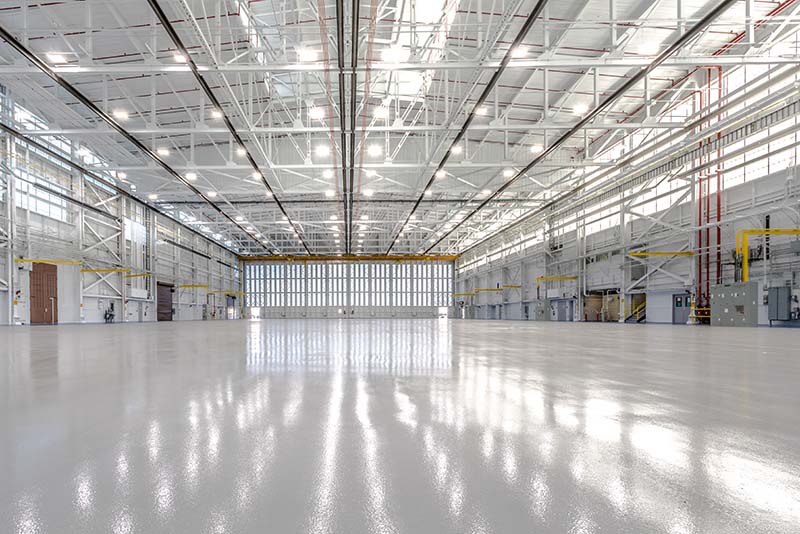
Haskell undertook the design-build renovation of the 89,000-square-foot Fleet Readiness Center Hangar 101 at Naval Air Station (NAS) Jacksonville, originally built in the 1940s. On average, the building is occupied by several hundred civil-service craftsmen and women who disassemble, repair, upgrade, restore and return each aircraft to the Fleet in 100% combat-ready condition. Our challenge was to update the existing facility without compromising the Fleet readiness mission.
Decades of renovation and expansion had rendered existing building documents useless.
Hangar 101 was one of the original buildings when the NAS Jacksonville was officially commissioned in October 1940. After several decades of renovation and expansion, the historic facility needed major upgrades. However, the U.S. Navy’s existing as-built documents were inadequate and did not reflect the current condition of the facility. Haskell overcame this challenge by conducting an extensive site investigation, implementing building scan tools to determine accurate dimensions of the hangar and hiring an electrical subject matter expert to assist in tracing and evaluating the existing electrical systems. Through careful exploration, documentation of changes and coordination with the end user, we delivered the renovated hangar to the client on time and on budget.
A phased approach allowed operations to continue, keeping the NAS Jacksonville facility in operation.
During Phase 1, personnel used the hangar to work on fighter jets and needed to continue normal operations during the renovation. The facility’s mechanical, electrical, plumbing, structural lifting, fire detection and suppression, welding, painting and general maintenance functions had to remain in exceptional working order to sustain the Fleet readiness mission. Originally, Haskell developed a detailed phased approach for refurbishing the building and its five support mezzanines that allowed half of the hangar to remain in operation while renovations were underway on the other half. Throughout Phase 1, the Fleet’s aircraft recovery and refurbishment production output remained at acceptable levels. By Phase 2, the type of aircraft changed, and personnel stopped working on aircraft in the hangar. The ancillary shops and offices remained in operation throughout the project, and this change gave Haskell more flexibility while finishing the renovation.
Innovative Remediation Technology was vital to safe execution and on-time delivery.
With the facility remaining in operation, safety procedures excluded any customary methods of removing lead-based paint from approximately 25,000 separate spots throughout the hangar. For public health, Haskell and its environmental subcontractor, Florida-based Best-Tec, had to adapt. Best-Tec’s president proposed using a laser paint removal technique with rigorous safety protocols that would more effectively and safely remove the lead than the more traditional, manual method of chemical stripping and scraping. We established a work plan and developed a “Laser Containment” system of fabricated laser curtain supports attached to our scissor lift and existing structural components. Additionally, our team continuously tested air quality to check the laser operator’s breathing zone, the fume-extraction exhaust port and area sampling to assess lead exposure throughout operations. By applying this laser technology, Haskell reduced our hazardous lead waste output for the entire project by approximately 2,200 gallons.
Related Topics
Talk to a Subject Matter Expert
Project Highlights
89,000 SF large hangar
Major renovation to a fully operational existing 1940s facility
Extensive construction phasing to maintain operations
Renovation to five attached mezzanines totaling 21,050 SF
Demolition including removal of hazardous materials
Replacement of major mechanical and electrical building systems and roofing
Related Projects
Camp Lejeune, North Carolina
MV-22 Hangar Marine Corps Air Station New River
Elizabeth City, North Carolina
U.S. Coast Guard Maintenance Training Unit Facility
Luton, Bedfordshire, United Kingdom
Gulfstream International Service Facility
Related News & Insights
What Manufacturers Should Know About High-Temperature Heat Pumps
Discover how industrial manufacturers evaluate high-temperature heat pumps as part of an integrated thermal strategy. Learn what early design decisions shape performance and economics.
Why OTAs Are Transforming Federal Construction and Procurement
Learn how Haskell is using Other Transaction Authority agreements and collaborative delivery methods to expedite facilities from funding to construction.

How Pure Cane Sugar Can Reshape American Beverage Operations
Explore the supply chain, infrastructure and production considerations beverage manufacturers face when introducing pure cane sugar.
Visionary Leadership: Crafting Tomorrow’s Government Environments
Discover how Tomra Russell's unique perspective as a Navy spouse and design expert fueled her design success and led to a role as Vice President.