
Learn how Haskell, in response to a client's needs, has begun designing, manufacturing and installing complex facilities around the globe.
This is the origin story of a groundbreaking, global Design Manufacture Install (DMI) delivery method that combines intricate cross-disciplinary engineering solutions, Volumetric Modular Construction capability and highly skilled industrial construction capabilities.
It’s the story of a revolutionary building solution that has grown out of expertise, innovation and persistence to meet the unique needs of an exceptional client.
It is a quintessential Haskell story.
From its beginning, Haskell has broken molds to create best-in-class facilities solutions. Founder Preston Haskell III was among the earliest proponents of design-build because its collaborative nature delivered better projects faster and more efficiently. His company would pioneer and optimize tilt-wall construction and expand into the Engineer Procure Construct (EPC) method of designing, integrating and commissioning manufacturing systems.
Highly skilled, multi-disciplinary teams regularly undertook EPC projects that featured components fabricated offsite. This required complex logistics, equipment setting and attention to intricate detail in offsite design and construction, as well as in onsite integration. The company’s groundbreaking use of Building Information Modeling (BIM) and Virtual Design & Construction (VDC) was a force multiplier in such operations.
“Haskell has an extensive background in skidding process equipment, shipping the skids to site and integrating into larger systems,” said Bill Rudder, Vice President and Religious & Cultural Market Leader. “My first several projects at Haskell included relocating a large packaging line and the associated process equipment from the U.S. to Mexico.
“Then, in 2010, I received a very large conditioner skid from China and installed it in a new facility that we designed and built. The skid was 20 (feet) by 20 by 20 with tanks, piping and instrumentation. Once the skid was set, we tied in 20 raw materials and process utilities. In 2011, Haskell also shipped a prefab steel building to Venezuela for Procter & Gamble. We had many of these sorts of experiences.”
Expanding Into Prefabrication
Meanwhile, in its drive for safer, more efficient and higher-quality projects, Haskell leadership began considering the possibility of leveraging Volumetric Modular Manufacturing (VMC) for overall facility delivery, in which entire modules, including walls, floors, ceilings and sometimes even furnishings, are constructed in a manufacturing environment.
VMC’s benefits stem from the fact that by building significant portions of structures under controlled plant conditions, constructors can use the same materials and design to the same standards as in conventionally built facilities – but in less time and with more precision and certainty. Site work and permitting can occur while the facility is being manufactured, resulting in shorter schedules, lower costs, improved safety, higher quality and enhanced sustainability.
In 2019, Haskell’s newly formed venture and innovation arm, Dysruptek, guided the company into an investment in BLOX, an Alabama-based firm that was just such a modular manufacturing operation, predominantly making replicable medical facilities, such as Free-Standing Emergency Departments. Those modules ship intact to job sites, where they are assembled and connected with a high degree of detail. The facility is then finished, much like a traditionally constructed building.
Subsequently, Haskell became a strategic partner in the modular healthcare space, handling permitting, site work, installation, stitching and finishing dozens of projects.
Another Modular Use Case
Internationally, Haskell was becoming an increasingly close partner with a Religious & Cultural client with plans to rapidly expand the presence of its highly complex temples to more than 100 new locations around the globe. Over several years, Haskell’s teams have earned the client’s trust with strong performances in delivering temple projects in Latin America, including its first design-build temple project in Quito, Ecuador.
Not only were the client’s expansion plans aggressive, but they also called for building in remote locations in less-developed countries. Rudder saw the opportunity to introduce modular construction, leveraging Haskell’s vast and varied experience to fulfill a challenging goal for a valued customer.
In 2018, after numerous conversations about the viability of modularizing temples, Haskell collaborated with BLOX to manufacture and ship a 50-foot-long mockup to the church’s headquarters.
“Prototyping is something unique to Haskell,” Rudder said. “With the AE (architecture and engineering) in-house, the design-build background, the willingness to take it on such a risk profile – that’s what Haskell does. It’s the entrepreneurial nature of our business. We have access to world-class resources that enable the process.
“We set up the mockup and toured everyone through it. They were blown away by the high level of quality and robustness of the structure – how stout it was compared to how people perceive modular building.”
The church commissioned a temple in Helena, Montana, and manufacturing of the modules began at the BLOX facility in 2021. Helena was the first full-scale prototype. With a firm agreement that there was total transparency and collaboration between all parties, Haskell began work on a full-scale prototype.
All agreed it would be a learning experience, and the Helena project set the foundation for future scalability.
“We tried all kinds of things,” Rudder said. “Some worked, some didn’t work, and we’re all smarter now because of it. What we walked away with was that we got the job done. It was close to the schedule. It was over the budget. But all the stakeholders could look at it and say, ‘This is the product we need.’ From a quality standpoint, which is what the prototype was measuring, it knocked it out of the park.”
Another modular temple was commissioned, this one in Casper, Wyoming. Helena was the prototype; Casper was the proof of concept.
“The thinking was, ‘OK, I know we can hit the product that they want. Now we need to hit that product within budget and within a schedule,’” Rudder said. “And that’s effectively what Casper accomplished. From there, what we’re working on is the continuous improvement piece. We have a working pro forma, and now it’s just how much better can we make it through repetition while taking in all of the church’s changes and requirements as they operate the buildings.”
Manufacturing to Meet Demand
With a solution identified, the client’s need increased beyond the capacity of Haskell’s modular manufacturing partners. Again, the answer was harnessing Haskell’s experience, in-house expertise and global scale.
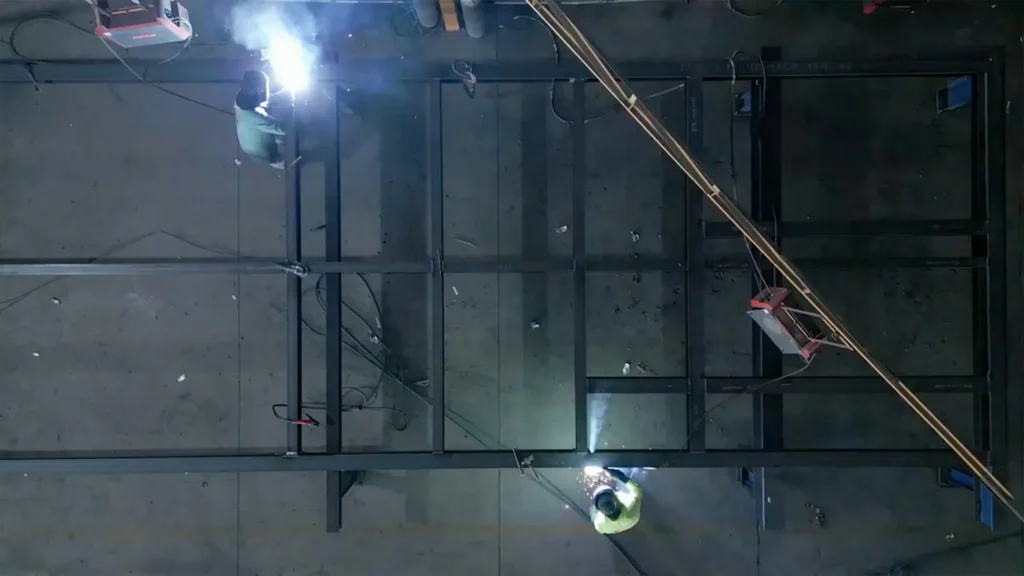
Rudder’s extensive experience in Mexico gave him the confidence that Haskell could launch a volumetric modular manufacturing facility there, capable of producing the quantity and quality of modules necessary. The company designed and commissioned a plant in the northwestern city of Culiacán, and it began production in February 2024. The facility encompasses 210,000 square feet, with an additional 100,000-square-foot outdoor staging patio, and employs 430 people on site.
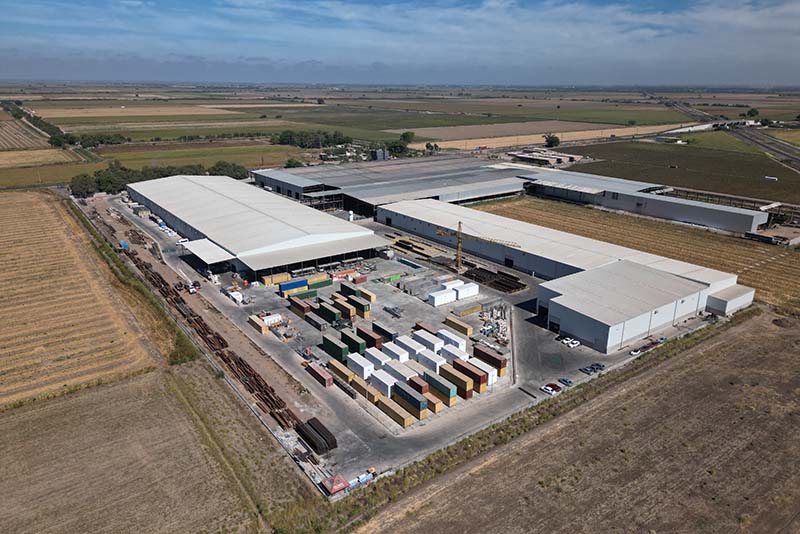
Internalizing much of the production allowed the Religious & Cultural team the ability to optimize the manufacturing specifications. The tolerances required for temple-level finishes were uncommon in the industry but well within the scope of the Haskell Modular chassis.
In its earlier conventional temple work, team members in Haskell’s International Design Center developed the in-depth knowledge of Mechanical, Electrical, Plumbing (MEP) and Fire and Metal Wall Framing BIM detailing necessary to produce shop drawings. The level of design (LOD) required is double what is produced for conventional construction. This ability enabled the team to produce the documentation necessary for manufacturing. With this detailing ability and processes developed by the quality team, the off-site tolerances are tighter and more exact, allowing finishes to be installed at the facility and reducing the time for field installation.
“In its later stages, we get the design to the point that’s location specific,” said Aaron Arbuckle, the program’s Director of Design. “We know where it’s going to go, then we start localizing it, which means we take the building’s MEP systems and adapt them for local, readily available equipment, like large mechanical equipment, electrical voltages, all the things that need to be updated to fit the region and the local standards. We have a catalog of options and any unique design, like the exterior, which is unique every time, and we take those to a full construction document level.”
Haskell’s Culiacán facility is scheduled to produce 200 to 300 modules in 2025, making it one of the most productive modular manufacturers in North America and one of the few using structural steel with metal wall framing. The structural steel frame is more rigid than wood framing, allowing it to travel by boat and with more finishes installed.
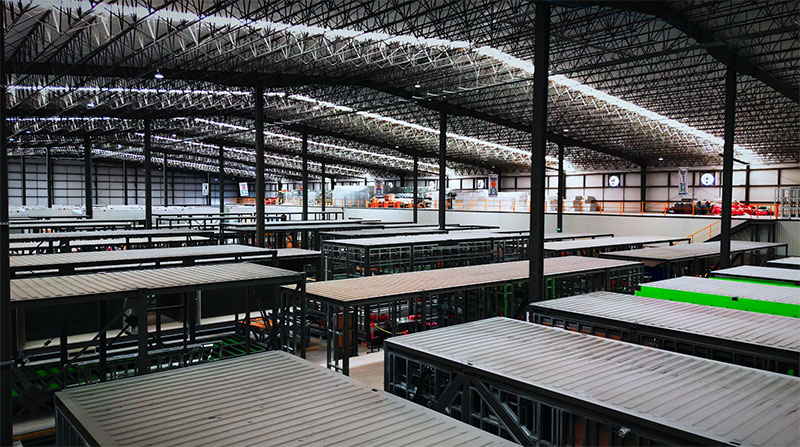
Since it began operation in Spring 2024, Haskell Modular’s manufacturing facility has become a mainstay of the Culiacan community.
“Since Culiacán is in a more remote area in Mexico, the local people didn’t have the expertise, so at the beginning, a lot of the workforce was from outside the region,” said Project Manager Jocsan Ramon, who leads the VMC operation. “Now that’s different. Probably 80% are from the region, as they have been trained and developed by those from the outside. Now they have built a workforce that is local and qualified.”
In addition to temple components, Haskell Modular is producing units that are installed and finished to comprise 20,000- to 30,000-square-foot buildings that can house any combination of a visitor center, a dormitory, apartments, a cafeteria, common spaces and a distribution center. Rudder said it was a natural evolution to envision similar structures serving the higher education and hospitality industries, to name a few.
The Certainty of Integrated Delivery
Forming a deep understanding of each client’s needs, then collaborating and innovating to create the best possible solution, is a constant throughout Haskell’s 60-year history.
So is completely integrated, under-one-roof project delivery.
Unlike any other modular contractor, Haskell’s DMI program fulfills current and prospective clients’ needs from concept to commissioning.
- A one-of-a-kind, full-spectrum team creates intricate high-LOD plans that meet the most demanding of tolerances and complexities.
- A new and highly productive Volumetric Manufacturing facility creates modules that can be shipped anywhere worldwide and arrive ready for installation and finishing.
- Global scale, with a growing international team of more than 400 who excel in the specific trades and requirements for exacting construction, including high-end finish trades, millwork, stone, deco painting and decorative metals.
- Experience adapting to new locations to meet customer needs.
“There are a lot of things that set this program apart – there’ve been thousands of micro-learnings that have enabled it,” Rudder said. “But from the beginning, Haskell has provided project owners with certainty by owning their projects from design through execution and close-out. It’s the same thing we have always done. That integrated execution mentality is in our DNA.”
At Haskell, we take our clients’ goals as our own. We innovate constantly to ensure that we deliver world-class solutions with the best possible effectiveness, efficiency and performance. Contact us to discuss your facilities needs.
Related News & Insights
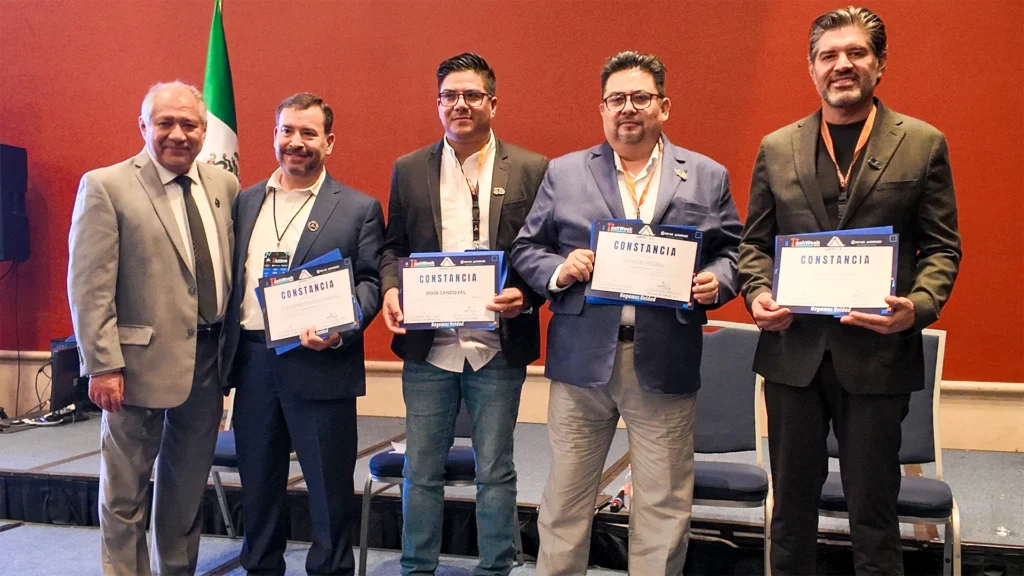
TechWeek Message: Early Integration is Key to Outcomes and Quality
Explore how data centers and modular projects each demand the same discipline: resolve critical details early and carry quality through every phase.
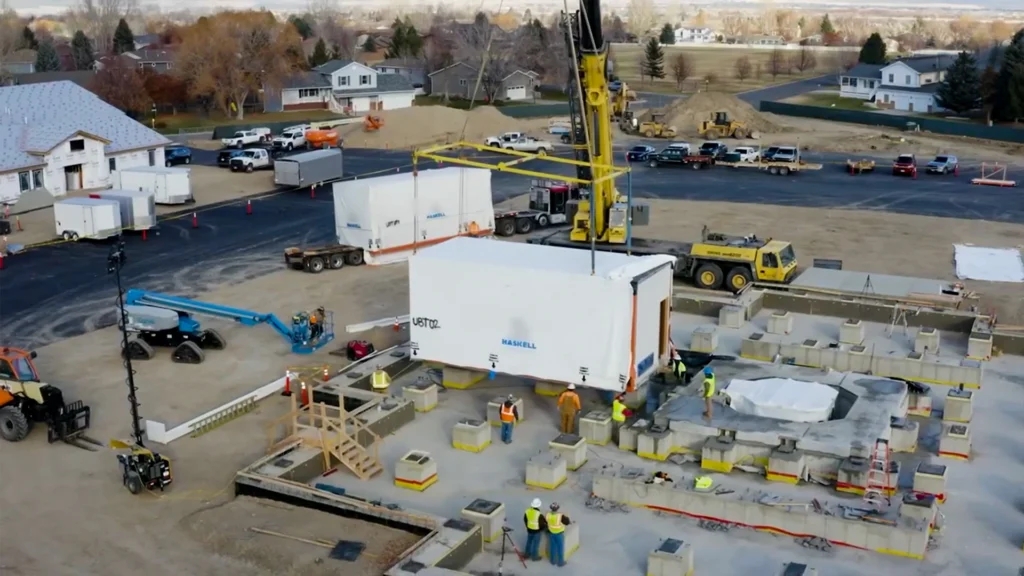
How Programmatic Construction Compounds Improvements, Savings
Standardization creates consistency, but repeated collaboration unlocks greater value. Learn how program optimization differs from project optimization.
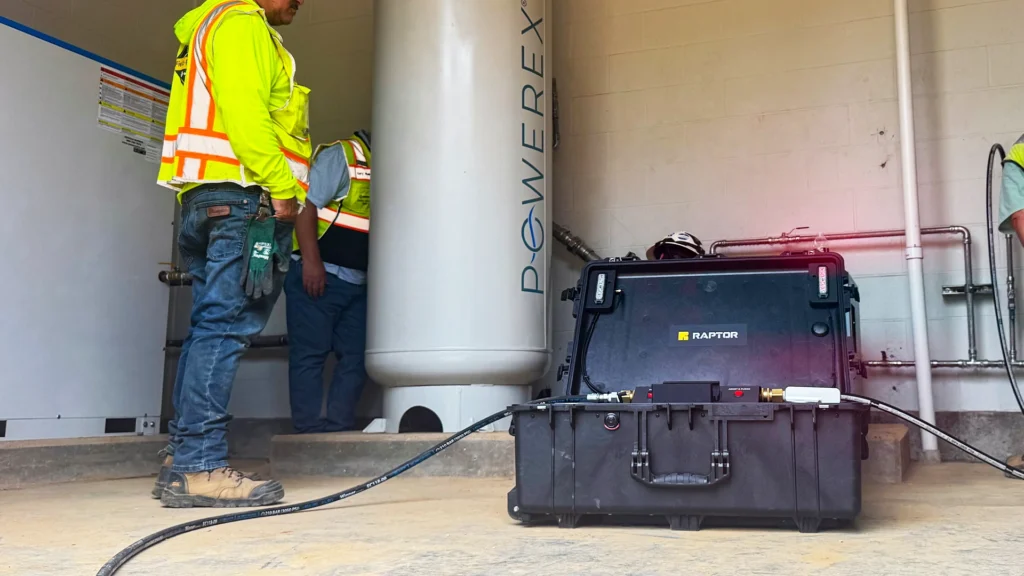
RAPTOR Device Advances to Model 2.5, Completing First Field Test
Learn the latest developments from one of the first Big Pitch winners. Discover how Dysruptek is helping advance safer pressure testing.
Is Modular Construction Right for Your Project?
Learn how to determine if modular construction fits your project and brings value. Discover the dos and don’ts of applying this growing delivery method.