
How Will AI Change the Fields of Engineering and Design?

Learn how Haskell’s four-pillar AI strategy strengthens governance, accelerates delivery and empowers engineers and teams enterprise-wide.
As is the case in virtually every industry and field, conversations and applications related to Artificial Intelligence (AI) are ubiquitous in engineering. What was a promising experimental tool 12 to 18 months ago has become a core component of workflows.
For architectural, engineering and construction firms, adopting AI solutions isn’t optional, but the pace, philosophy and methodology of adoption come with myriad choices.
At Haskell, Dysruptek, the company’s innovation and venture arm, has led AI exploration and pilot testing for years. The lessons learned throughout this process have led to a strategic plan built on four pillars:
- Establish an enterprise AI backbone that gives every team member secure access to tools they can trust.
- Strengthen governance and data protection to keep clients and the company safe.
- Elevate our people through structured workshops, learning pathways and enablement.
- Operationalize AI across business units in a way that supports how each team works.
Engineering Pilots that Took Flight
Kevin Crump, Haskell Chief Civil Engineer , leads the AI Council within Haskell’s Design & Consulting (D&C) team. Along with Dysruptek, the group has identified and validated both near and long-term AI use cases that enhance design efficiency and streamline workflows to deliver superior outcomes for our customers.
“We’ve tried to find the applications using artificial intelligence that really hit the mark in day-to-day workflows,” Crump said. “That’s where a 10-minute workflow turns into a two-minute workflow or a one-hour workflow turns into a five-minute workflow. We’re working to find the type of applications that really make a difference.”
“There is so much noise, chatter about artificial intelligence right now that you really have to be zeroed and locked into what really will matter for Haskell.”
Among the engineering teams, a few solutions have stood out:
- HVAKR automates HVAC load calculations using AI and rule-based modeling to provide rapid analysis and early design recommendations. Mechanical engineers at Haskell are actively piloting the tool. Early feedback suggests strong potential because HVAC load calculations are time-consuming and highly repetitive.
- Viktor provides no-code workflow automation for engineering calculations. Structural engineers used Viktor to replicate and automate calculations that typically take days or weeks. The tool significantly reduced turnaround times, and the team chose to adopt it beyond the pilot. Viktor will be introduced to other engineering disciplines as an example of AI-driven automation that aligns well with existing workflows.
- UpCodes applies AI to building code research, providing natural language search across jurisdictions and enabling designers to locate relevant code sections quickly. Haskell piloted UpCodes with designers, who adopted it immediately. The AI chat functionality and jurisdiction-level detail helped teams answer code questions rapidly, reducing time spent searching through documents. UpCodes is already in use beyond the pilot phase.
Cultural Adoption Progresses
An internal survey of D&C members revealed a favorable view of AI but discomfort, as well.
Crump says in no uncertain terms that AI is not altering the foundational responsibility of engineers. AI accelerates execution and reduces repetitive tasks, but it does not replace professional oversight or decision-making.
His message: Embrace the progression – thoughtfully and intentionally.
“Here’s what everybody should understand: If you’re not using AI, you should be,” he said. “The reason is that somebody else is, and they’ll simply be more productive, more ingenious, more creative. They’ll have less administrative burden, and they’ll simply just get things done day-over-day at a more rapid pace.”
Beyond understanding and accepting third-party applications, D&C team members are increasingly finding ways to integrate AI in regular workflows and processes.
Engineering outputs must be precise, reviewable and accountable. AI is most valuable when embedded directly into calculation and modeling workflows, rather than as a general-purpose assistant.
Using a low-code platform called Cursor, they are beginning to generate custom scripts for the Autodesk environment, augmenting foundational tools such as Revit and Civil 3D.
“What we’re seeing now is the balance of creating and curating internal applications with proprietary applications that are specific to Haskell, built by Haskell team members for Haskell team members,” Crump said.
Stretch Goals
Recently, Crump and Frank Mangin, D&C Operating President, announced a 2026 goal of developing an agentic platform for Design and Consulting.
“The first brick that we have to lay is creating discipline-specific AI custom agents,” Crump said. “These would be custom agents curated and trained by subject matter experts, like chief engineers and senior engineers, on the most advanced literature, codes, standards, guidelines and white papers.”
Once developed and populated, the discipline-specific agents would be interconnected and interfaced with agents trained on project-specific information, thereby synergizing all teams and relevant information into a real-time, AI-powered knowledge base that would optimize the quality and timeliness of each project.
So the journey continues toward the charge stated in the company’s enterprise AI strategy.
“The goal is to improve the way our people work, protect our clients and make informed decisions with more clarity and less friction. The companies that thrive in the coming years will be those that move with intention, encourage learning and align technology with purpose. With this strategy, Haskell can do exactly that. As an integrated architecture, engineering and construction firm, Haskell can do exactly that.”
Related News & Insights
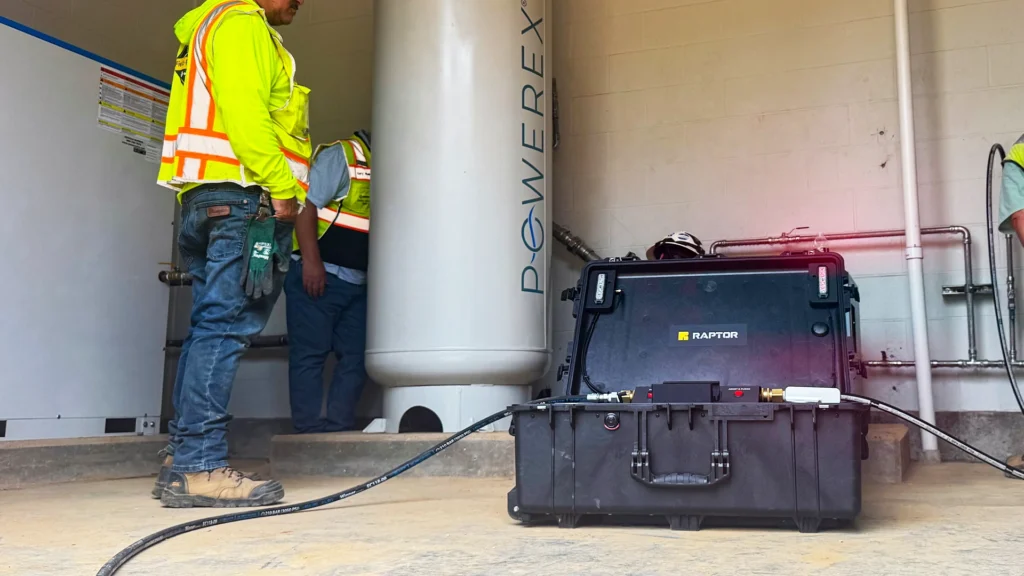
RAPTOR Device Advances to Model 2.5, Completing First Field Test
Learn the latest developments from one of the first Big Pitch winners. Discover how Dysruptek is helping advance safer pressure testing.
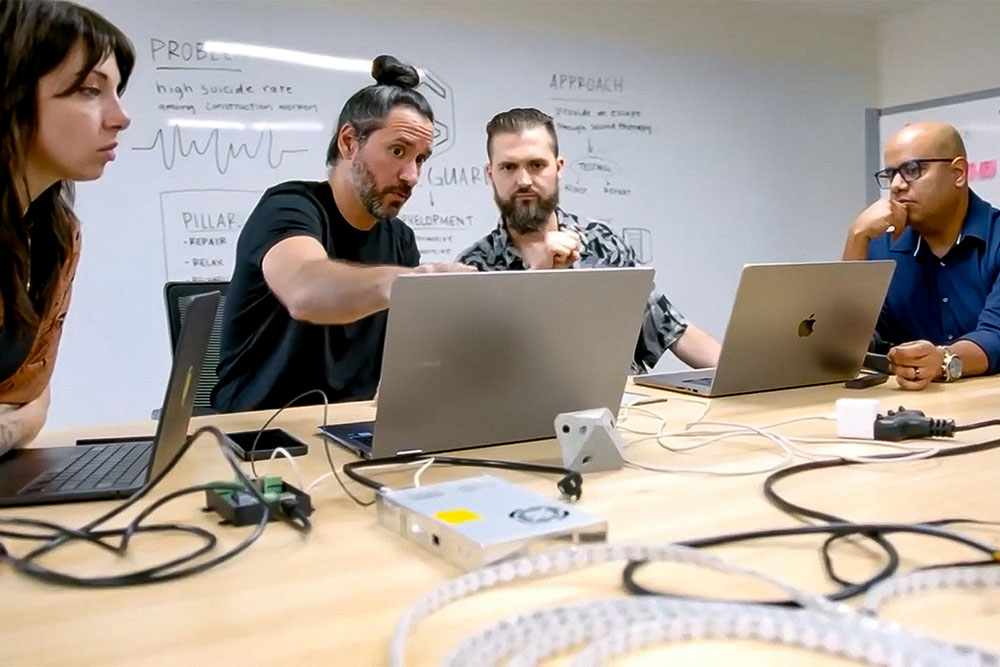
Castano Group’s Big Pitch Production Brings Home an Addy Award
Learn how this frequent Haskell collaborator creates award-winning projects and watch the Big Pitch video that earned.
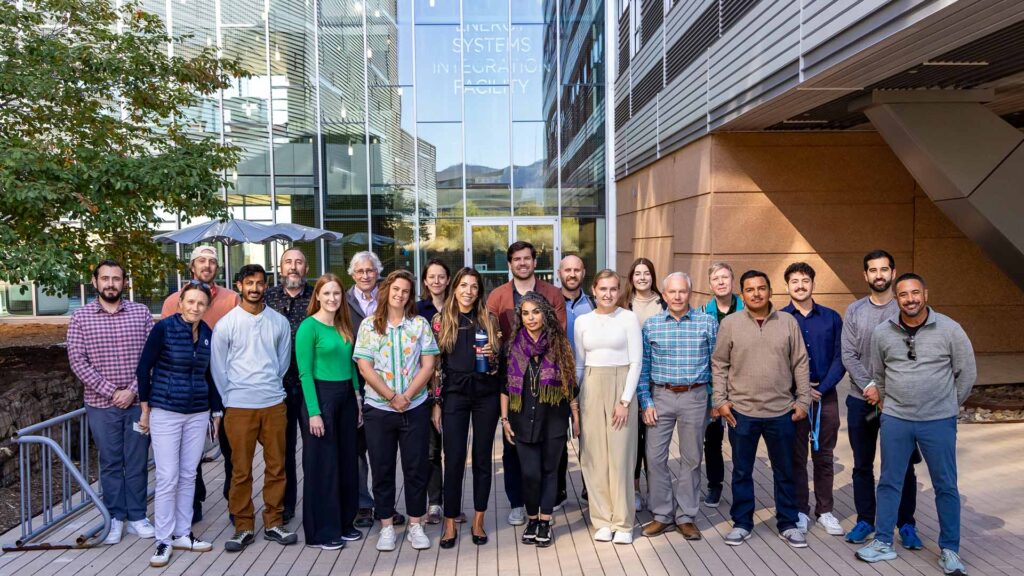
Haskell to Push Modular Energy Integration in Wells Fargo Incubator
Learn how Haskell and seven other cohort members will leverage expert support to advance adoption strategies for cutting-edge energy solutions.
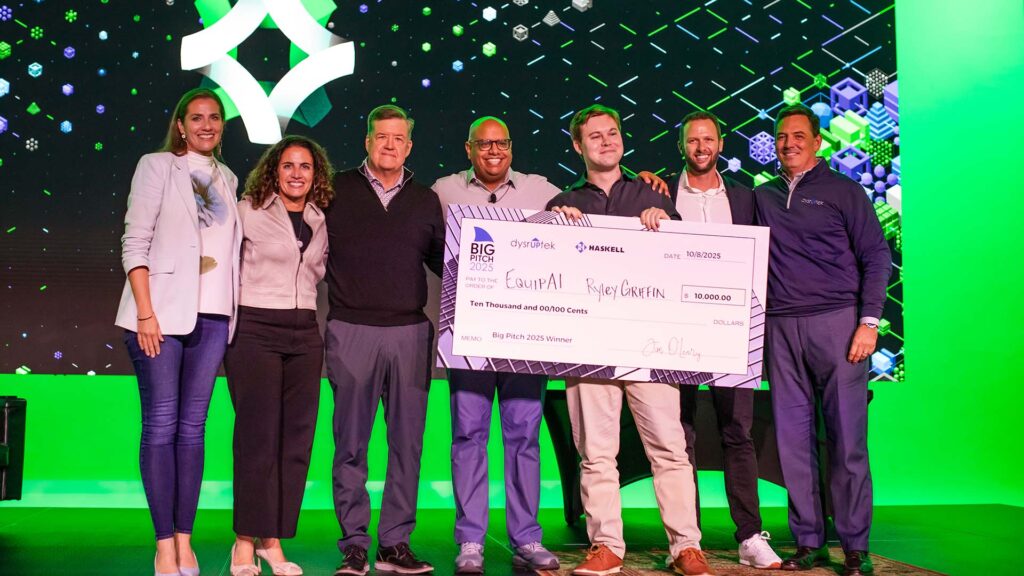
Big Pitch 2025: Highlighting AI and Sustainability in Construction
Explore how collaboration and creativity drive innovation at Haskell. Learn how AI is enhancing sustainability tracking to improve project performance.