
Enhancing Project Safety and Efficiency with Innovative Technology

Discover how simulation, emulation, virtual reality and BIM technologies enhance project safety and efficiency throughout design and construction.
Technology serves as a catalyst for improvement in nearly every industry, and construction is no exception. In today’s world, companies like Haskell are using innovative technology — including Simulation, Emulation, Virtual Reality, and Building Information Modeling (BIM) — to improve safety and efficiency across all architecture, construction, and engineering projects.
System Analytics: Simulation, Emulation & Virtual Reality
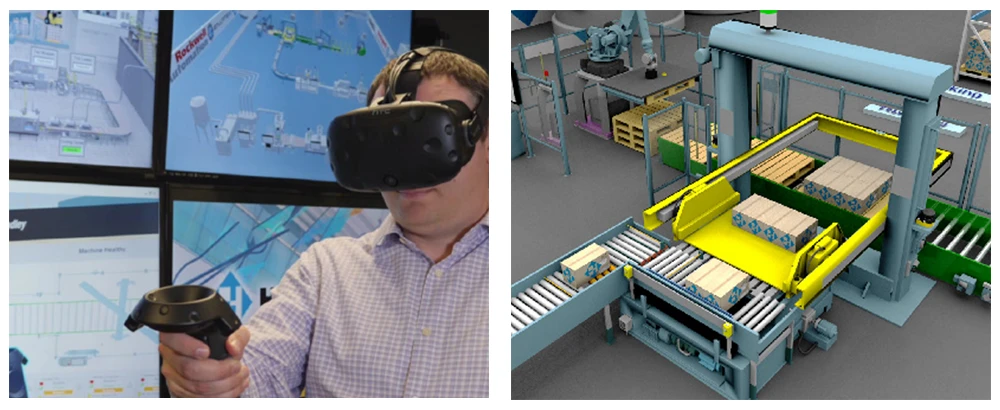
Virtual Reality (VR) immerses the user into a 3D model with the capability of virtually touring a new or existing facility, interacting with real Human-Machine Interfaces (HMIs), and seeing facility operations function long before startup.
A Digital Twin (or “emulation”) is a virtual 3D model of a packaging system where everything is controlled by real Programmable Logic Controllers (PLCs) and HMIs. These PLCs execute logic the same way they would in the factory, receiving input from sensors in the model and delivering instructions to machines, conveyors, and other automated equipment.
VR technology can integrate with 3D BIM models, render HMIs within the model, and thoroughly test PLC programs using extensive scenarios. By foreseeing design faults and clashes, saving production time and resources, and training operators long before the first day of production, this innovative technology delivers tremendous value to our clients.
Building Information Modeling (BIM)
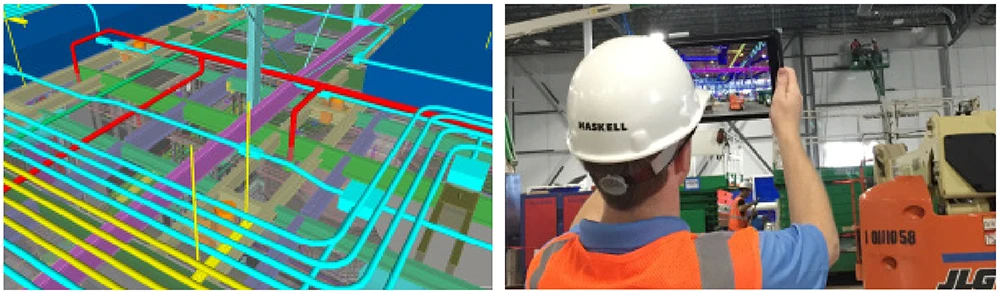
Where contractors and subcontractors once relied on 2D drawings to communicate design intent, fully coordinated and constructible 3D models now provide precise installation information. These models easily translate the engineering and architectural needs of a project to the subcontractors responsible for execution. The additional level of detail reduces rework and information requests, allowing subcontractors to work more efficiently — reducing risk, saving time, and lowering overall project costs.
Additionally, BIM offers new opportunities to enhance safety for craftsmen and women. Safety is always a top priority at Haskell, and BIM allows subcontractors to pre-fabricate large portions of work offsite within their own controlled fabrication environments instead of building components in the more complex and unpredictable jobsite environment. This modular approach also enables production facilities to expand with minimal interruption to existing operations.
We also leverage 3D laser scanning technologies for rapid as-built measurements to further reduce risk, ensuring that construction tolerances are met and that prefabricated components align accurately with existing work.
Advancing Your Project with the Latest Technology
Across the industry, technologies such as BIM, Virtual Reality (VR), Augmented Reality (AR), 3D Laser Scanning, and Aerial Imaging with Drones are transforming the landscape of architecture, construction, and engineering. At Haskell, we are embracing these innovations and the advantages they provide to deliver safer, faster, and more efficient projects for our clients.


Written by Matt Williams
Related News & Insights
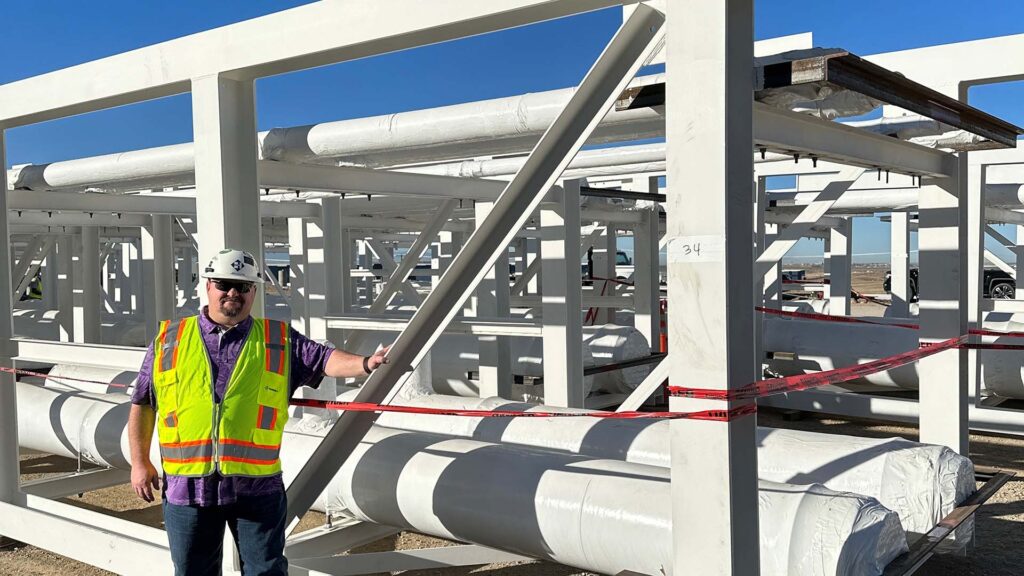
Fabrication, Sales and Service Underpin for Eric Jensen’s Leadership
Learn how the Haskell Superintendent's technical depth and people skills make him 'the glue that keeps it all together' on complex projects.
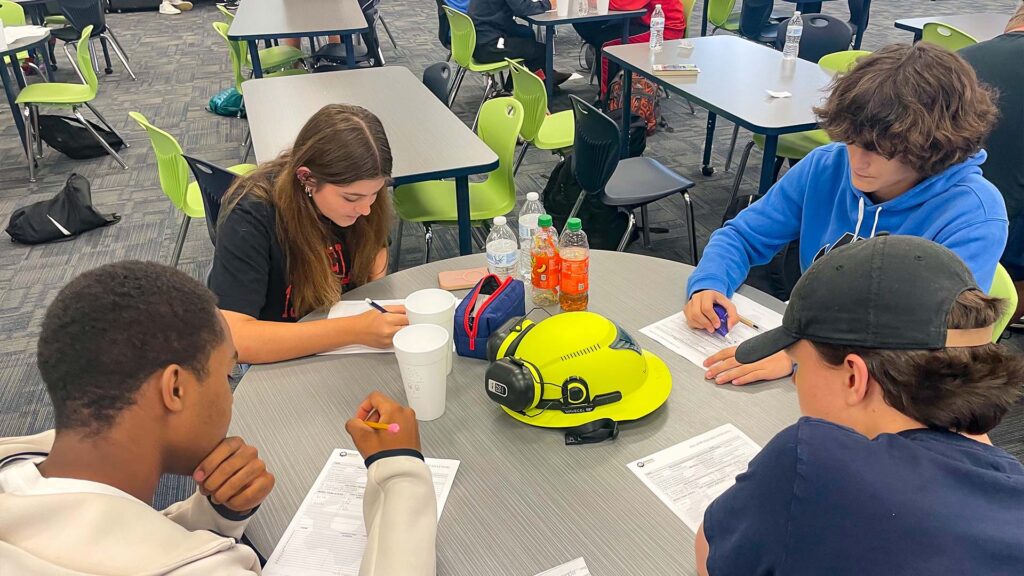
Haskell Partners with NEFBA to Expand Construction Trade Education
Learn NEFBA's vision for a state-of-the-art home for the next generation of skilled labor. See how Haskell invests in the future construction workforce.

BIM Leader Leo Dino Buera Honored with Living the Values Award
Explore how Buera has helped build Haskell Philippines, playing a collaborative role and successfully coordinating global BIM integration initiatives.
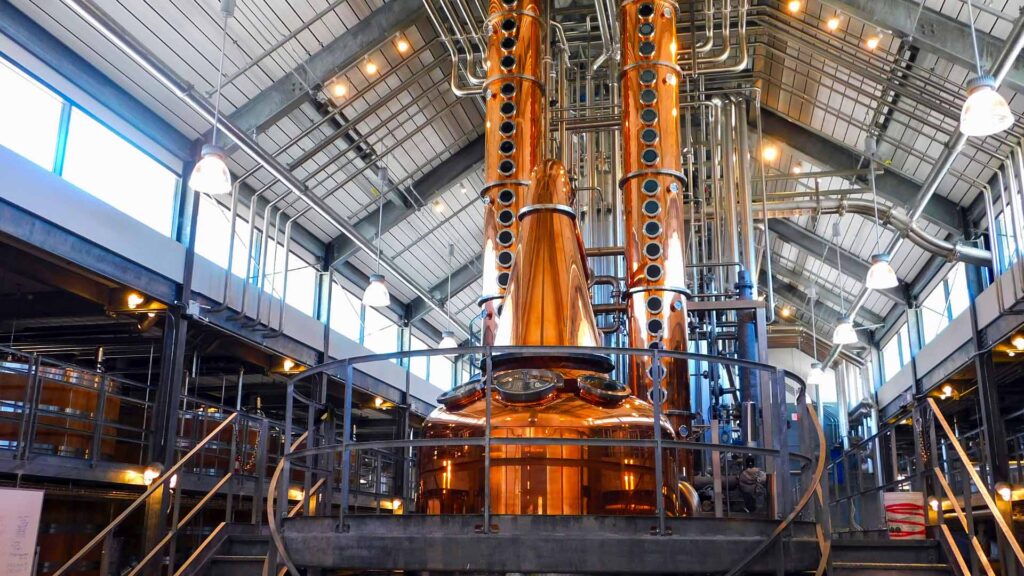
Integrated Expertise That Drives Results in Beer, Wine and Spirits
Learn how, with all disciplines under one roof, Haskell delivers highly complex, sustainable, turnkey beverage facilities with speed and certainty.