


Haskell is hiring! Join the St. Louis team as a crucial 3D resource, providing support and guidance for all architectural and engineering projects.
If you are an expert in the virtual design world and would like to join a fast-growing and high-performing real-world team, Haskell’s opening for a Building Information Modeling (BIM) Specialist in its St. Louis, Missouri, office is a prime opportunity.
The BIM Specialist serves as a key 3D resource for Haskell’s St. Louis architectural and engineering teams, existing at the BIM nexus of all their designs. Extensive knowledge in the Autodesk virtual environment, particularly Revit and BIM 360, is a prerequisite.
Haskell is a pioneer in design-build project delivery and is widely known for innovation. It has leveraged BIM and Virtual Design and Construction (VDC) extensively for years, garnering national recognition for its paradigm-shifting use of the technology to expedite delivery of Norwegian Cruise Lines Cruise Terminal B at Port Miami.
That innovative spirit makes the BIM Specialist opportunity special, said Mike Winkler, St. Louis Director of Engineering
“What makes it exciting is that they have a direct voice in how things are done and direct involvement in how we set our standards and how we perform things,” he said. “We’ve made advances that have proliferated across the entire organization. This position holds both responsibility for and respect from the design staff. We can't do it without them...”
Winkler outlined three equally important parts of the role.
First, this is a support role in which the successful candidate will manage designers’ virtual environments, including project setup, standards review and help with direction or modification to ensure that designs are done correctly.
“From a design standpoint, virtually every project goes through this person,” Winkler said. “It's very much a support role, and the right person will both knowledgeable and be good with people.”
Second is a mentoring component. The BIM Specialist trains new hires and works with CAD coordinators in each design discipline, typically bringing them together biweekly to share new information and best practices.
Finally, there is the system administration role, performing key maintenance on files, ensuring adherence to Haskell standards, preparing designs for customers and closing them when they’re complete.
“This person is somebody who understands not just how to draft, but also how to administer the system,” Winkler said. “It's the difference between being a designer and being a lead engineer. A lead engineer has to look at it from the 10,000-foot view to make sure that everything is all working together. That's where this role is. It's an all-encompassing BIM role.
“It’s an all-encompassing role that comes with a lot of responsibility. The key thing is that the person has the ability to set the tone for how we do our work across the industry, setting and maintaining standards.
In addition to providing a highly collaborative and fast-paced environment, Haskell operates with the direction of six strategic pillars, the first of which is to “Provide Team Members the BEST Job of Their Lives.” It offers a robust benefits package that includes a 401k match and an Employee Stock Ownership Plan (ESOP), which creates stock ownership for every full-time team member.
Related News & Insights
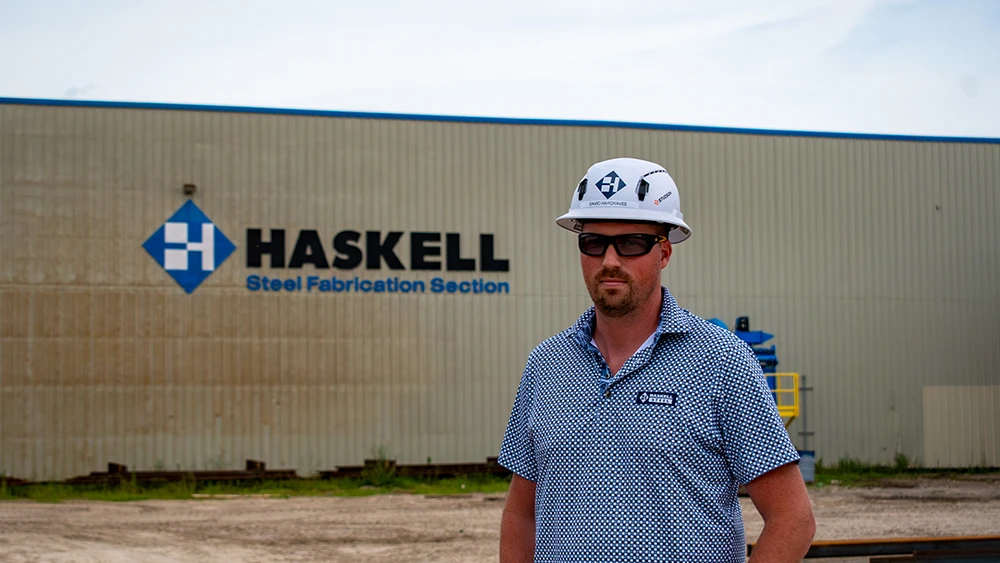
A Golden Hammer and a Coin-Toss Mark the Start of a Career
Learn how high school carpentry empowered David Hargraves. Discover the history of Haskell Steel’s Production Superintendent.

Visionary Leadership: Crafting Tomorrow’s Government Environments
Discover how Tomra Russell's unique perspective as a Navy spouse and design expert fueled her design success and led to a role as Vice President.
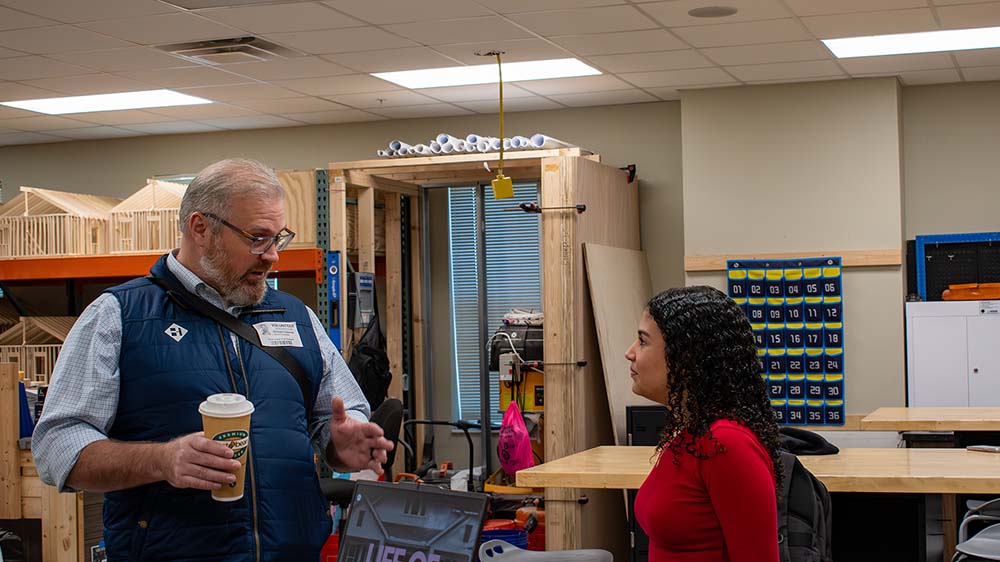
Students Excel Where Design Education, Hands-On Construction Meet
Partnerships with NEFBA and Professional Women in Building immerse students in real projects. See how mentorship accelerates leadership growth.

How Student Samantha Wuertter is Design-Building Her Career Path
Learn how Tocoi Creek High School’s Academy of Innovation and NEFBA’s PWB are helping this student turn classroom concepts into jobsite-ready skills.