

AI-Enabled Material Handling Automation in Pet Food Facilities

Learn how engineered material flow and AI-enabled automation can cut manual touches, speed dock-to-truck loading and support scalable growth.
Across the pet food industry, material handling is often one of the most overlooked drivers of operational performance. Many facilities still move finished goods from palletizing to truck loading with forklifts, staging lanes and labor-intensive workflows that erode throughput, inflate labor costs and introduce variability into outbound logistics.
This is where measurable gains can be found.
Today’s AI-enabled automation, including robotic palletizing, autonomous mobile robots (AMRs), intelligent conveyor systems and warehouse execution software, allows food processors to rethink material handling as an engineered system rather than a collection of disconnected movements.
Haskell designs material-handling operations into the production ecosystem, not as an add-on. It starts with value-stream analysis, mapping the product flow from packaging through shipping to identify bottlenecks, touchpoints, dwell time and labor dependencies. From there, our System Analytics team evaluates automation opportunities based on real operating data, line rates, SKU mix, changeover frequency and future capacity targets.
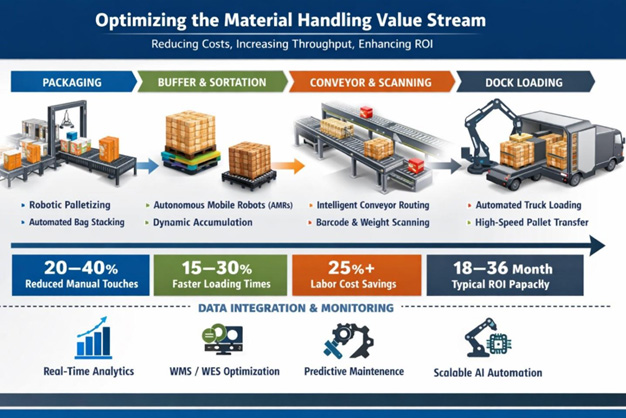
Instead of automating everything, Haskell’s teams engineer systems that balance capital investment with operational return. Typical outcomes when material handling is designed holistically include:
- 20 to 40% reduction in manual touches per pallet
- 15 to 30% improvement in dock-to-truck loading speed
- Labor reductions of 25% or more in finished goods handling
- Improved overall equipment effectiveness (OEE) through elimination of downstream congestion
- Measurable safety improvements through reduced forklift traffic
- Payback periods commonly in the 18-to-36-month range, depending on scope and scale
Just as important, these systems are designed to evolve. Infrastructure layouts, controls, architecture and data pathways are planned so future AI and robotics can be integrated without ripping out yesterday’s investment.
“Material handling has to be engineered around production reality,” said Todd Noethen, Haskell’s Senior Director of Material Handling Technology. “We design systems that optimize flow today while laying the foundation for future automation. That means integrating controls, data and physical infrastructure so clients can scale throughput, reduce labor dependency and protect ROI as technology advances.”
For pet food manufacturers facing higher labor costs, tighter shipping windows and growing SKU complexity, modern material handling becomes a strategic lever. When designed with engineering rigor, it delivers faster throughput, lower operating cost and greater resiliency while positioning clients’ facilities to adopt next-generation automation with confidence.
Contact Haskell’s System Analytics team for the nuanced analysis it takes to leverage data and draw informed conclusions to support real-world decisions across a wide variety of industries.
Related News & Insights
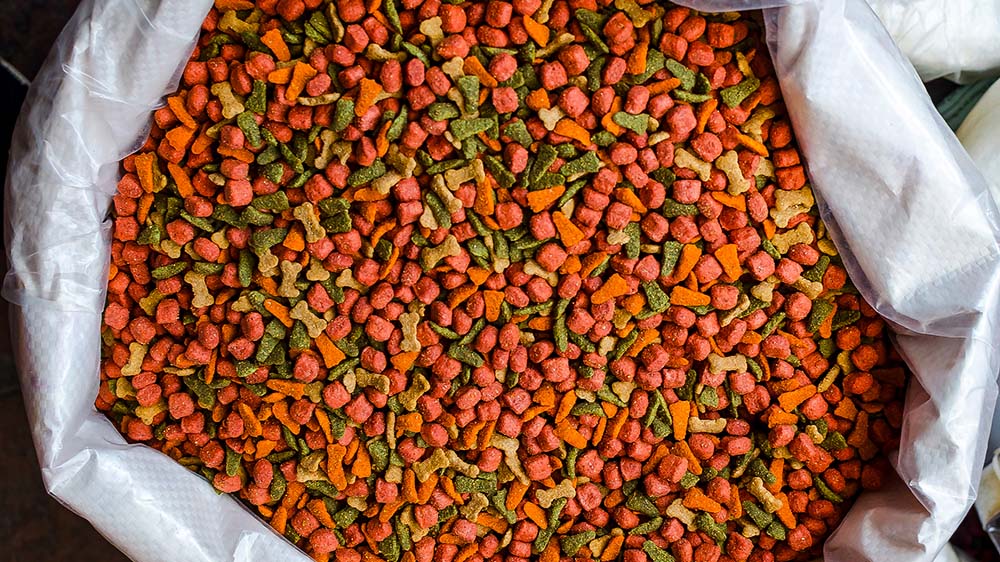
Natural Colors and Flavors: The New Standard in Pet Food
Learn how the industry is moving quickly to replace artificial ingredients and what manufacturers must do to maintain quality, compliance and throughput.
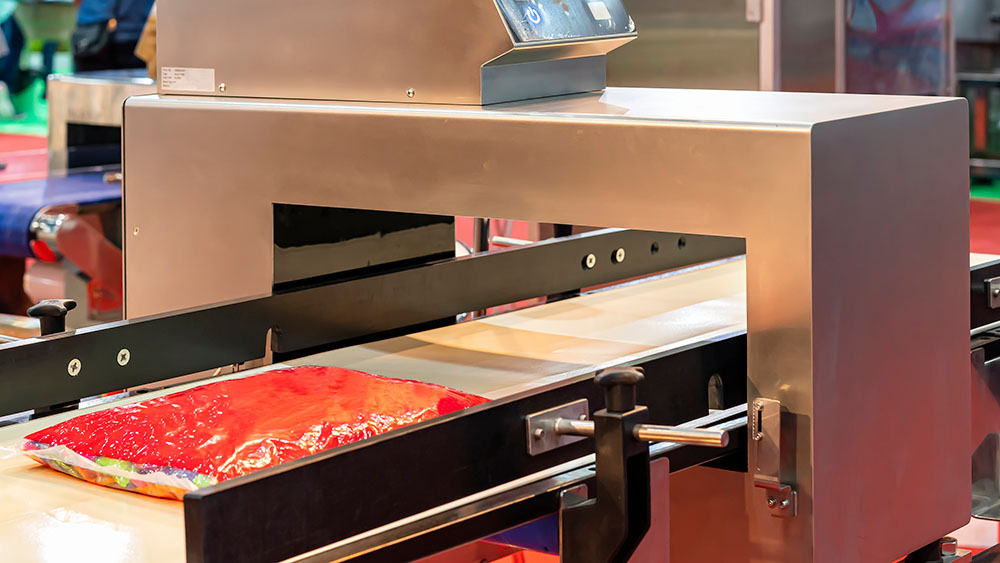
How to Control Glass Hazards in Food Manufacturing
Learn how to reduce glass contamination risks through prevention, inspection and maintenance best practices. Protect food safety and product quality.
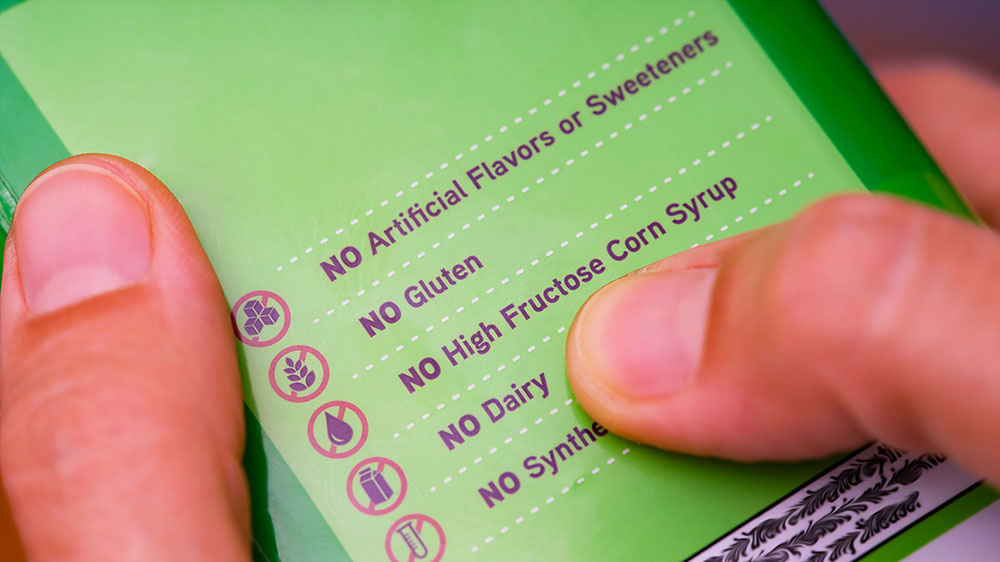
The Real Cost of Moving from Artificial to Natural Flavors and Colors
Regulatory scrutiny and consumer expectations make economic planning essential, not optional. Learn how to build a long-term reformulation roadmap.
Fabrication, Sales and Service Underpin for Eric Jensen’s Leadership
Learn how the Haskell Superintendent's technical depth and people skills make him 'the glue that keeps it all together' on complex projects.