

Micro-Hospitals Offer a Scalable Path for Rural Access

Learn how micro-hospitals differ from traditional facilities and why community education can shape adoption. See Northeast Georgia Health System’s approach; Lumpkin County micro-hospital.
Editor’s note: This article was originally published as “Micro-Hospitals Can Be Successful with Community Education and Engagement” in the March/April 2026 edition of the Society for Healthcare Strategy and Market Development (SHSMD) Member Newsletter.
Micro-hospitals, or small-scale health care facilities, have become a viable option for health systems serving areas that may not have the population needed to sustain larger medical centers. Although the decision to open a micro-hospital should engage multiple stakeholders and be part of a health system’s strategic plan, marketing and communications professionals play a vital role in the success of these facilities, helping to educate the local community and clinical staff about their benefits.
That was a key message of a session titled “Building Bridges: Micro-Hospital Development as a Lifeline for Rural Healthcare,” held during the SHSMD Connections Conference last October.
“[We often hear] people talk about a micro-hospital being just like a smaller version of a big hospital, that’s like saying pediatrics is just a small adult,” explains Kevin Meek, Vice President-Advisory Services, Haskell. “It’s a completely different operating program in a micro-hospital.”
In the session, Meek joined Kevin Matson, Vice President, Regional Hospitals, Northeast Georgia Health System (NGHS), who worked with Haskell after it had purchased a small, closed hospital in their region and converted it into a micro-hospital called Northeast Georgia Medical Center Lumpkin.
Micro-Hospital Defined
Micro-hospitals have emerged in some markets across the United States to provide care where demand isn’t sufficient to sustain larger facilities.
They are significantly smaller than even smaller community hospitals, typically less than 50,000 square feet in total, and housing fewer than 20 beds, according to Meek. Still, they are open 24/7 and offer many of the same acute and emergency services as full-scale hospitals, including:
- Acute care
- Emergency care
- Pharmacy
- Diagnostic imaging
- Abs/phlebotomy
- Outpatient surgery
- Wellness services
“A micro-hospital can be built into a developing community and eventually expand into a full-service community hospital,” as needed, Matson notes.
A Micro-Hospital for Lumpkin County
NGHS, which is a not-for-profit organization, operates five hospitals that collectively accommodate more than 1.6 million patient visits annually. Collectively, the system has 1,002 licensed beds and employs.
With more than 227,000 emergency visits per year, NGHS is the “third-busiest ER in the state of Georgia,” Matson said. “We serve about 1 million lives across 19 counties.”
That includes Lumpkin County, a largely rural area that saw one of its key hospitals, Chestatee Regional Hospital, close in July 2018 after nearly 50 years in operation. NGHS purchased the property soon after the closure and decided to open a new facility there.
However, Lumpkin County has an aging and declining population, which limits the viability of a full-service hospital.
“We started to look at opportunities around [reopening],” said Meek, a former registered nurse who previously worked as a hospital chief operating officer. “But we needed to look at where the needs and gaps are within that community.”
Working with the Haskell Company, NGHS evaluated several options, including an ambulatory surgery center (ASC) and a stand-alone emergency department (ED). However, based on an analysis of existing health facilities in the area, including ASCs, urgent care centers and physician practices, a micro-hospital was determined to be the best option.
“Haskell’s evaluation showed us the final product probably needed to be different from what we otherwise would have turned this into,” Matson said. “The community loved that [Chestatee Regional]. It had garnered a lot of support from the local community, and a lot of personal stories built around that place.”
The new micro-hospital features 16 beds, expandable to 32 (while maintaining a 1-to-4 nurse-to-patient ratio), four ORs (expandable to eight), and an ED. It also has a “welcoming, community feel” at the main entrance and lab testing and imaging facilities located near the front for outpatient access. A helipad is located outside the ED for patient transfers to the NGHS magnet hospital in Gainesville only.
The total construction cost was $69 million. The site “is built for expansion, both in terms of inpatient beds and the ED,” Matson said. “In fact, we’re already looking at horizontal expansion by adding additional ORs.”
The Need for Education
As important as all the bells and whistles of the new Northeast Georgia Medical Center Lumpkin are, however, educating the local community about what a micro-hospital is, and why NGHS wasn’t opening a full-service facility on-site, was key. And that’s where NGHS marketing and communications entered the picture.
Working with Haskell, the health system hosted 14 town halls within a 25-mile radius of the site, and each had more than 100 attendees.
“Even though we didn’t provide all things to all people, we wanted to ensure the community that their outcomes would not be jeopardized [by the micro-hospital model],” Meek said. “We had to teach them about what continuum of care would look like and how we would transfer patients forward as needed.”
That community engagement was “so strong” that it became a significant benefit to the project, according to Matson. NGHS highlighted the benefits of the new facility, including the ability for patients to stay close to home and for families to participate in care delivery.
“Word of mouth within the community is better than any billboard,” Matson said. “Because of our regular town hall meetings, we were able to find out from the community what they needed or wanted in a new hospital. The result has been a tremendous success.”
Contact Haskell’s Healthcare Consulting and Design teams to evaluate micro-hospital options and plan a right-sized facility strategy for your system.
Related News & Insights
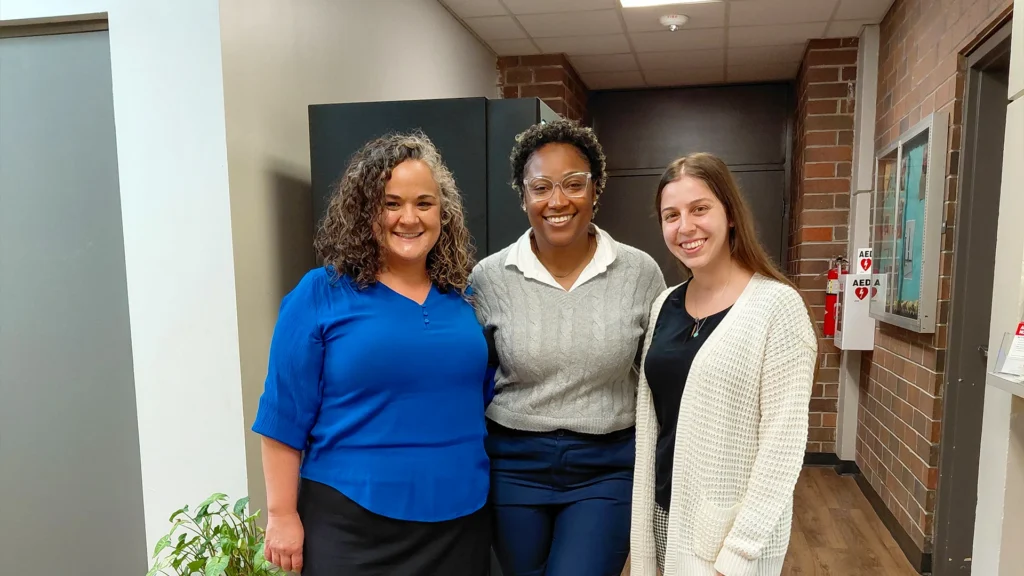
Healthcare Designer Helps Launch Jacksonville’s The SPOT
Explore Kristen Argalass's work making The SPOT an accessible place for connection and mental health support through a community-based model.
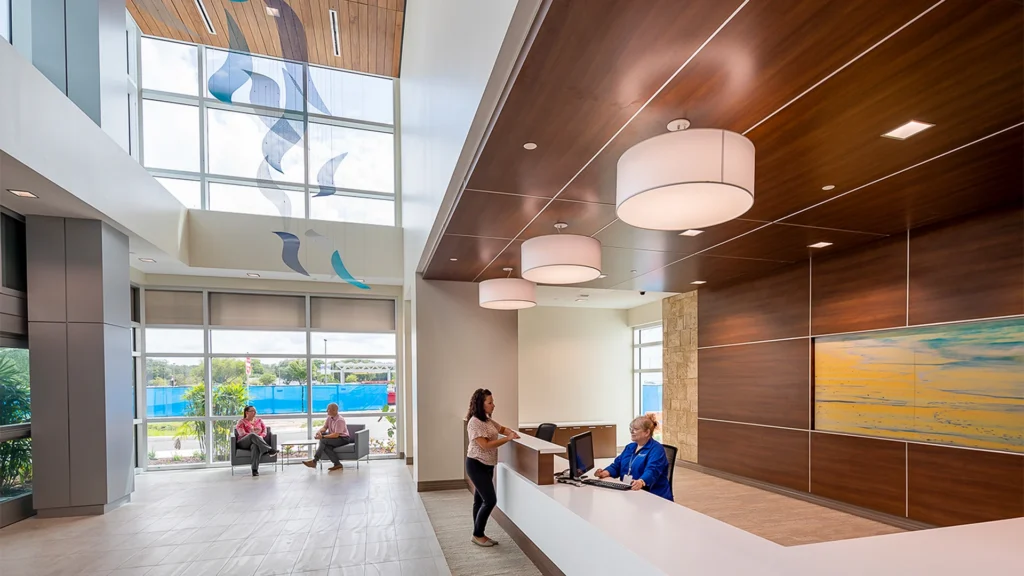
Healthcare Security Works Best When Planned from the Start
From egress planning to AI surveillance, learn how proactive healthcare security design improves safety without compromising patient experience.
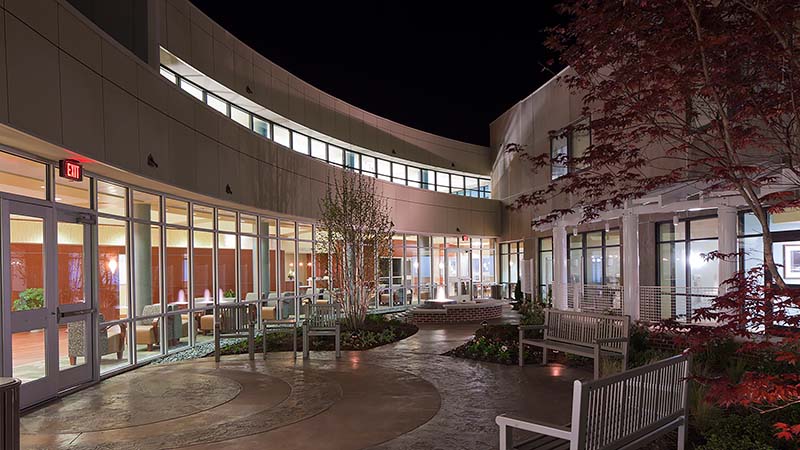
The Human Experience is Vital in Shaping Good Healthcare Design
Each facility is unique, but some factors related to patient, staff and family wellbeing consistently offer opportunities to optimize the healing environment.

Case Study: Design Features Help Reduce Potential for HAIs in ICU
In a recently completed ICU project, Haskell designers included numerous measures to reduce the risk of contamination and post-discharge infections.