

Healthcare Security Works Best When Planned from the Start

From egress planning to AI surveillance, learn how proactive healthcare security design improves safety without compromising patient experience.
When stakeholders are conceiving and designing healthcare facilities, security is rarely top of mind. But for optimal results, it should be.
Coordinating patient and visitor wayfinding, efficient staff circulation and life-safety egress can be challenging. Adding security zones and access control after the fact adds another layer of complexity, if not confusion. On the other hand, careful planning early in a project can improve passive security arrangements that minimize the need for active security measures.
Planning to Wait and Leave
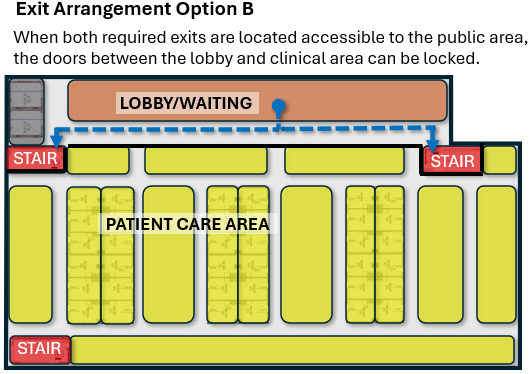
A common example is the location of emergency exits relative to public lobbies and patient waiting areas. Hospital lobbies where the occupant load exceeds 49 or the distance of common egress exceeds 75 feet require two exits. Often, one or both of those emergency egress paths must go through the clinical space to reach an exterior door or exit stair.
Typically, this egress setup is based on a design that stresses efficiency by maximizing clinical space while reducing the area used for circulation. However, this comes with trade-offs.
Because life safety and building codes do not allow locked doors in a path of egress, either the doors have no access control or delayed egress hardware is added to doors to slow uninvited individuals trying to enter the clinical area. Without access control, clinical staff are constantly interrupted by the public wandering around in the clinical area. With delayed egress, staff are interrupted by alarms that must be turned off manually.
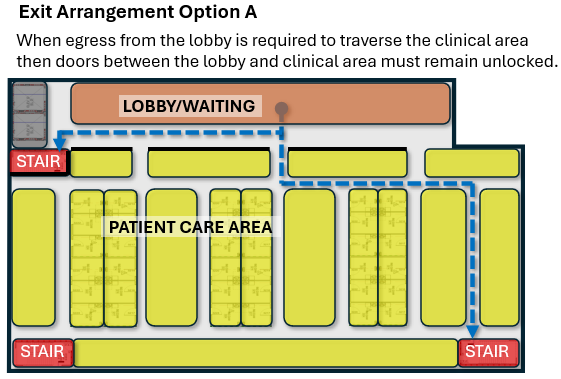
Conversely, if addressed early in the design phase, exits can be arranged so that egress from public spaces does not travel through clinical areas, the necessary doors can be locked, minimizing disturbance of clinical staff or unsettling security alarms.
Considering data-driven design for active shooter defense is another area in which proactive design can reduce costs. Most often, the transparent parts of a building are targeted. Instead of using costly bullet-resistant opaque walls and glazing, some facilities simply raise window heights so sight lines are obscured, eliminating the need to protect opaque walls.
Similarly, glass entrances can be protected from vehicular intrusion by installing bollards. Bollard systems can be designed for different levels of protection, but all should be planned with foresight to accommodate future imaging equipment moves or spacing for everyday access for smaller deliveries or bariatric-sized wheelchairs.
Security Choices
While some areas, such as pharmacies, medication storage, NICU / PICU, and behavioral health areas must adhere to regulations, health systems generally determine the level of access control for public, patient and staff areas.
Hospital security typically includes active measures such as video surveillance and on-site security staff. Some facilities have security checkpoints with metal detectors at public entrances manned by full-time security officers. Even the presence of non-security staff at reception areas can provide the appearance of security.
Security personnel represent the most basic and effective security. The simple presence of uniformed guards deters most unwanted activity. Security staff are typically positioned full-time in high-traffic areas, such as main entrances and emergency departments, and can quickly identify and de-escalate potentially dangerous situations. However, training and salary costs make it difficult to justify staffing smaller off-site outpatient facilities.
Technological solutions
Healthcare facilities have relied on security cameras for decades, and their use continues to expand.
Technology increasingly assists security staff in monitoring by recognizing people and vehicles and automatically changing monitor views to cameras with activity of interest. Additionally, license plate readers and facial recognition can quickly alert security staff to known dangerous individuals entering the campus. AI improvements will continue to advance the effectiveness and efficiency of these technologies.
Depending on the facility’s location and the local culture, the obvious presence of security can be either disturbing or comforting to visitors. Technology can be discreet, such as small cameras and hidden, staffed monitoring rooms, or intentionally conspicuous, such as metal detectors at entrances and blue-light telephone stations in parking areas.
There is no perfect security solution for all healthcare facilities. Each provider has unique priorities. NFPA 3000 Active Shooter/Hostile Event Response Program can help guide any facility in developing protocols. As mentioned in NFPA 3000, door locking arrangements also need to comply with the NFPA 101 Life Safety Code. To implement these security strategies in the built environment while balancing code requirements and desired aesthetics, include all interested parties throughout the design process of each project.
Contact Haskell’s Healthcare Design team to discuss options for safe and patient-friendly facilities.
 About the author: Kevin Waitkus, AIA, is a Senior Architect who brings a big-picture approach to design, ensuring consistency from concept through completion. He specializes in site-specific architecture that responds to local context and environmental conditions. With 20 years of experience in healthcare design, he leads quality assurance efforts and improves project documentation through Haskell’s Quality Improvement Program.
Related News & Insights

Healthcare Designer Helps Launch Jacksonville’s The SPOT
Explore Kristen Argalass's work making The SPOT an accessible place for connection and mental health support through a community-based model.
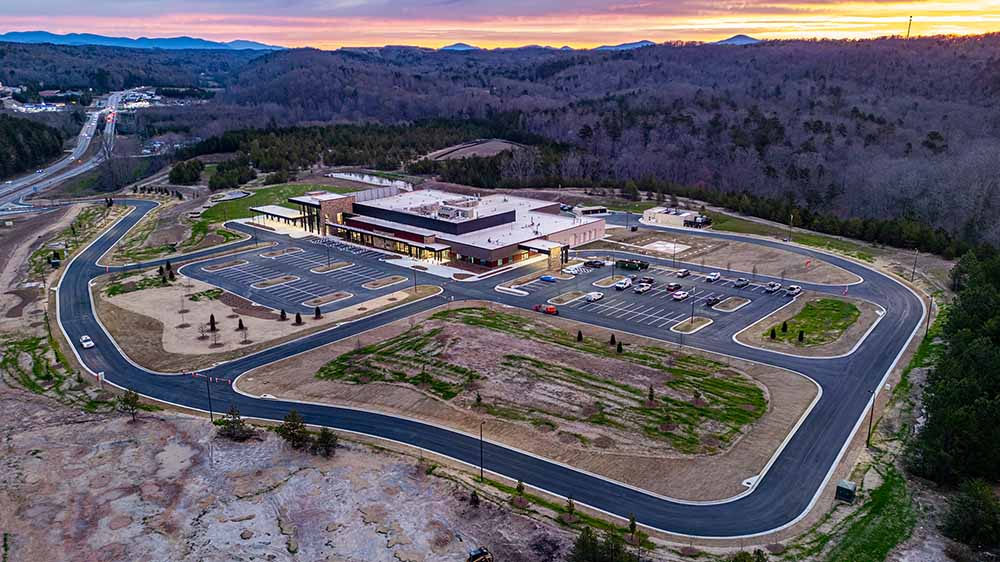
Micro-Hospitals Offer a Scalable Path for Rural Access
Learn how micro-hospitals differ from traditional facilities and why community education can shape adoption. See Northeast Georgia Health System’s approach; Lumpkin County micro-hospital.
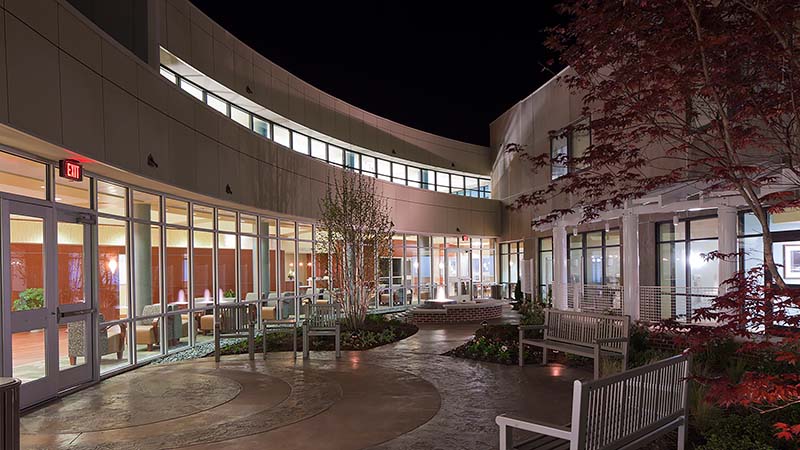
The Human Experience is Vital in Shaping Good Healthcare Design
Each facility is unique, but some factors related to patient, staff and family wellbeing consistently offer opportunities to optimize the healing environment.

Case Study: Design Features Help Reduce Potential for HAIs in ICU
In a recently completed ICU project, Haskell designers included numerous measures to reduce the risk of contamination and post-discharge infections.