

AquaNereda Brings Process Intensification to Wastewater Facilities

Project use cases show how innovative compact biological treatment systems can help utilities increase capacity, simplify operations and reduce lifecycle costs.
As utilities work to deliver reliable service amid aging infrastructure, rising costs and tightening regulations, the water and wastewater sector is shifting toward more efficient, resilient and cost-effective treatment solutions. That shift is changing how facilities are designed, built and operated.
The American Water Works Association’s “Water 2050” vision reflects many of the same priorities, emphasizing resilience, innovation, affordability and sustainability. Across the industry, utilities are exploring approaches that support those goals while addressing the practical realities of project delivery.
One of the most significant changes is the shift toward process intensification, with utilities increasingly adopting compact systems that maximize treatment performance, simplify operations and reduce lifecycle costs.
Rethinking Biological Wastewater Treatment
Most municipal wastewater treatment facilities in North America rely on conventional activated sludge (CAS) systems. These systems use suspended microorganisms to break down organic material during biological treatment. While effective, they typically require multiple tanks and large treatment basins to support the various biological processes.
An innovative, newer approach, the AquaNereda® Aerobic Granular Sludge (AGS) Technology uses dense microbial granules that settle significantly faster than traditional activated sludge. Faster settling allows the treatment process to occur at higher concentrations within a smaller reactor.
These granules contain layered microbial communities that enable several biological reactions to occur simultaneously within a single tank. As a result, facilities can perform anaerobic, anoxic and aerobic treatment in a more compact system.
For utilities, the operational benefits are significant. AGS systems can reduce facility footprints, simplify treatment processes and lower energy consumption compared with conventional activated sludge systems. The process can also improve nutrient removal by enabling multiple biological reactions within the granular structure.
Originally developed in the Netherlands through research led by Delft University of Technology and its partners, AquaNereda has gained momentum internationally and is now emerging across North America.
Case Study: Fort Pierce Mainland Water Reclamation Facility
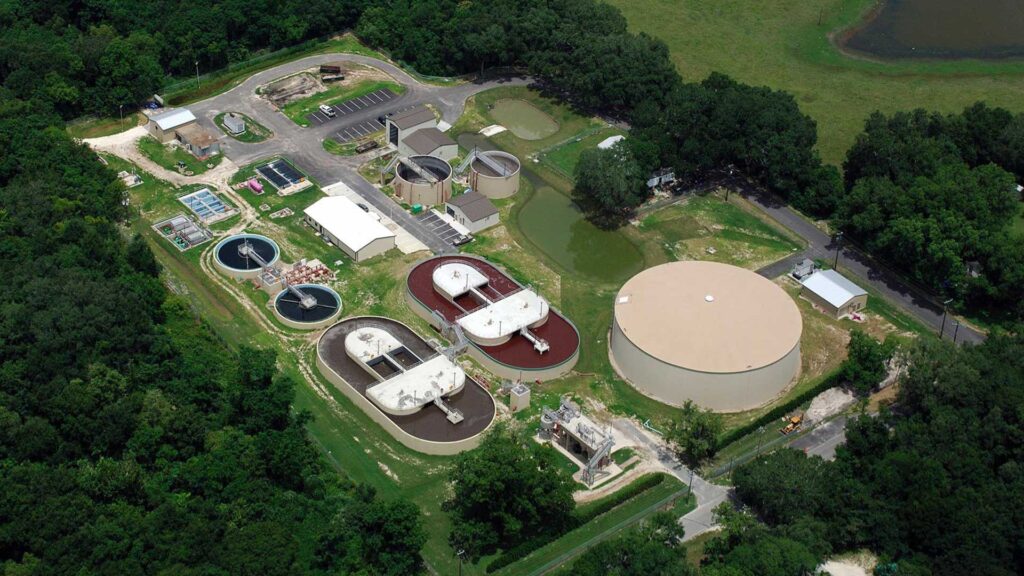
Faced with aging infrastructure and weather-related vulnerabilities, Fort Pierce Utilities Authority (FPUA) sought to relocate its Island Water Reclamation Facility (IWRF) to a newly developed 20-acre greenfield site on the mainland to improve resiliency and environmental performance. The move provided an opportunity to modernize aging systems and expand treatment capacity. Following an extensive evaluation, AquaNereda was selected as the solution to support the facility’s goals, delivering efficient, reliable treatment while reducing long-term operational costs.
“AquaNereda is great, but it’s not a plug-and-play system,” Haskell Senior Project Director Joe Kantor said. “It’s a black box until you’ve actually been inside it. That’s where Haskell brings real value; we know how to make all the pieces work together.”
With multiple active installations underway, Haskell’s experience with AquaNereda helped guide the design, coordination and construction of the upgraded facility. By leveraging the technology’s compact treatment process, the project team increased treatment capacity while maintaining the existing site footprint.
The approach also delivered a facility with one of the lowest costs per gallon in the industry, under $20 per gallon, resulting in approximately 10% savings on the overall $140 million project.
“Those savings matter,” Kantor said. “When we help a community spend less on essential infrastructure, it gives them the flexibility to reinvest their capital in other priorities that directly benefit residents.”
Proven Performance in the United States
Across the U.S., utilities are beginning to evaluate aerobic granular sludge systems as they plan capacity expansions. Several communities have already adopted the technology to increase treatment capacity while maintaining compact facility footprints, demonstrating its potential as an alternative to traditional oxidation ditch expansions.
Haskell recently completed the first AquaNereda project in Utah, the Confluence Park Water Reclamation Facility in Hurricane. Delivered as a $47.1 million CMAR greenfield facility, the original design supports a 1.5 million gallons per day (MGD) flow with capacity up to 3.5 MGD as the region grows.
“As Southern Utah continues to grow, projects like the Confluence Park Water Reclamation Facility play a critical role in balancing development with environmental stewardship,” Haskell Senior Project Director Jeremy McVey said. “The state’s first use of AquaNereda technology allows this facility to produce reliable, high-quality reclaimed water that supports reuse, protects natural waterways and ensures long-term water sustainability for the community.”
The Future of Water Facilities
As utilities plan for the next generation of water infrastructure, process intensification is increasingly part of the conversation.
“If you’re considering this process, we understand it,” Vice President and Segment Market Leader Bryan Bedell said. “We can get the price right, the scope right, and that’s what builds trust. Trust, even in uncharted territory, is what we build our partnerships on.”
By bridging innovative process solutions and real-world execution, Haskell helps utilities implement emerging solutions with confidence. The result is infrastructure that meets today’s regulatory requirements while preparing communities for the evolving demands of water management.
Haskell’s subject matter experts consistently maintain a holistic and innovative approach to problem-solving. Contact our team to leverage that expertise on your next project.
Related News & Insights

Protect Communities by Removing, Averting PFAS in Drinking Water
New FDA rules require utilities and businesses to act fast against "forever chemicals." Explore how expert-led strategies can make communities safer.

Macon Water Project Demonstrates Value of Progressive Design-Build
See how Haskell collaborated with the Macon Water Authority and its design partner to maximize the available budget and rehab two reclamation facilities.
Innovative One Water Strategies for Future-Ready Communities
Learn how collaborative delivery transforms water infrastructure projects, providing tailored solutions to meet clients' needs and optimize resources.
Collaborative Delivery Meets Stringent Requirements in Salt Lake City
Learn how Haskell’s expertise and proven track record with federal compliance are helping the city build its resilient water treatment plant.