

One of North America's oldest distilleries needed a modern and sustainable evaporator system.
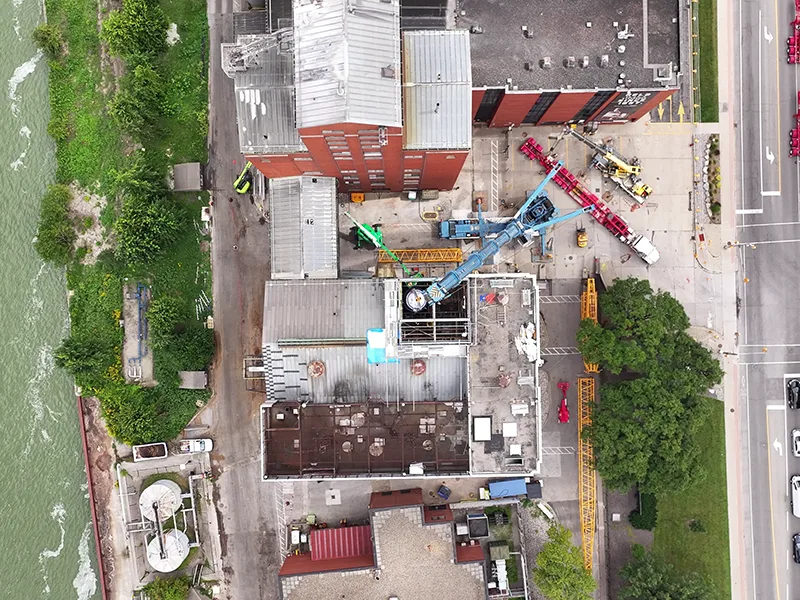
Hiram Walker & Sons (HW&S) needed to replace the aging and inefficient evaporator system at its 160-year-old facility in Windsor, Ontario, Canada. Haskell engineered, procured and constructed their new mechanical vapor recompression (MVR) evaporation system, selected to reduce the distillery’s carbon footprint.
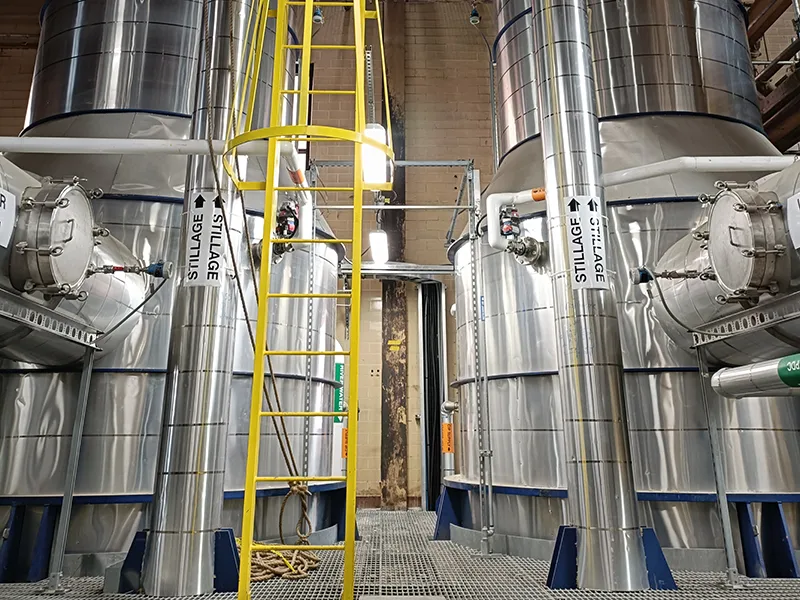
The new system concentrates thin stillage into syrup using recompression technology.
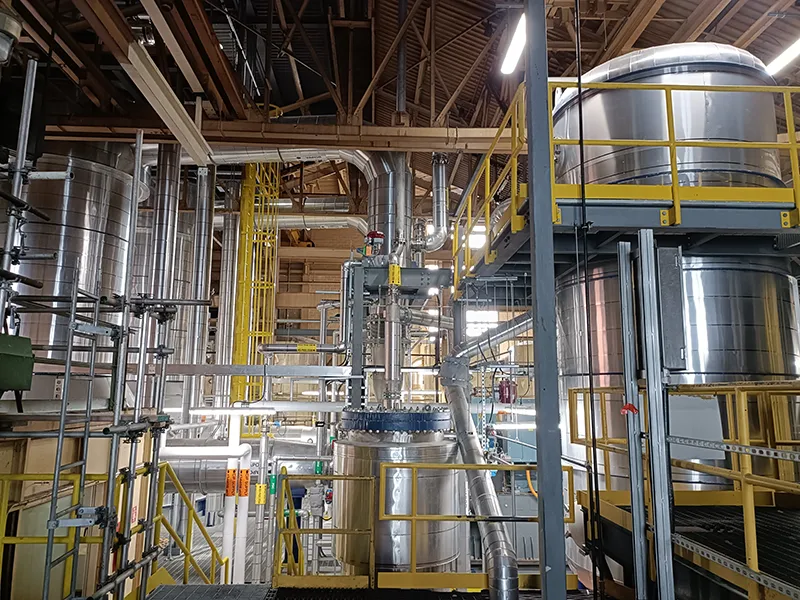
Fitting the system into a compact, 8,800-square-foot area required early demolition and facility improvements, and the design and construction of a new penthouse and roof to enclose the new evaporator columns. The pump system spans three floors, with more than 725 horsepower moving liquid from the first floor to a surface condenser on the second floor, to evaporator columns with 1,000-horsepower fans on the third floor. The new de-superheating system, designed by Haskell, reduces water and energy consumption. Raising the evaporator system by one floor also improved operational space while cutting costs and reducing disruptions.
International projects require coordination and regulatory knowledge.
Spanning borders, time zones and workforces, the HW&S distillery project was a highly coordinated effort. Canada’s regulatory requirements, from permitting to safety standards, required local engineers to ensure code compliance.
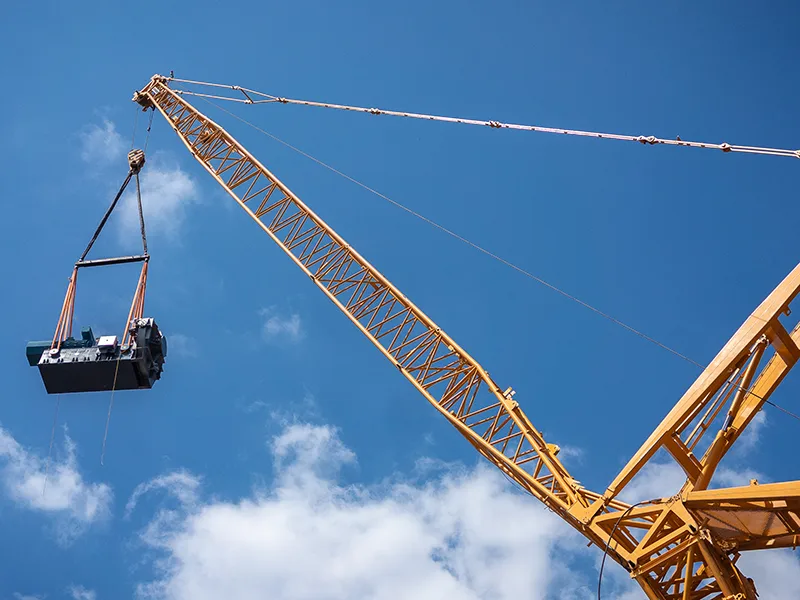
Haskell also helped transport and deliver equipment internationally. When electrical supplies were delayed, the design team sought local vendors that could use existing equipment and alternative components to stay on schedule until permanent installation was complete. Although supply chain and labor constraints delayed installation, Haskell’s startup and commissioning adapted by working on completed systems while construction progressed in other areas.
Laser scanning and clash detection supported design in a facility without accurate records.
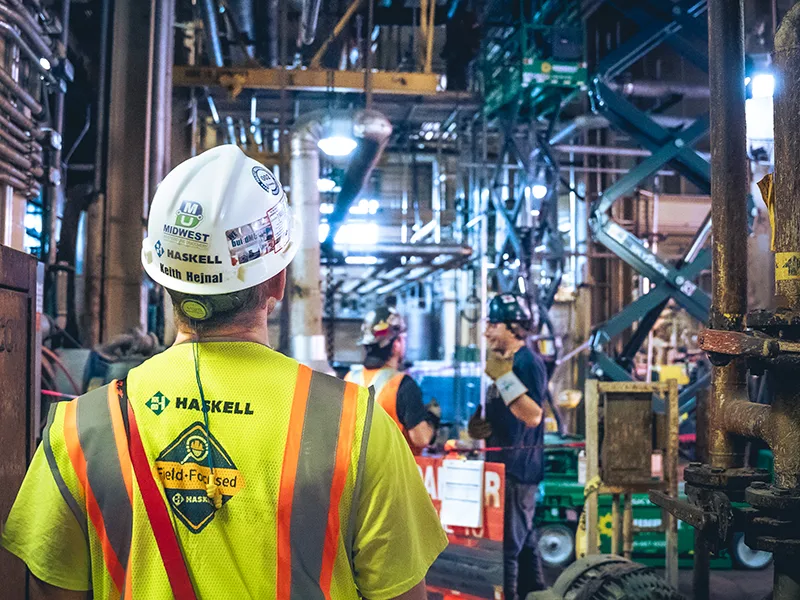
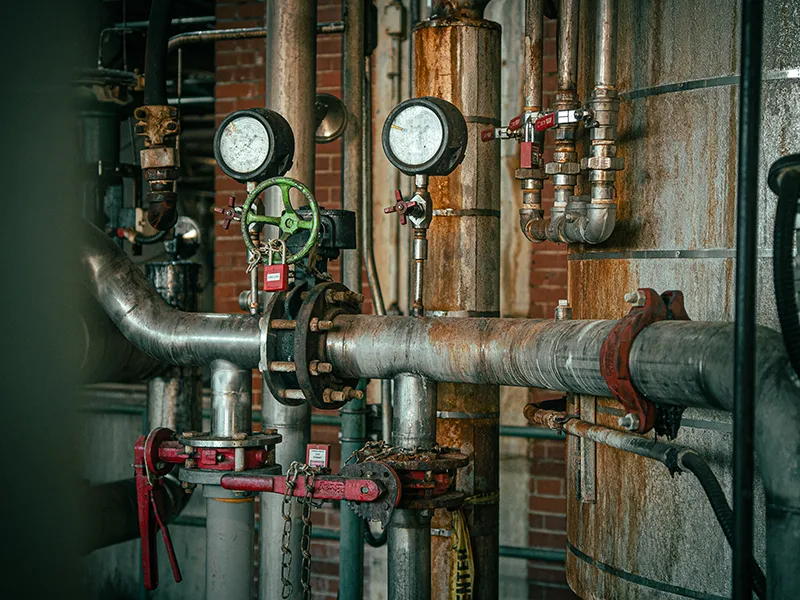
The aged and complex site lacked accurate documentation, so Haskell’s Virtual Design & Construction (VDC) group performed 3D laser scanning with Navisworks and used clash detection modeling to guide detailed design. The model revealed necessary equipment rearrangements that avoided substantial clashes on the first floor.
The upgrade advanced sustainability goals for parent company Pernod Ricard.
The new MVR evaporator system supports HW&S’s carbon-reduction and sustainability goals. The safety standards maintained throughout Haskell’s scope, which led to zero accidents, have been adopted in the plant’s day-to-day operations.
Related Topics
Talk to a Subject Matter Expert
Project Highlights
Process Systems
Engineer, procure, construct (EPC)
Manufacturing system design & integration
3D/4D/5D scheduling
Laser scanning
System analytics
Related Projects
Minden, Nevada
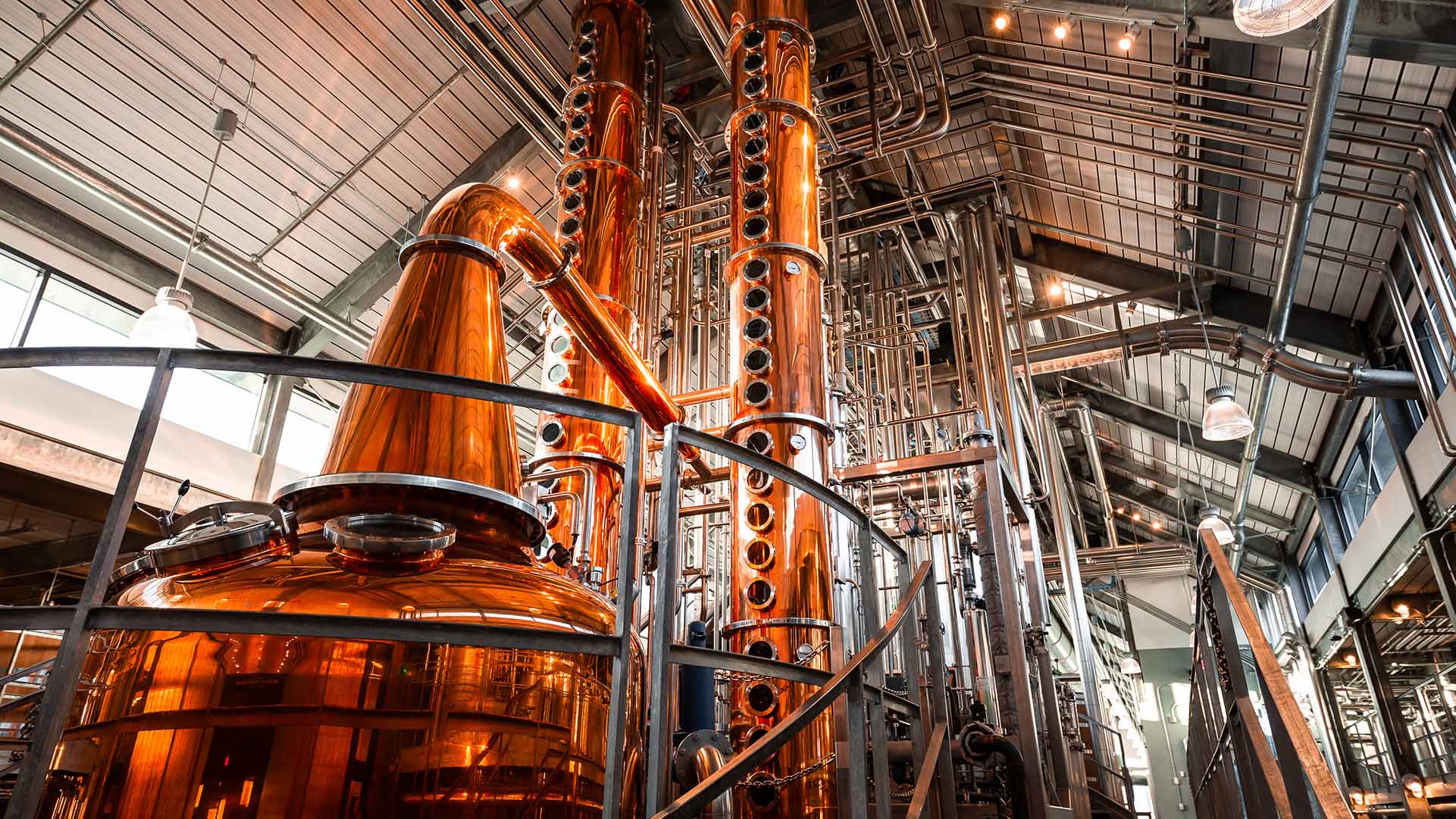
Bently Heritage Distillery

Plainfield, Illinois
Diageo Manufacturing Line Improvements

Fairfield, California
Anheuser-Busch Brewery Projects
Related News & Insights
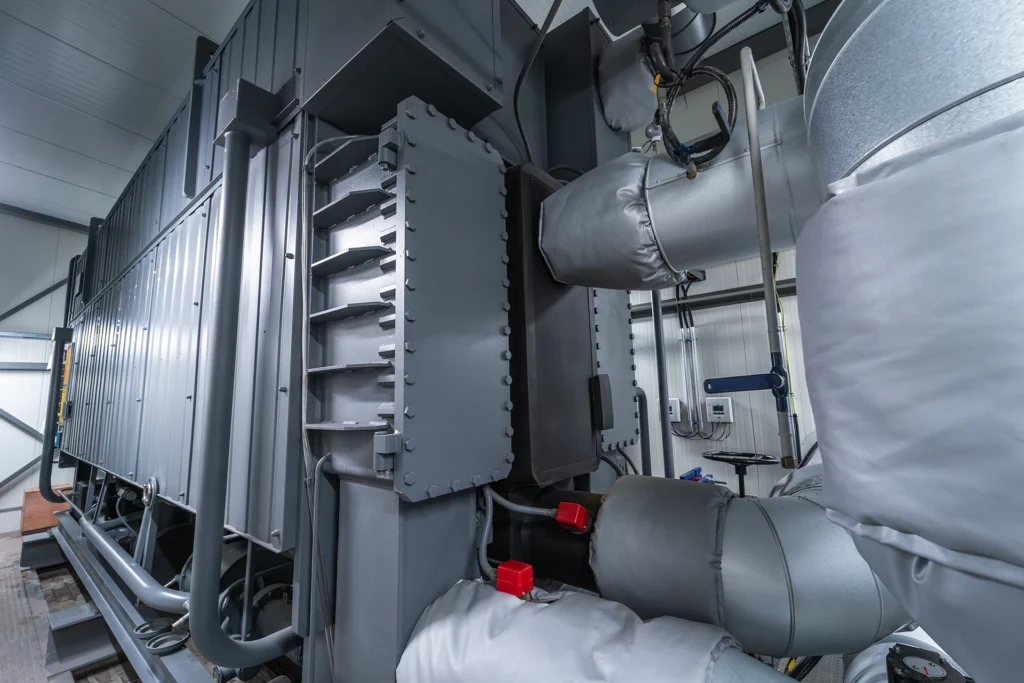
What Manufacturers Should Know About High-Temperature Heat Pumps
Discover how industrial manufacturers evaluate high-temperature heat pumps as part of an integrated thermal strategy. Learn what early design decisions shape performance and economics.
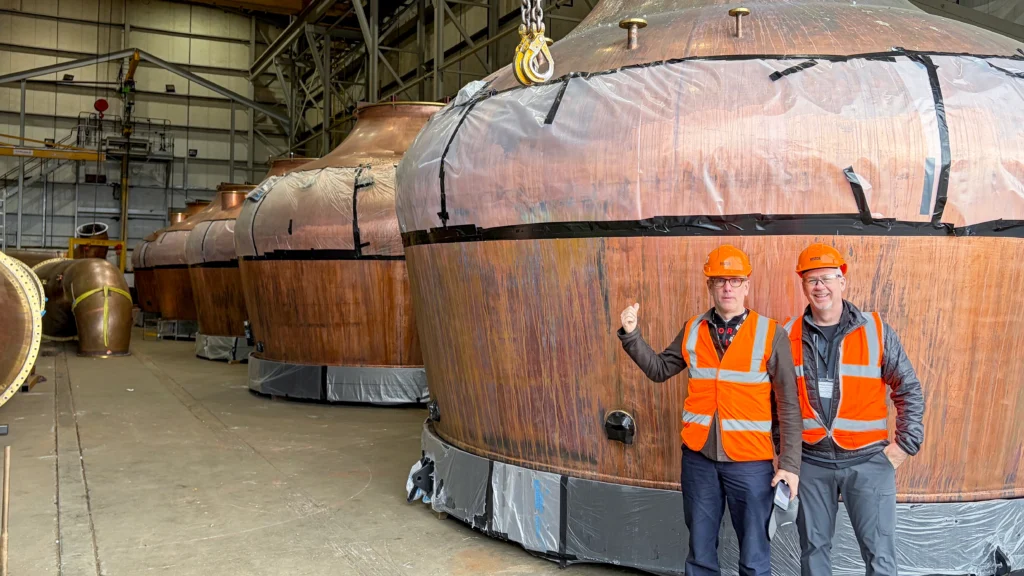
Beer, Wine & Spirits Expert Explores European Tech and Innovation
Travel along as Haskell's Phil Morgan explores how producers are improving efficiency without compromising the products consumers know and love.
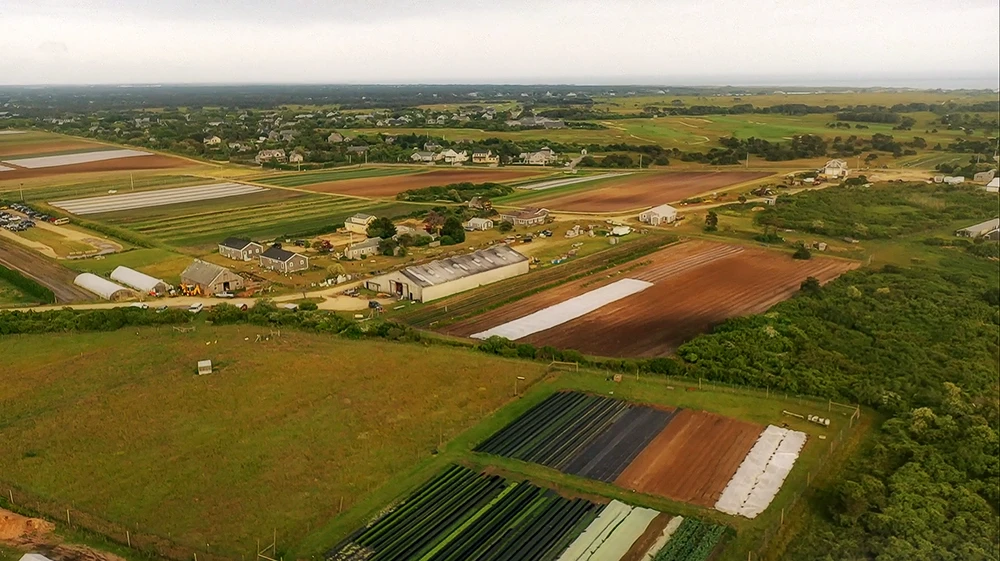
An Adventure in Nantucket, Restoring Distillery Automation
Learn how Haskell Subject Matter Expert Alan Green brought custom solutions to Triple Eight Distillery to upgrade an overmodified system.
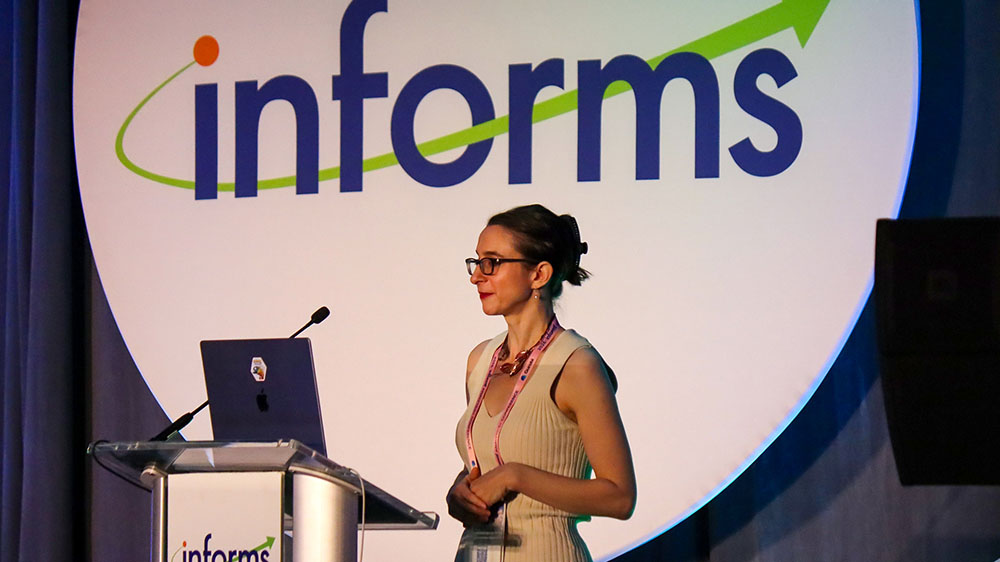
How AI and Digital Twins Are Shaping Industrial Analytics
Discover how stronger data foundations and planning tools are improving operations. Explore insights on capacity planning, supply chains and modeling.