
RAPTOR Device Advances to Model 2.5, Completing First Field Test

Learn the latest developments from one of the first Big Pitch winners. Discover how Dysruptek is helping advance safer pressure testing.
After five years of development, RAPTOR – a Remotely Activated Pressure Testing, Observation & Recording device – has completed its first live jobsite test, putting it one step closer to public deployment.
The device lets crews validate piping from a safe distance, clearing workers from the exclusion zone during the most dangerous phase of a pneumatic test.
Before joining Haskell, Senior Quality Subject Matter Expert Gary Weiler conceived it after a 2009 jobsite fatality. Ten years later, he pitched it at Dysruptek’s first Big Pitch in 2020 and earned the company’s first patent.
“It’s been a journey to get to this point,” Weiler said. “We were finally able to test it on a project site, on a system installed by craftsmen and it performed as advertised.”
The Evolution from 2.0 to 2.5
Dysruptek, Haskell’s innovation and venture arm, has guided RAPTOR’s development alongside Weiler, with early work and closed-system testing at the Dysruptek R&D Center on Haskell’s Steel Fabrication Campus.
“Our early tests exposed two problems that kept RAPTOR 2.0 out of the field,” Said Abby Paris, R&D Analyst for Dysruptek. “Control connectivity and valves that were either fully open or fully closed, with no proportional control over pressure. We started with a cell phone controller that ran the unit over Wi-Fi, tethering it to local cellular service. But that limited where it would work.”
RAPTOR 2.5 fixes both shortcomings, replacing the open-or-closed valves and swapping the phone for a dedicated tablet that ships with the unit and moves communication to radio frequency. Relocating the antenna from inside the case to the exposed lid extended the reliable range to around 100 feet.
Vendor contracts and manufacturing errors were among the first challenges for the 2.5 units.
“We’ve learned a lot in the development process,” Weiler said. “It’s a lot of technical details to develop a product like this, and without careful oversight and experience, things can get complicated. We’re learning as we go, but planning and being super detail-oriented with our partners is critical.”
A unit shipped to Haskell’s Jacksonville headquarters in December 2025 arrived with connection issues, then failed outright when its internal wiring came loose in transit to a test site.
“Those delays really complicated development,” Weiler said. “The pressure sensors need annual calibration, and enough time had passed that the units came due before they ever reached the field. Recalibration is now the device’s only scheduled maintenance.
“We’re capturing all these lessons learned to inform the field manual that will come with the final unit.”
The First Field Test
Project Stowe, a wastewater plant beside the U.S. National Whitewater Center, gave RAPTOR its first live project-site test. The system, a bubbler line, injected air into the incoming waste stream to keep solids moving. The stainless-steel piping was mostly 1.5-inch and 2-inch, with some 3/4-inch, joined by compression and threaded fittings. Its air receiver tank created an exclusion zone of nearly 70 feet.
RAPTOR took the system through the test sequence from outside that zone. It increased pressure in stages, holding 70 psi, then 90 psi and finally 115 psi for 3 minutes each. It then reached a 140-psi test pressure for 10 minutes before dropping back to the 115-psi operating level.
On the device, the test registered as a pass. The inspection continued because the ASME pipe code still requires crews to soap every joint at operating pressure and watch for bubbles. That step found two slow leaks at threaded connections, too small to register as pressure loss or trip the sensor.
After several rounds of repairs and additional testing, the bubbler system passed. RAPTOR ran the pressure sequence from outside a nearly 70-foot exclusion zone.
“I had no idea this was RAPTOR’s first live field test,” said Seth Wood, assistant project manager on Project Stowe. “Gary explained when they arrived with the kit, and it all sank in that we were part of a major milestone. I’ve heard of RAPTOR for a few years, so it was exciting to be a part of its development.
“In terms of field safety standards, this is invaluable,” said Owner’s Engineer Representative Jerry Mullen. “If a required pressure test can be managed from outside the exclusion zone, that should become the expectation in the field. Having this device makes that a reality and helps eliminate a serious risk.”
More to Come
The team now has five RAPTOR 2.5 units. One is with DPR Construction’s innovation team, giving Haskell and Dysruptek a way to collect data outside their own projects. Additional field tests are planned for later this year, including one on roughly half a mile of 10-inch pipe in Colorado.
Pressure testing is required but often lands on project schedules shortly before it happens, leaving the RAPTOR team about a week’s notice to coordinate freight, travel, setup and site access.
Weiler and Paris still operate the units themselves. Training field crews to run RAPTOR independently is one of the next steps, along with collecting enough project data to guide RAPTOR 3.0.
“We expect at least one more iteration before RAPTOR is ready for market,” Paris said.
The long-term path is making RAPTOR a marketplace product. For now, the work is focused on more job sites, more users and more data.
“It’s going to change the way people look at pressure testing, especially pneumatic testing,” Weiler said. “The standard way of doing something so dangerous needs a tool that can meet the functional requirements of the task but also help create a safer environment for job sites.”
Through Dysruptek, Haskell leads the construction industry in technological development and adoption. Contact the Dysruptek team to discuss your idea “For the Betterment of the Industry.”
Related News & Insights
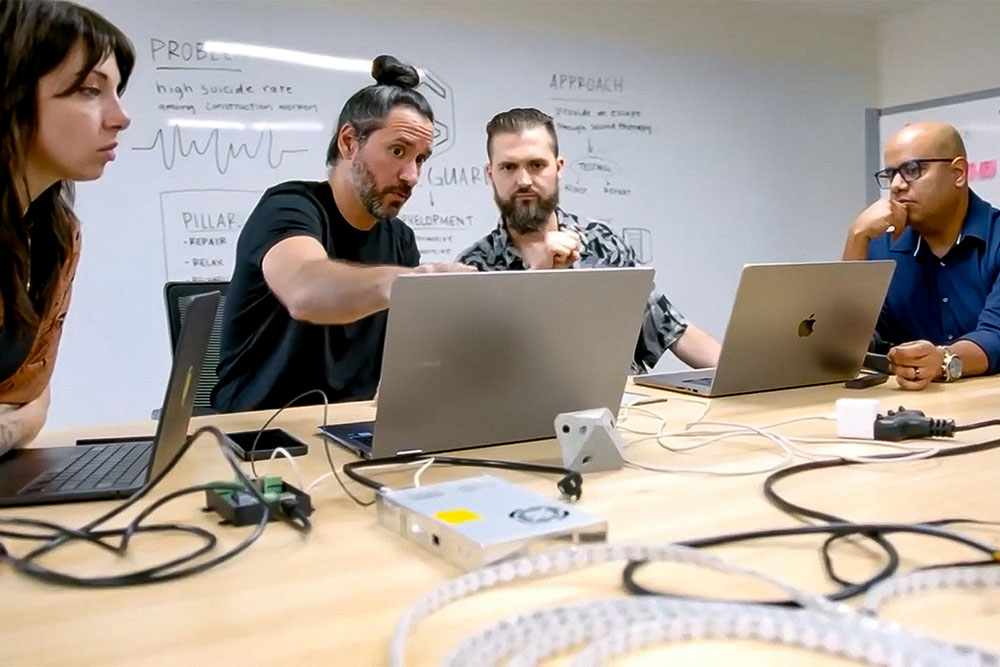
Castano Group’s Big Pitch Production Brings Home an Addy Award
Learn how this frequent Haskell collaborator creates award-winning projects and watch the Big Pitch video that earned.
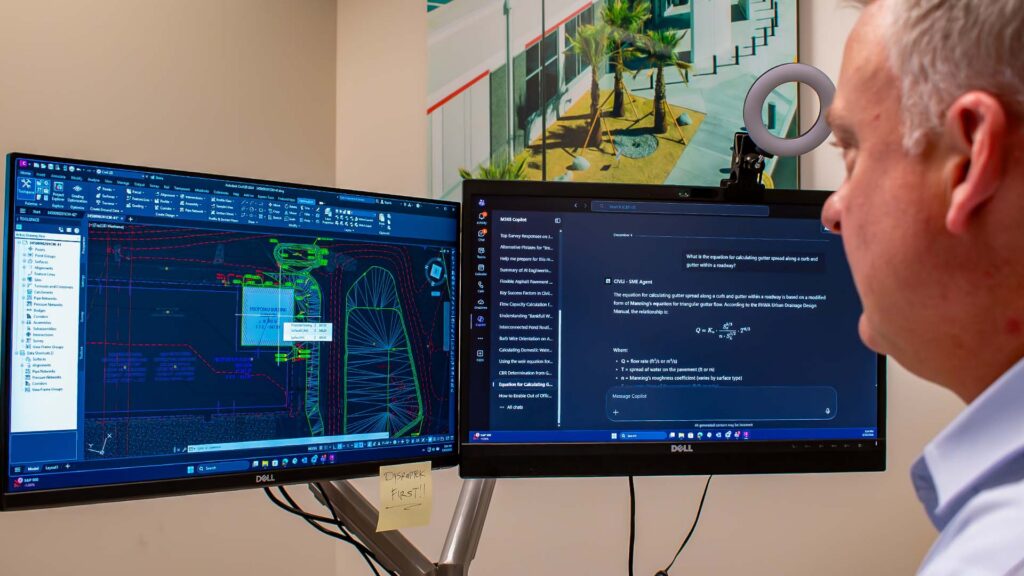
How Will AI Change the Fields of Engineering and Design?
Learn how Haskell’s four-pillar AI strategy strengthens governance, accelerates delivery and empowers engineers and teams enterprise-wide.
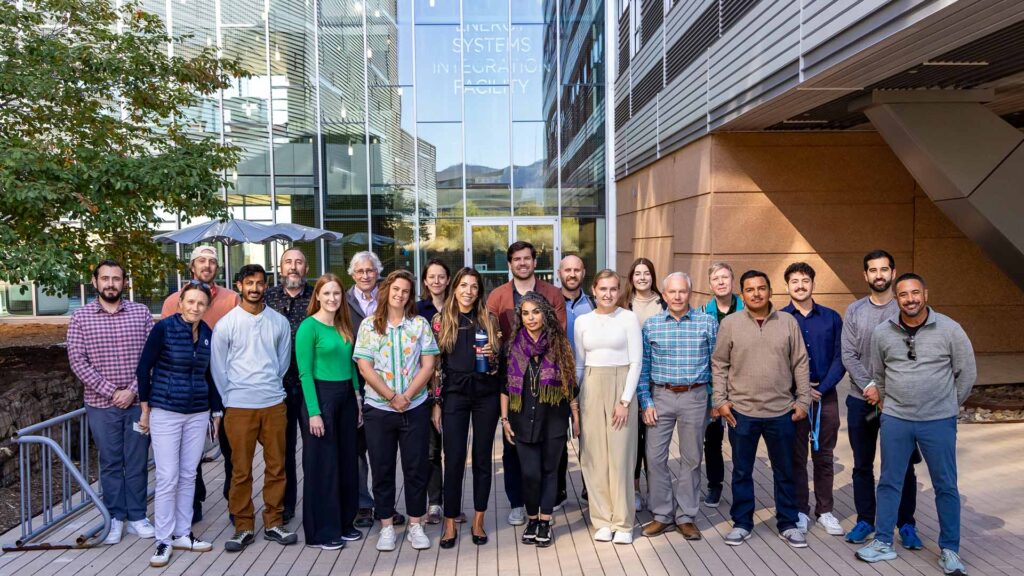
Haskell to Push Modular Energy Integration in Wells Fargo Incubator
Learn how Haskell and seven other cohort members will leverage expert support to advance adoption strategies for cutting-edge energy solutions.
Big Pitch 2025: Highlighting AI and Sustainability in Construction
Explore how collaboration and creativity drive innovation at Haskell. Learn how AI is enhancing sustainability tracking to improve project performance.