


Understand the structural mismatch behind architects' hesitation toward modular construction. Learn how integrated delivery models are closing the gap.
Modular construction promises faster schedules, tighter quality control and more predictable labor. Yet many architects approach it with caution. That caution is not resistance to innovation. It reflects the profession’s responsibility to manage risk, protect design intent, and ensure buildability. The realities of manufacturing-driven construction present the perception that these responsibilities will be compromised.
Traditional design workflows allow many decisions to be refined throughout the procurement and construction phases. Modular delivery shifts much of that coordination earlier in the process. Before fabrication begins, teams must resolve module layouts, system coordination, material selections, transportation requirements and installation sequencing to create a production-ready design. The challenge is to align architects, engineers, manufacturers and builders earlier around how the building will be manufactured and assembled.
Some of the key reasons architects resist modular delivery include:
- Unfavorable Risk-to-Reward. Modular projects require greater coordination, earlier decision-making and additional resources upfront, while compensation structures often remain similar to traditional delivery models. The process requires teams to coordinate more in detail earlier than in conventional projects, where many issues can be resolved later during construction. In modular delivery, those decisions must be addressed before fabrication begins, increasing the need for early alignment and elevating perceived risk for firms adapting to a new delivery model.
- Industry Fragmentation. Modular projects often involve multiple independent entities, including architects and engineers, general contractors or construction managers, and modular manufacturers. Each operates with its own priorities, contracts, and levels of experience with modular delivery. In many cases, at least one party is new to modular construction or new to working with the other members of the team. This fragmentation introduces opportunities for miscommunication, uneven expectations, and steep learning curves across the project team. It can lead to scope gaps, uncoordinated decisions, cost escalation, and schedule pressure as teams work through unfamiliar processes. When alignment does not occur early, design decisions may ned to be revisited to address manufacturing or installation realities. This can result in re-design effort and downstream impacts to both cost and schedule.
- Increased Complexity. Architects must account for manufacturing tolerances, transportation limitations, assembly sequencing, inter-module connections and factory production constraints. Issues traditionally resolved in the field must instead be addressed during design, resulting in more front-loaded effort and significantly more BIM coordination. Modules are produced in a controlled environment where consistency and repeatability require a higher level of predefined detail than field-driven construction typically demands.
- Perceived Constraints. Modular construction introduces transportation, manufacturing and assembly constraints that can influence building geometry, structural systems, layouts and material selections. Requirements like double walls, reinforced structures and standardized dimensional grids can complicate the creation of large open spaces and flexible design solutions. Designers also plan how each module travels, adding temporary walls, roof panels or bracing to withstand transport and leaving gaps at the points where two modules will be joined and finished once on-site.
- Systems and Utility Coordination. HVAC, plumbing, electrical and utility systems require additional connection points, alignment across module boundaries and earlier coordination than traditional construction. Utility tie-ins and serviceability considerations must be fully resolved before fabrication begins, whether components are installed inside the module or shipped loose for field connection.
- Shifting Role of the Architect. Modular delivery changes the architect’s role from primary author of design intent to a collaborator within a broader manufacturing delivery system. Decisions are more interdependent, and control is shared earlier with builders, fabricators, and logistics teams. For some firms, this represents not just a process change, but a shift in professional identity.
- Concealing the seams. Architects often invest additional effort in designing around module joints, stitching conditions and finish transitions so the completed building meets expectations for quality, continuity and permanence, rather than revealing the logic of prefabrication.
Solving with Integration
These challenges are not inherent limitations of modular construction. They are coordination problems, and coordination problems have a consistent solution. The most successful modular projects align architects, engineers and manufacturers as a single team, rather than handing off a design between separate parties. Many modular programs separate design, manufacturing and installation among different companies, which can leave field teams to resolve module connections without knowing why an earlier decision was made.
Integrated delivery models address this misalignment by aligning design, manufacturing and installation within a single structure. Haskell’s Design, Manufacture, Install (DMI) model reflects this approach. Design, manufacturing and installation teams share a single model and a single feedback loop from early design through commissioning, using datum points and detailed manufacturing drawings to keep tolerances and finishes aligned across every module. That structure gives architects a channel to resolve manufacturing questions during design rather than after modules are already in production. Design, manufacturing and installation teams share a single model and a single feedback loop from early design through commissioning, using datum points and detailed manufacturing drawings to keep tolerances and finishes aligned across every module. That structure gives architects a channel to resolve manufacturing questions during design rather than after modules are already in production.
Architects evaluating a modular project should ask whether the delivery team, not just the design team, is built to solve manufacturing questions early. A single structure accountable for design, manufacturing and installation reduces the handoffs behind rework, schedule risk and misaligned incentives.
For teams evaluating modular delivery, the structure of the delivery model is as critical as the design itself. Haskell’s DMI model provides one approach to aligning those elements into a single, accountable team. Contact us to learn more.


About the authors: Aaron Arbuckle is Design Director at Haskell, based in Salt Lake City. He joined the company in 2021 as Design Manager and was promoted to his current role in 2023. He holds a Master of Architecture from the University of Utah College of Architecture and Planning.
Kyle Cross, AIA, NCARB, is Director of Project Development at Haskell. Cross is a member of the American Institute of Architects and holds certification from the National Council of Architectural Registration Boards.
Related News & Insights

TechWeek Message: Early Integration is Key to Outcomes and Quality
Explore how data centers and modular projects each demand the same discipline: resolve critical details early and carry quality through every phase.
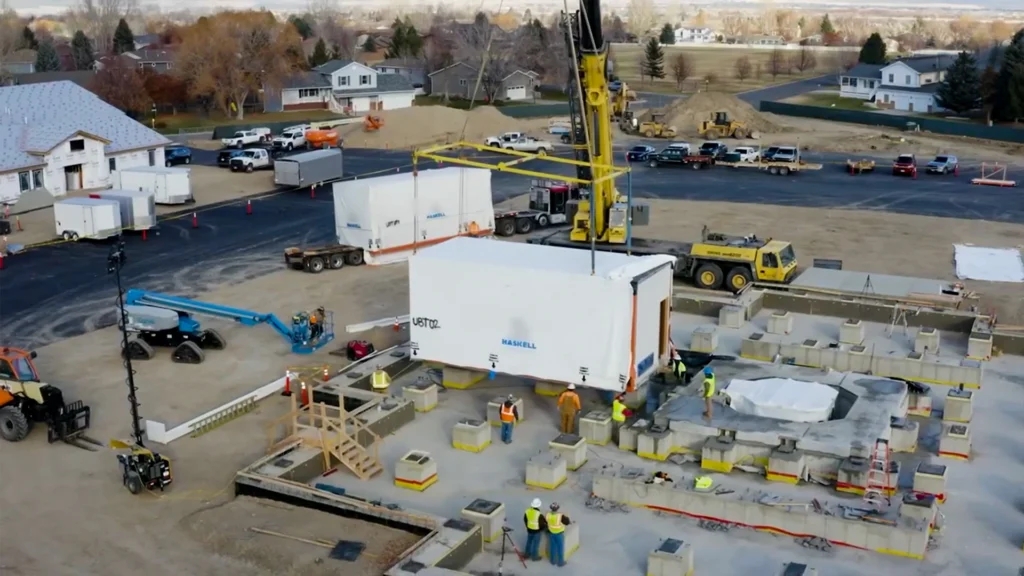
How Programmatic Construction Compounds Improvements, Savings
Standardization creates consistency, but repeated collaboration unlocks greater value. Learn how program optimization differs from project optimization.
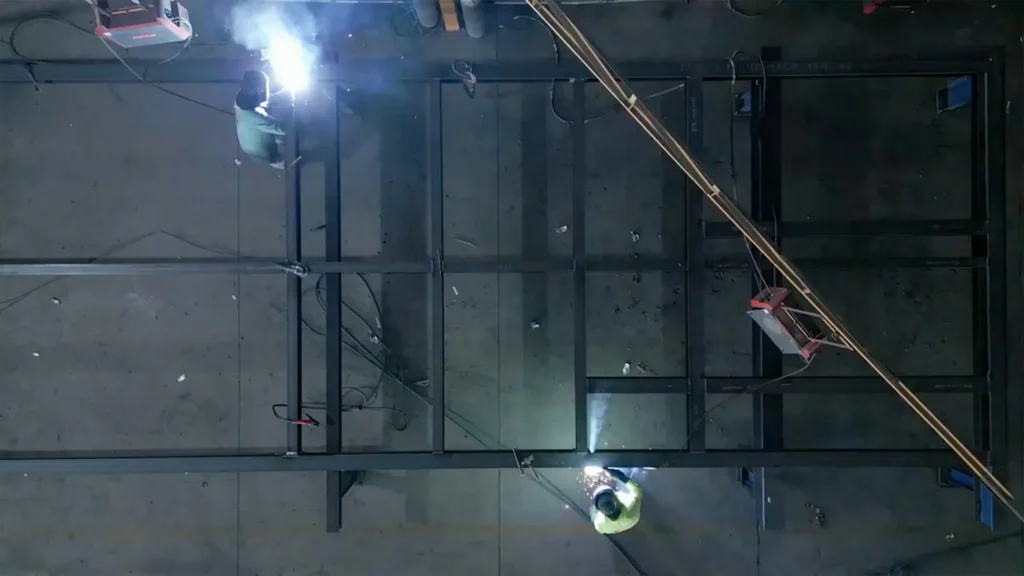
Is Modular Construction Right for Your Project?
Learn how to determine if modular construction fits your project and brings value. Discover the dos and don’ts of applying this growing delivery method.
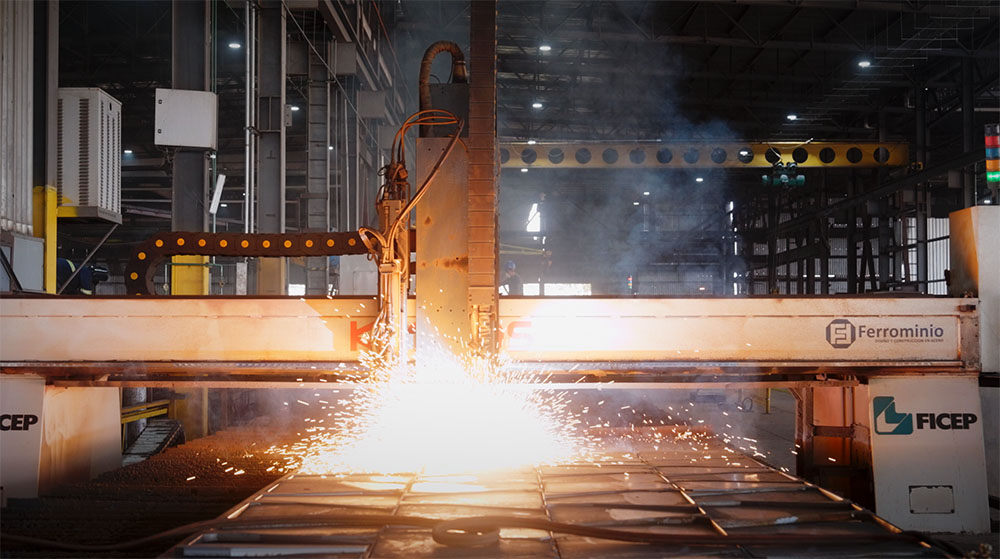
Discover the Step-by-Step Process of Modular Construction
Learn the inner workings of this fast-growing construction delivery method and how Haskell refines and improves with every project.