Venezuela Earthquake Relief Delivers Clean Water

Learn how Haskell’s Manuel Fernandez partnered with Water By Women and Cáritas to mobilize filters and local training in La Guaira.
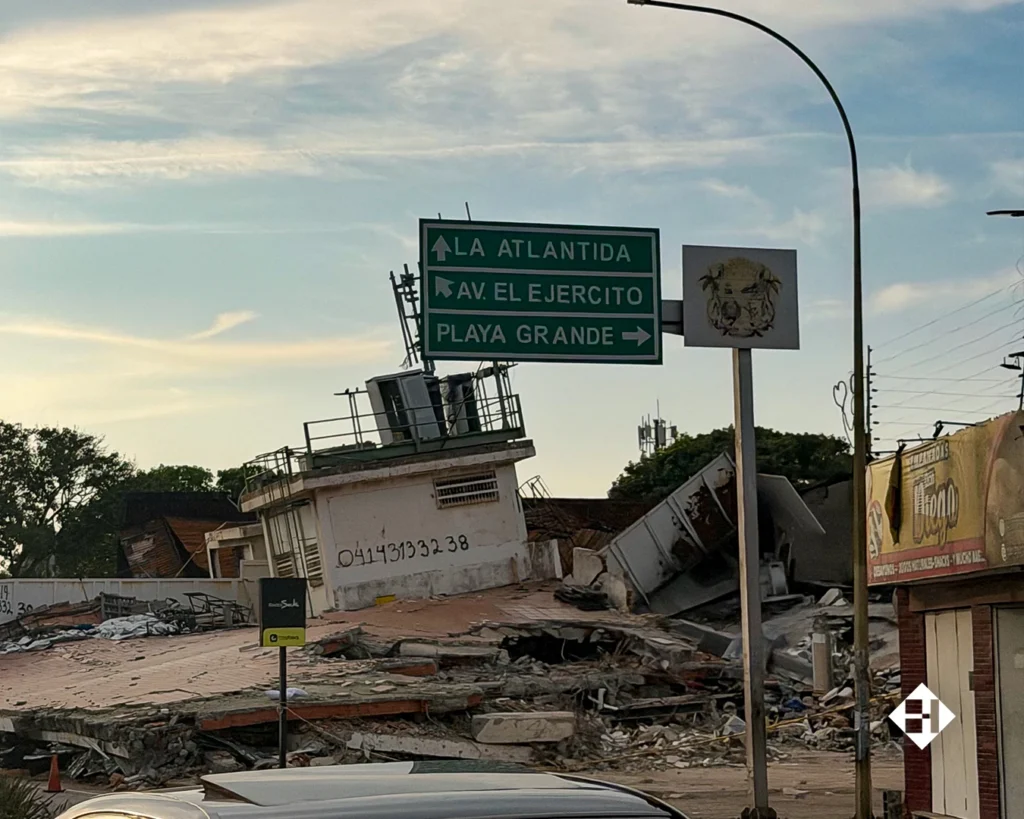
On June 24, 2026, a pair of earthquakes — a 7.2 foreshock followed seconds later by a 7.5 main shock — tore through northern Venezuela. La Guaira, a narrow coastal state wedged between the Ávila mountains and the Caribbean Sea, home to roughly 350,000 people, was hit hardest. Satellite and radar assessments from NASA and European partners estimated that more than 58,000 buildings across the affected region were damaged or destroyed, with localized collapse rates above 80% in parts of La Guaira.
Six weeks later, Manuel Fernandez, a Project Integrator at Haskell’s Atlanta office, coordinated with team members and non-profits to help deliver clean water to the affected families.
Fernandez grew up in Venezuela, and after graduating high school at 17, he moved to the U.S. for college.
“I moved to the U.S. in part because violent crime was rampant across Venezuela,” he said. “Nearly a decade later, I was in Atlanta when my family group chat lit up with people checking on each other. My hometown sits roughly 100 miles from the epicenter – close enough for things to fall off the walls, far enough to be spared the worst. La Guaira was not so fortunate.
“During the first several days after the earthquake, the government offered no meaningful response, no rescue crews, no organized relief from official channels. Just residents, families and strangers helping strangers, because no one else was coming. International organizations began arriving around days four and five.”
Local businesses quickly turned into donation collection centers. Fernandez and his wife, Luisana, donated and volunteered at a local drive held by a restaurant near the Atlanta office, but it didn’t feel like enough.
“We knew from experience that our people couldn’t count on anyone else to organize a fast, effective response,” Fernandez said. “The people helping in those first days were regular Venezuelans – neighbors, family members, strangers who showed up with their hands and whatever tools they had. That’s who La Guaira had. The diaspora did what it’s always done in moments like this: We organized ourselves and got to work.”
Opportunity Knocked
During this period, Fernandez met with Shawn Huffman, a friend from Fernandez’s time at Amazon Global Engineering Services, for a beer and conversation. They commiserated that, after a week, formal relief was still barely reaching the hardest-hit communities. Huffman mentioned he’d spent the past year on the board of Water by Women, a Kentucky-based nonprofit with more than 15 years of experience bringing safe drinking water to hard-to-reach communities.
Two days later, Fernandez was on a call with Huffman and Water by Women co-founder Sister Larraine Lauter. The organization couldn’t move on the ground alone but said if Fernandez was willing to lead the effort and confident he could get filters into the country, they could start securing an initial 300 filters for the most critical needs.
Fernandez said yes and started planning the journey that same day.
The goal was to distribute filters and train community members to build a local network that could operate them to share clean water after the team left.
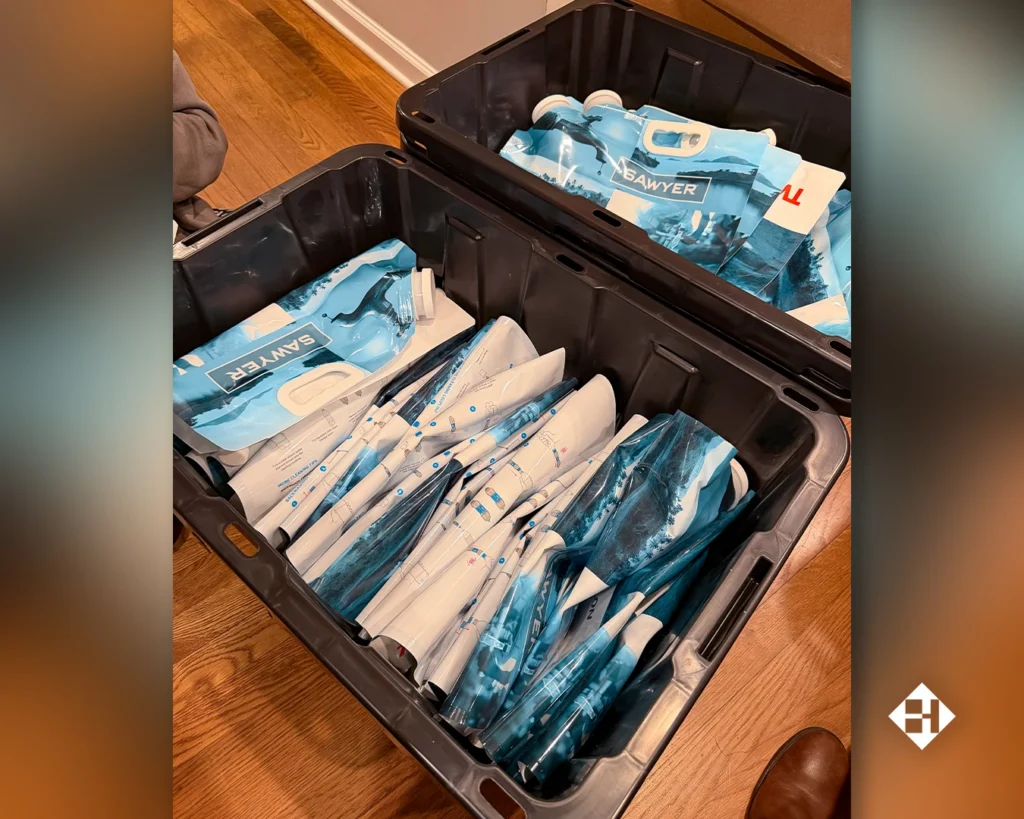
The first challenge was logistical. Water by Women’s 300 filter kits arrived in boxes of 25 that were too bulky to ship into a disaster zone. The team found a solution: 27-gallon totes from Home Depot, which could hold far more per container and, with the right fittings, double as 200-person drinking stations.
Challenging Logistics
Water by Women shipped the filter kits and conversion fittings, and Fernandez and his wife spent days packing the 300 filters, 24 drinking-station conversion kits and a batch of toys, 3D-printed by Haskell Senior Integration Manager Julia Sawyer, for kids they’d meet along the way.
Fernandez, Luisana and Huffman split 11 totes and began booking airline tickets.
“We were packing materials and figuring out the logistics when we hit a serious snag,” Fernandez said. “Diplomacy between the U.S. and Venezuela is tumultuous, and without a humanitarian visa, Shawn couldn’t legally make the trip.”
Fernandez’s research revealed that approval required sponsorship from a locally registered non-governmental organization (NGO) or charity. He also found Venezuela’s recently appointed Vice Chancellor for Foreign Affairs on Instagram.
Water for Women co-founder, Sister Lauter, connected the team with the Bishop of La Guaira and the local leadership of Cáritas, a global confederation of Catholic charitable organizations dedicated to serving people in poverty and crisis, and promoting human development and social justice.
“Cáritas agreed to write a sponsorship letter for Shawn,” Fernandez said. “But between rolling power outages, unreliable communications and their own workload, the process dragged. Shawn’s visa application didn’t start until the week of our flight. I made my case to the Vice Chancellor on Instagram and then three days later, during a layover in Chicago before the international leg, Shawn’s visa came through.”
On the Ground
Once in Venezuela, Fernandez’s family hosted the team at their home in Valencia. His cousin Samuel joined the team and helped haul the totes in his uncle’s Silverado. They made the 3.5-hour drive from Valencia to La Guaira and Cáritas’s headquarters, where they met with the organization’s leadership, with whom Fernandez had been coordinating over WhatsApp.
Cáritas conducted a thorough census of the affected population and identified 1,325 families in the highest tier of need — people who had lost their homes and, in many cases, family members.
“The first day was a reality check,” Fernandez said. “Our team visited nine families in Blanquita de Pérez, a barrio of makeshift cinderblock and zinc-roof homes stretching miles up the mountainside, each household now sheltering two to five additional displaced families. Climbing hundreds of steps through narrow alleyways, we needed three hours to complete just nine deliveries. Clearly, door-to-door wasn’t an efficient approach.
Caritas contacted families and encouraged locals to attend a scheduled training and distribution event at a nearby church in Soublette Parish. The team trained 150 “water captains,” each responsible for maintaining a filter and sharing clean water with three to four neighboring families. Training and distribution took just 2.5 hours.
Later that week, the team joined a previously scheduled Cáritas relief drive in Mare, one of the region’s largest survivor camps, with more than 500 families and deployed their remaining 240 filters and seven drinking stations along with the mattresses, portable kitchens, food, and hygiene kits already being distributed.
After just three days, the team had deployed 400 20-person filter kits, established nine 200-person drinking stations and trained local water captains, securing clean water access for all 1,325 in-need families identified by Cáritas.
It’s Not Over
The relationships built during those six weeks became the foundation for an ongoing supply chain. Water by Women has partnered with OneWay Cargo, a Venezuelan-owned importer, to fly filters from Miami to Valencia, where Manuel’s family and local partners carry them the rest of the way to Cáritas for further distribution.
The campaign has raised more than $60,000 against an original $35,000 goal — enough to guarantee 1,000 more filters directly from the manufacturer. Cáritas has also flagged a new area of need in Morón, closer to Valencia, where a local partner delivering medicine has identified roughly 1,000 additional families without safe water access.
“I want to thank everyone at Haskell who supported and encouraged me through this,” Fernandez said. “With special thanks to former Senior Marketing Manager Adriana Fader, who was instrumental in fundraising and helping communicate the effort internally; to Vice President and Market Lead for Haskell’s Water Division, Bryan Bedell, for the generous donation; to my colleagues at the AMS (Automated Manufacturing Systems) packaging team for their help in keeping projects on track; and to Julia for the 3D-printed toys that we handed out to the kids we met along the way.”
The campaign continues year-round at waterbywomen.org. Every dollar raised goes toward keeping filters moving to families still waiting for safe drinking water.