

40-Year Team Member: Sharing a Moment with Preston Haskell

A celebration became a personal tour, as Alan Wilson and Preston Haskell III talked architecture, art and the city they know well. Read the account.
Editor’s note: This is a first-person account from Alan Wilson, 40-year Haskell team member and Chief Architect. Alan has over 30 years of experience in master planning and creative architectural design for a wide variety of building types.
On September 10, 2026, Haskell dedicated the “Preston H. Haskell III Executive Boardroom” and announced city approval of “Haskell Way,” as a street outside our building. All around, team members celebrated our new headquarters at 701 San Marco with a happy hour.
After finishing a meeting, I arrived about five minutes after the event began. Preston Haskell III, our founder, was slated to speak, and I wanted to say hello and hear his remarks.
As I arrived, the space was packed, and to see what was happening, I took a position on the stair landing between the 13th and 14th floors; it gave me a good vantage point despite being at the back of the crowd.
In his comments, Preston lauded the efforts of everyone who contributed to the company’s success and was excited about the new headquarters, “your headquarters,” as he said. He noted that he was still available as a resource, if ever needed, but never wants to “get in the way”.
From my stair landing perspective, I was able to capture the moment. Preston was speaking as Chairman and CEO Jim O’Leary, President John-Paul Saenz and Haskell colleagues looked on.
I took this photo that captures Haskell’s past, present and future. In the foreground are my Haskell colleagues in the new headquarters. In the middle ground are JP, Preston and Jim. In the background, which for me makes the photo, is our former headquarters building at 111 Riverside, which we built in 1986 and occupied until our move last year.
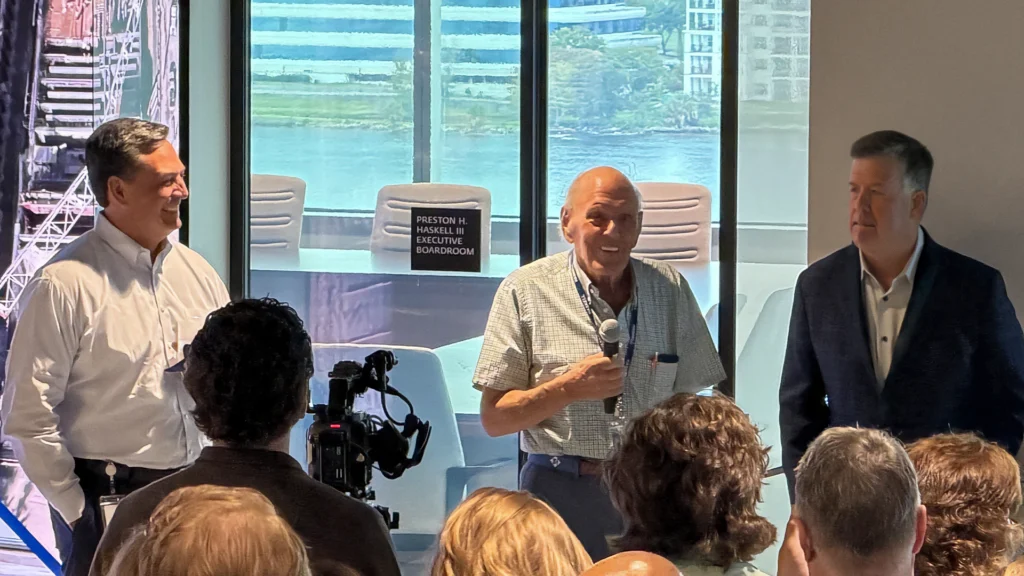
Sharing a Moment
Following Preston’s remarks, I made my way down to tell him hello. I have known Preston for nearly 40 years, and after greeting me, he asked to see my office. I was flattered and happy to show him. As we started toward the stairs, a coworker stopped Preston and asked if they could take a photo with him. Thinking that was a good idea, I did the same. Then there was another photo, and another and another! I commented to him that he was a celebrity and our coworkers the paparazzi, which brought a smile.
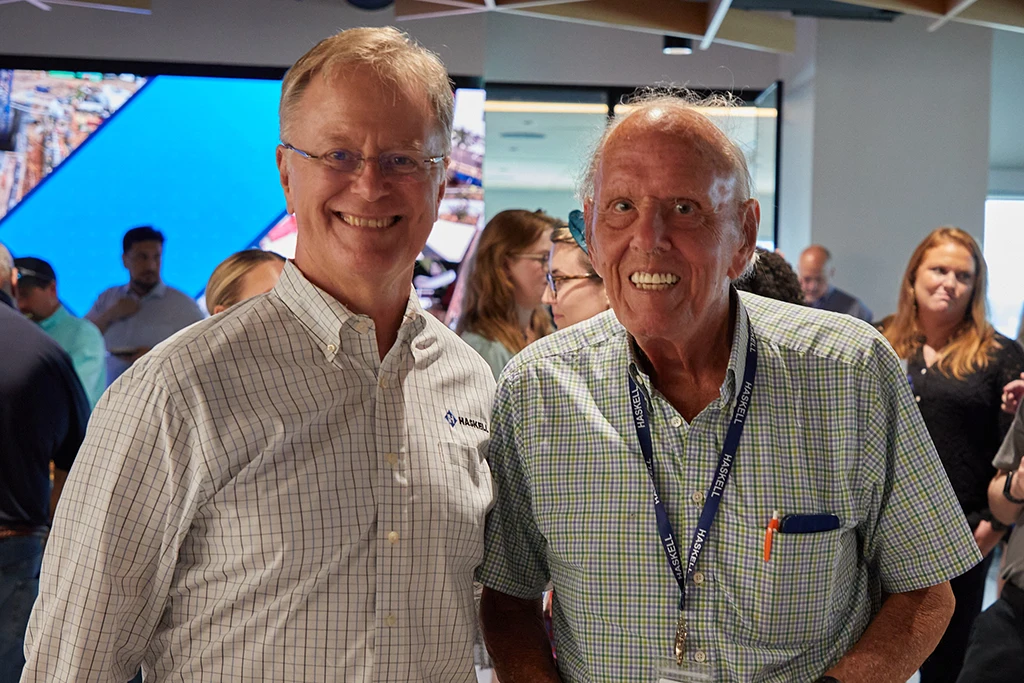
Finally free, we made our way downstairs to 12th floor. We looked out the windows to the north and the wonderful views of downtown. We noted the MOSH demolition and discussed its architect, the late William Morgan. I described Morgan as a brilliant man who did a lot of interesting projects, and Preston agreed. Then I asked him, “Wasn’t your first project a William Morgan designed building?” “Yes, Project 001,” he replied, was an apartment building at the beach.
We moved to the conference room to look west and, together, lamented the history of the southern part of Friendship Park, which went from being a public park, to a city-owned lease to Harbormasters Restaurant, and finally to being sold to a developer. We agreed that cities should not sell off their prime waterfront property.
We then made our way to my office. Ever curious, he wanted to know who sat in my area, what the controls were at the office entry and how the hoteling station worked. I think he enjoyed having a quiet visit after the large celebration.
He asked me how I liked the painting in my office, and I told him I liked it, but not as much as the print in my previous space, Roy Lichtenstein’s “Sunshine Through the Clouds.” It now hangs on the wall at the end of the visual axis near the 12th floor elevator lobby, so I still get to enjoy it, but also ‘share it’ everyone who visits the 12th floor. He said he would get back in touch concerning a painting he thought I’d really like and that I could switch with my current painting, which I humbly agreed would be great. This is vintage Preston Haskell.
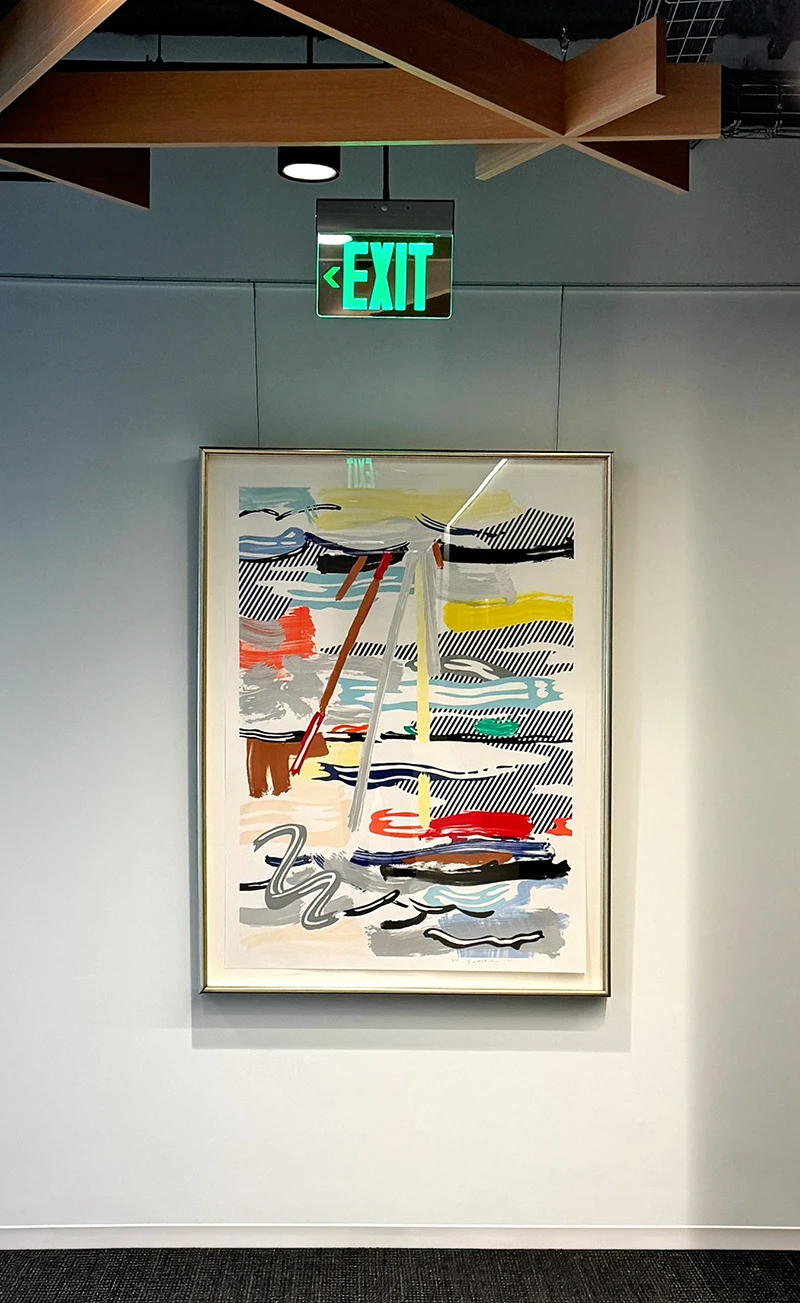
When he was ready to depart, I accompanied him along the 12th floor gallery space. We stopped briefly at each painting, and he shared an observation about the artist or the nature of the painting. I love how the galleries on each of the four levels of the new headquarters embody Preston’s love and commitment to the arts. He was delighted with the gallery space. We finished our tour and said goodbye at the elevator.
I was so pleased that our leadership honored Preston at the event. It recognizes his legacy, which is long and deep: He built this remarkable company from scratch, was a leader in the formation of the design-build industry as we know it today, elevated the cultural landscape of our community and enhanced my life and the lives of so many current and past Haskell colleagues. It was a pleasure and honor for me to share this remarkable moment in Haskell’s history with Preston himself.
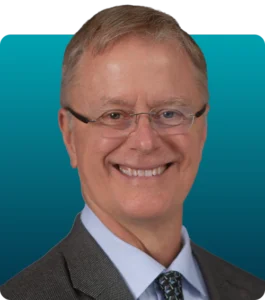 About the author: Alan Wilson, a Vice President and Haskell’s Chief Architect, joined Haskell in 1987 and has over 30 years of experience in master planning and creative architectural design for a wide variety of building types. He is a registered architect in over 20 states, a LEED AP, and has served in leadership roles in the Jacksonville Chapter of the American Institute of Architects, the Tilt-Up Concrete Association and North Florida Urban Land Institute.
Related News & Insights
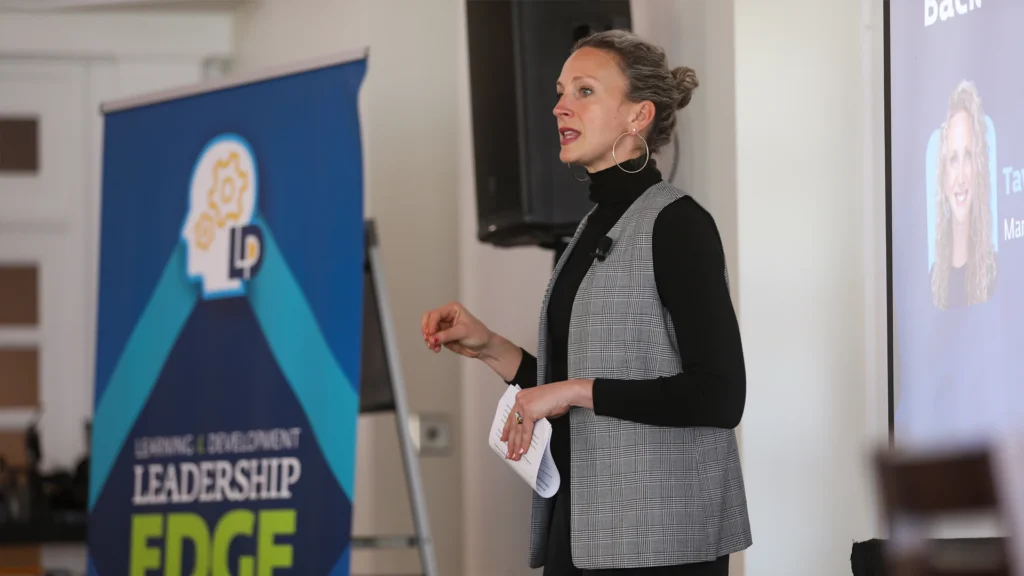
Developing Leaders, Building the Future at Haskell’s Edge Retreat
Learn how candid stories, expert perspectives and small-group conversations helped Haskell leaders examine what it means to lead with courage.

Meet the Engineer Behind Products on America’s Grocery Shelves
For Craig George, automation is personal: It is the code on a carton, the cookie on a shelf and the team that made both possible. Learn more, and join us.
Turning Manufacturing Challenges Into Shared Solutions
Learn how the Livermore Project Integrator built her career by connecting teams and helping complex production systems perform as designed.

Working Behind the Scenes to Keep Haskell Teams Safe
Learn how Haskell’s Director of Corporate Safety built a 27-year career around prevention and earned the Living the Values Award.