

Haskell Steel’s Paperless Shift Yields Sustainability, Operational Wins

Learn how the steel fabrication unit's move to an electronic document management system has improved efficiency and reduced its environmental impact.
Haskell Steel, the company’s owned and operated steel fabrication facility in Jacksonville, Florida, historically spent $15,000 or more a year on paper to print millions of pages of the shop drawings that communicated the specifications of fabrication projects.
Not only was the use of printed drawing sets expensive, but it also caused numerous other problems and inefficiencies.
- Wasted time: Each project required four sets of drawings, with a print time of three hours. Revisions required reprinting. When they used the drawings, welders had to search hundreds of pages to find the needed specifications.
- Exposure to the elements: Physical drawing sets were used and stored in the fabrication facility, which is covered and has walls but is exposed to the open air – and to heat, cold, rain, and wind. Ink bled when it got damp, and pages blew when it was windy.
Faced with the need to replace its printer, which would cost nearly $40,000, Haskell Steel’s leadership decided to go paperless.
Working with Dysruptek, Haskell’s innovation and venture capital arm, Haskell Steel implemented an electronic document management system. Loaded on iPads, the Procore application makes it easy to search for, retrieve and share documents between the project management team, production office and field crews.
Revisions are made instantaneously, eliminating thousands of pages or reprints, and managed electronically, ensuring that the correct set is always in use. Saving in manhours for document production and rework as a result of errors is estimated to save another $6,500 annually.
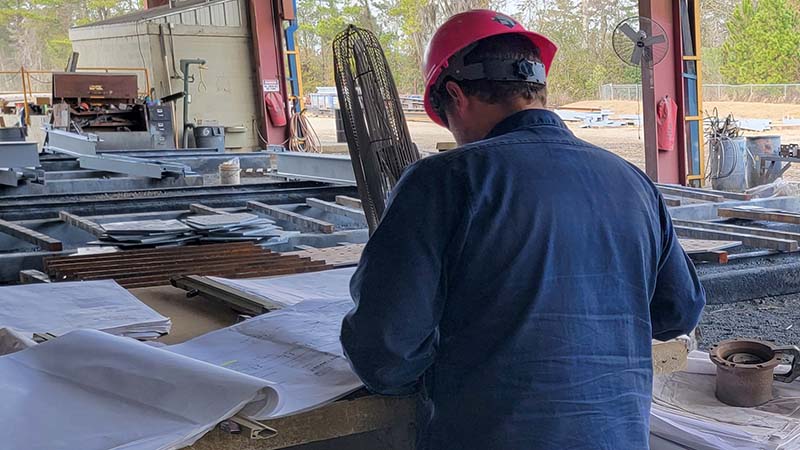
Electronic storage of revisions also allows the fitter on the shop floor to review the most up-to-date drawing and look back at past revisions to review what changed. Also, welders and fitters can quickly sort through hundreds of erection, assembly and parts drawings using search features.
“The guys love it,” said Rick Maron, Director of Project Development. “The fact that they can search for a part and it just goes right to it, so they're not flipping through a hundred pages for 10 minutes. The benefit has far outweighed any negatives, and it was received incredibly well in the field.”
From an environmental perspective, Haskell Steel reduced the amount of paper used and decreased the energy and cost needed to store, print, and transport the physical paper. This is a significant contribution to reducing the organization’s carbon footprint.
Overall, paper usage has been reduced by about 75%. In coming iterations, electronic drawing management will allow Haskell Steel to automate many additional processes in the near future, such as quality checks and inventory management, which will produce significant time savings and further reduce errors resulting in rework.
“We’re not completely paperless,” Maron said. “We still have a long way to go. We'd like to get some digital boards up at each station, for example. But the initial surge has been very successful and very well received. I don’t see any going back.”
Haskell is committed to its role as a leader in environmental sustainability in the AEC industry. We view our role in furthering sustainability in three dimensions: leading by example, through service and through active support of community organizations. Contact us to learn more and to discuss your next sustainable project.
Related News & Insights
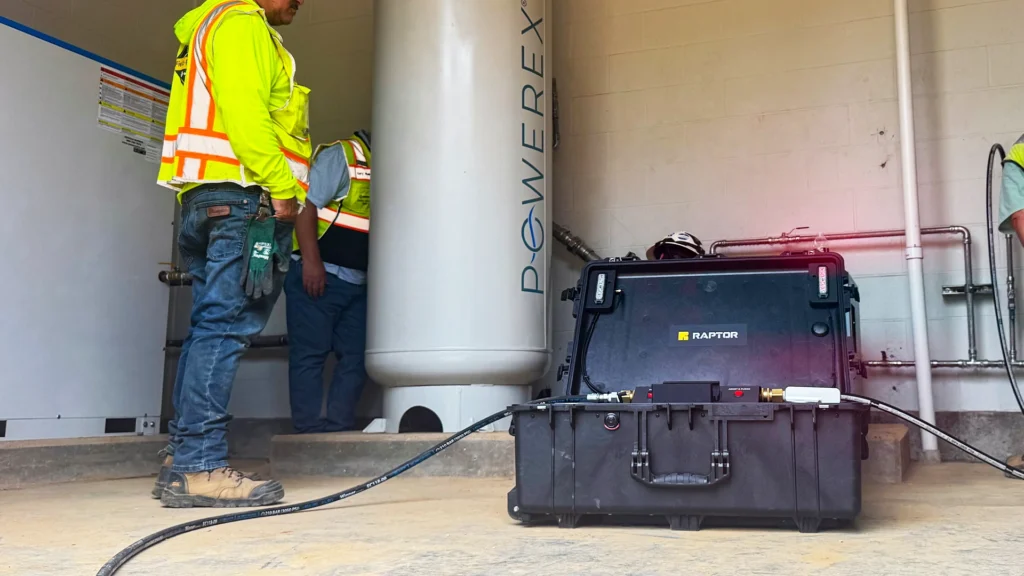
RAPTOR Device Advances to Model 2.5, Completing First Field Test
Learn the latest developments from one of the first Big Pitch winners. Discover how Dysruptek is helping advance safer pressure testing.

How ECOncrete is Building a Sustainable Future for Coastal Infrastructure
Learn how a new round of funding is pushing marine construction technology worldwide. Discover sustainable solutions for building materials.

Castano Group’s Big Pitch Production Brings Home an Addy Award
Learn how this frequent Haskell collaborator creates award-winning projects and watch the Big Pitch video that earned.

How Will AI Change the Fields of Engineering and Design?
Learn how Haskell’s four-pillar AI strategy strengthens governance, accelerates delivery and empowers engineers and teams enterprise-wide.