

Haskell Designing Factory Where UST Will Reshore PPE Production

The project will quickly produce billions of sterile gloves, growing in three phases with investment up to $350 million and creating 2,000 American jobs.
Years of offshoring jobs and manufacturing processes created supply chain breaks that left the United States with critical shortages of personal protective equipment (PPE) when the COVID-19 pandemic struck.
With the design of a 735,000-square-foot new manufacturing facility in Baltimore, Maryland, Haskell is helping United Safety Technologies Inc. (UST) repatriate thousands of jobs and produce billions of sterile nitrile gloves per year.
“We’re a team leading the movement to bring lifesaving (personal protective equipment) production back to our shores,” said Dan Izhaky, CEO of United Safety Technology. “We can protect the safety and security of our communities in America. Not only is it a noble mission, but it’s also an exciting one.”
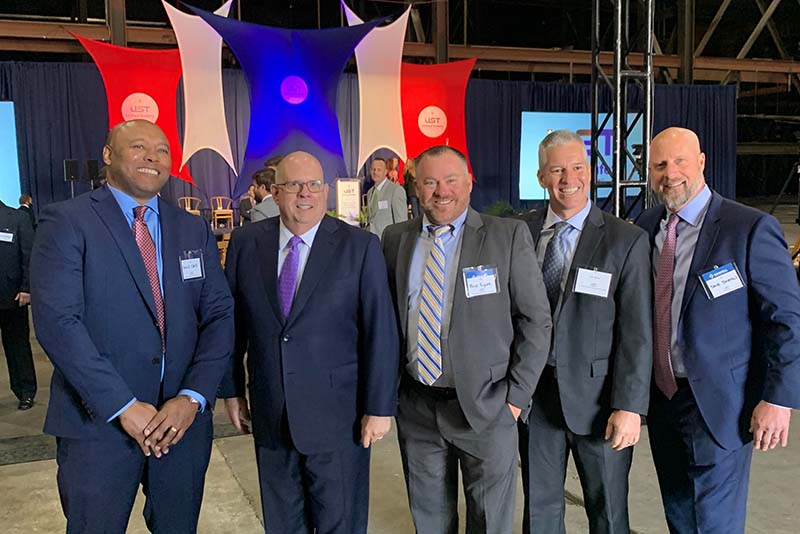
Over the next three years, UST will invest up to $350 million in a multi-phased project to build a leading medical-grade nitrile exam glove manufacturing center at Tradepoint Atlantic. During the first phase, which is scheduled to begin operation in the first quarter of 2023, the facility will produce more than 375 million gloves per month.
By Q4 2024, UST expects to have created more than 2,000 jobs in engineering, manufacturing, operations, logistics and other functions at the site.
Haskell began advising UST early in the site-selection process, providing preliminary layouts for various greenfield and brownfield facilities. Eventually, UST selected the former Bethlehem Steel Cold Mill building, built in 1999 for cold roll mill steel production and product storage. The mill went idle in 2012 and was used as a temporary storage facility from 2014 to 2019 by third-party logistics providers.
“During this concept design, we also provided our Facility Conditions Assessment Program (FCAP), which provided more than 250 observations to highlight the minor, moderate and major issues that the structure, superstructure and infrastructure have,” said Erik Lightner, Haskell Vice President of Consumer Products. “We’ve incorporated that into the design, as well as looking at all of the foundations to support the manufacturing equipment and the utilities that are available, which are limited.”
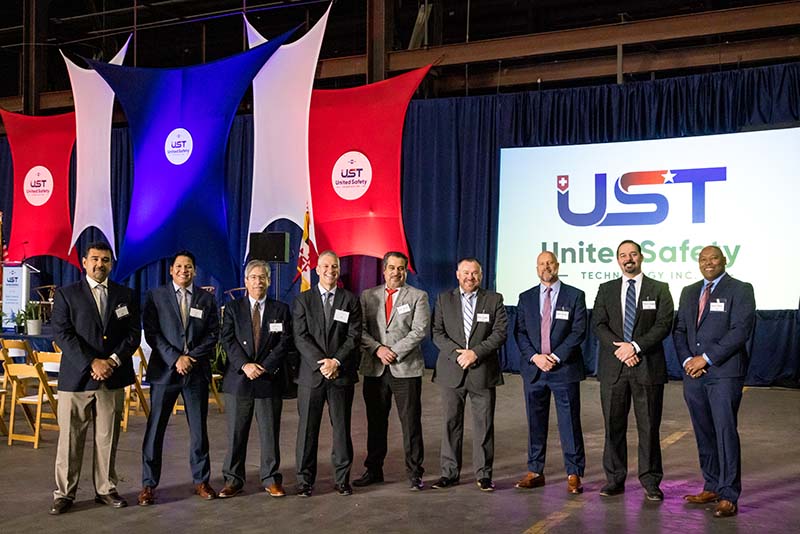
Much of the work done to this point has been through Haskell’s Malaysia Design Center because of the number of UST representatives there. Numerous Haskell offices will remain engaged as the company creates the facility’s complete design.
“Now we’ll look at what the full build-out will need,” Lightner said. “This will be a multi-phase project, and while we’re only really looking at Phase 1 for the current upgrades, we’ll be designing for the facility to handle the subsequent phases.”
Contact Haskell’s Consumer Products team for collaboration and answers from beginning to end of your manufacturing facility project – or needs at any point in the process.
Related News & Insights
How Equip-opedia Solves Common Packaging Integration Challenges
Discover how developing a comprehensive resource for ongoing education enables engineers to work smarter and enhances CPG engineering skills.
Manufacturing Consultants Solve Process and Operational Challenges
Discover how manufacturing consultants solve real-world production challenges with smart, cost-effective strategies that drive measurable results.
Conscious Consumerism: How Our Choices Drive Positive Change
Learn how Haskell's Sustainability Council helped team members understand how informed choices can support the environment and ethical practices

Consumer Products Leader Alex De Martini Embodies Design-Build
Learn how he uses architecture and construction management degrees and nearly 30 years of integrated delivery experience to help clients be successful and profitable.